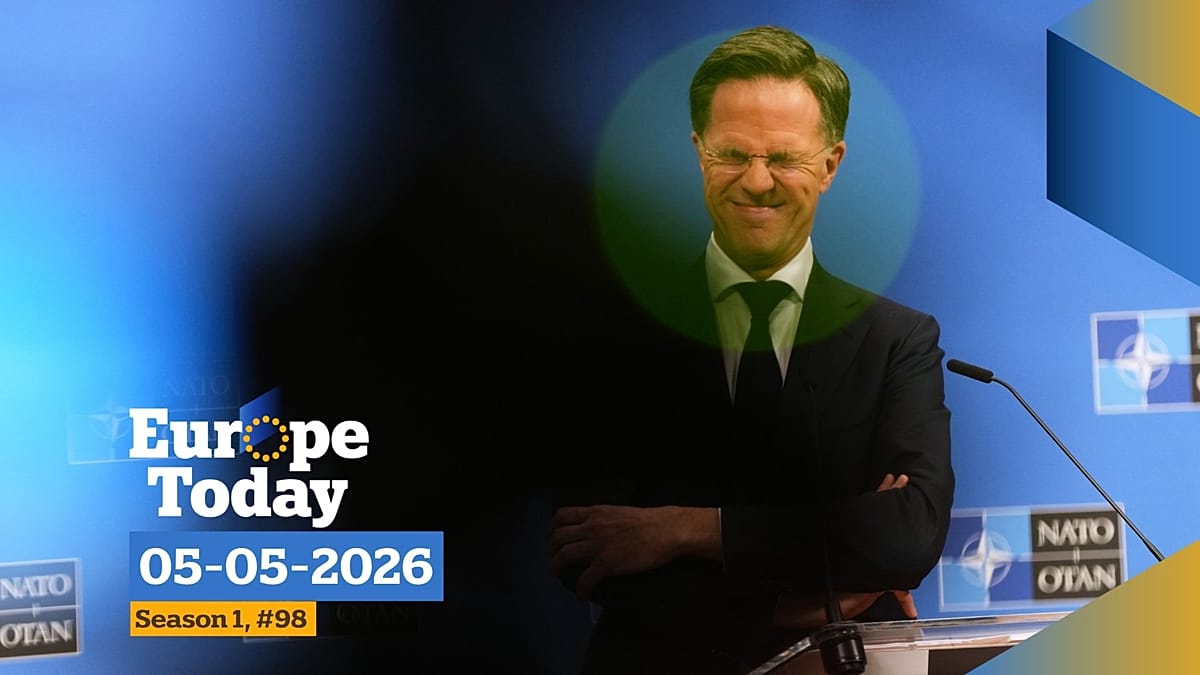
NATO, the bedrock of transatlantic security since 1949, is facing one of its most severe tests. Growing tensions over US military commitments in Europe have left European capitals scrambling to reassess their defense strategies. On a recent episode of Europe Today, hosted by Mared Gwyn, the alliance's internal discord took center stage, with Euronews correspondent Shona Murray reporting on the deepening rift.
The immediate trigger is the Trump administration's threat to withdraw thousands of US troops from Germany, a move that has escalated into a broader confrontation with Berlin. As detailed in our earlier report, Trump Vows Deeper US Troop Cuts in Germany, Escalating Transatlantic Rift, the planned reductions have alarmed European allies who rely on the US nuclear umbrella and rapid-response capabilities. The Pentagon's potential pullback from bases in Ramstein and Stuttgart would not only weaken NATO's eastern flank but also signal a fundamental shift in Washington's strategic priorities.
NATO's Spokesperson Defends the Alliance
Colonel Martin O’Donnell, NATO's spokesperson, pushed back against claims of an alliance in crisis. In an interview on the show, he insisted that NATO remains united and that the US commitment to Article 5 is unwavering. 'We have seen fluctuations in political rhetoric before,' O’Donnell stated, 'but the military-to-military cooperation between the US and its European partners has never been stronger.' However, his reassurances did little to quell anxieties among member states, particularly those on the front lines in Poland and the Baltic states.
Pedro Miguel da Costa Silva, Brazil’s ambassador to the EU, offered a non-European perspective, noting that the current disarray weakens the rules-based international order. 'When the world's largest military alliance appears divided, it emboldens revisionist powers and complicates multilateral diplomacy,' he warned. His comments underscored how NATO's internal strife has global repercussions, from the Indo-Pacific to the Arctic.
Trump's 'Project Freedom' and Its Implications
The show also featured an explainer by Jakub Janas on what Trump's 'Project Freedom' entails. According to Janas, the initiative is a mix of transactional diplomacy and a push for European allies to shoulder more of the defense burden. 'Project Freedom is not about abandoning Europe,' Janas argued, 'but about redefining the terms of engagement. Washington wants Europe to pay more for its own security, and it's using troop withdrawals as leverage.' This approach has sparked a fierce debate within the EU: should member states accelerate their own defense integration, or double down on preserving the transatlantic bond?
The timing could not be more critical. With the war in Ukraine grinding on and Russia's military posture remaining aggressive, European NATO members are already struggling to meet the 2% GDP spending target. A US drawdown would force countries like Germany, France, and Italy to fill a capability gap that could take years to close. As one EU diplomat put it, 'We are sleepwalking into a security vacuum.'
What Next for European Security?
The crisis has revived discussions about a European defense union, an idea long championed by French President Emmanuel Macron. While the EU has made strides with the European Peace Facility and joint procurement, the bloc lacks the integrated command structures and nuclear deterrent that the US provides. Some analysts argue that the current turmoil could be the catalyst needed for Europe to finally take charge of its own defense. Others warn that without American leadership, NATO could become a hollow shell.
For now, the transatlantic relationship hangs in the balance. The next few months will be decisive: will Washington follow through on its threats, or will diplomacy prevail? European leaders are watching closely, knowing that the answer will shape the continent's security architecture for decades to come.