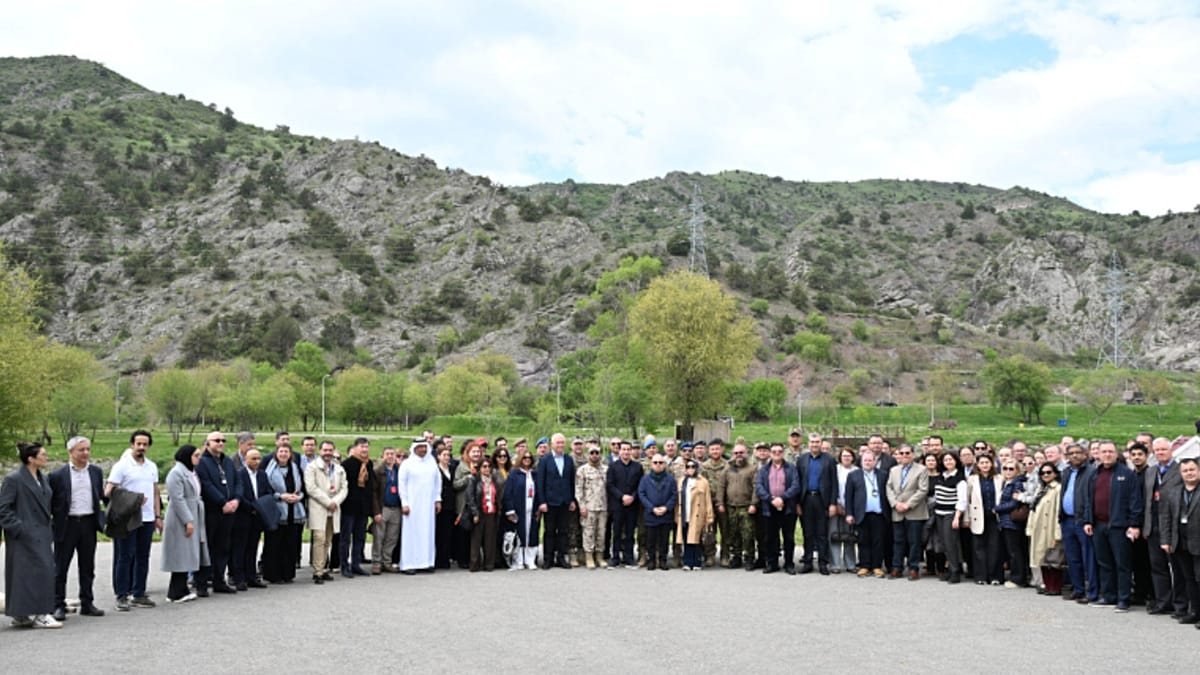
Over the weekend, a delegation of European and US diplomats accredited in Azerbaijan visited post-conflict reconstruction sites in the Karabakh region. The trip comes as the peace process between Armenia and Azerbaijan accelerates, driven by fresh political and economic initiatives that signal a durable end to decades of hostilities.
Diplomatic Support for Reconciliation
Dutch Ambassador Marianne de Jong, speaking to Euronews, explained that the delegation aimed to witness firsthand "the progress in the renovations." She added, "We fully support as the Netherlands, as part of the EU, the reconciliation process between Armenia and Azerbaijan." The Netherlands, she noted, is actively exploring opportunities to provide support in connectivity and investment, areas critical to the region's long-term stability.
Ukraine's Ambassador Yuriy Husyev highlighted the broader significance of the peace process, calling it "a good example how two countries solved long-term conflict with a respect to international law." His remarks underscore the potential for the South Caucasus to serve as a model for conflict resolution elsewhere, particularly given the ongoing tensions in Eastern Europe.
The United States also played a prominent role in the delegation. Amy Carlon, deputy chief of mission at the US embassy in Baku, told Euronews that Baku and Washington "have been taking concrete actions to implement peace and bilateral partnership." This aligns with recent US-led initiatives, such as the TRIPP Corridor talks, which aim to enhance Europe's energy diversification by linking the Caspian region to Western markets.
Reconstruction and Economic Integration
The Karabakh region, devastated by years of conflict, is now the focus of a major reconstruction effort led by Azerbaijan. The diplomatic delegation visited several sites to assess progress, including infrastructure projects and housing developments. The European Union has signaled its willingness to contribute to these efforts, with the Netherlands taking a lead role in identifying investment opportunities.
Connectivity remains a key priority. The recent first cross-border trade in years between Armenia and Azerbaijan marks a tangible step toward economic integration. Improved transport links and energy corridors could further bolster regional cooperation, reducing dependence on external actors and fostering mutual prosperity.
The peace process has also attracted attention from other European capitals. While the delegation did not include representatives from all EU member states, the presence of diplomats from the Netherlands, Ukraine, and the US reflects a broad consensus on the importance of stability in the South Caucasus. The region's strategic location, bridging Europe and Asia, makes it a critical node for energy transit and trade.
Challenges Ahead
Despite the optimism, significant challenges remain. The peace agreement, while holding, has yet to address all outstanding issues, including the status of ethnic Armenian enclaves and the return of displaced populations. The European Union has urged both sides to maintain dialogue and avoid provocations that could undermine the fragile truce.
For the Netherlands and other EU members, the focus is on practical support. Ambassador de Jong emphasized that her country is "seeking opportunities to provide support in connectivity and investment," which could include funding for road and rail projects, as well as technical assistance for border management. Such measures are seen as essential to building trust and ensuring the peace process is irreversible.
The US role, meanwhile, extends beyond diplomacy. The TRIPP Corridor talks represent a concrete effort to integrate Azerbaijan into broader energy networks, reducing Europe's reliance on Russian gas. This aligns with the EU's long-term strategy to diversify energy sources and enhance energy security.
As the region moves from conflict to reconstruction, the international community's engagement will be crucial. The diplomatic delegation's visit signals a commitment to supporting the peace process, but sustained investment and political will are needed to translate promises into tangible outcomes. For now, the sight of diplomats surveying reconstruction sites in Karabakh offers a hopeful glimpse of a future where the South Caucasus is defined by cooperation rather than confrontation.