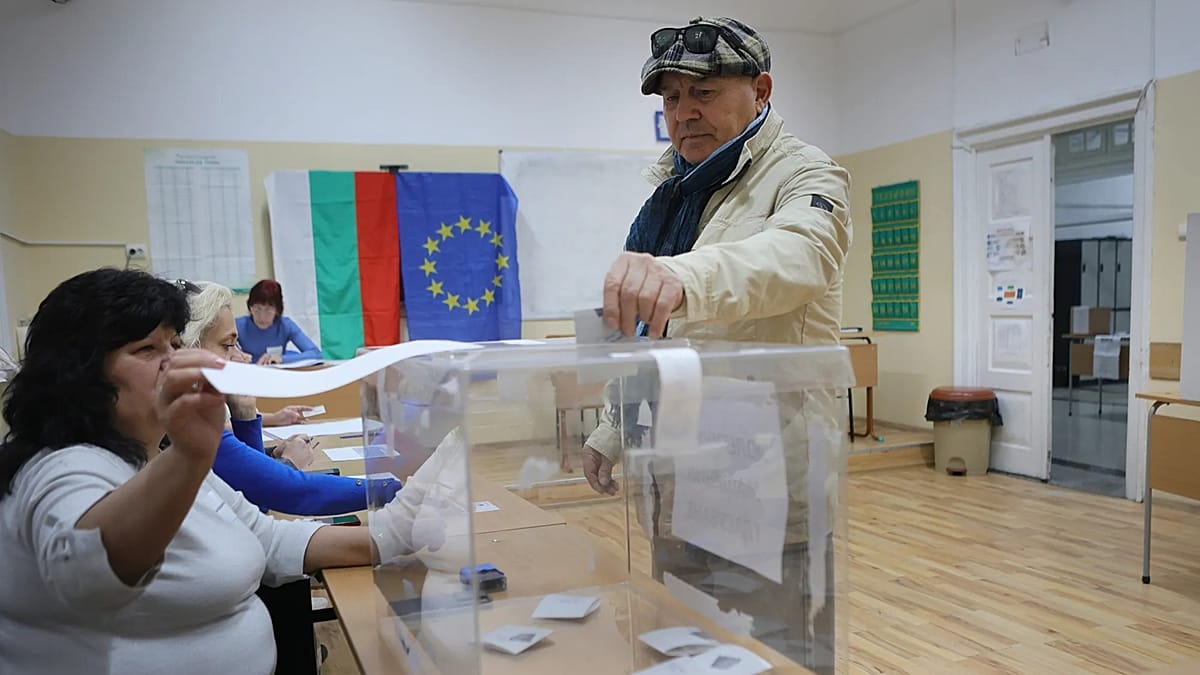
Bulgarians headed to the polls on Sunday for a presidential runoff that pits two candidates with fundamentally different visions for the country's relationship with Russia and its stance on the war in Ukraine. The vote is seen as a bellwether for the political direction of one of the European Union's most Russia-friendly member states.
Incumbent President Iliana Iotova, who is backed by the ruling Progressive Bulgaria party, the Bulgarian Socialist Party, and the nationalist VMRO, won the first round with about 35% of the vote. Her lead over pro-Western rival Andrey Gyurov was a slim 43,000 votes, a result that surprised many, as earlier opinion polls had suggested a more comfortable margin for the president.
Polling stations opened at 7 am local time and closed at 8 pm, with turnout expected to be high given the stakes. The runoff comes at a time of heightened tensions in the Black Sea region, where a series of attacks on commercial vessels have raised concerns about maritime security and the safety of shipping routes.
Two visions for Bulgaria's future
The election is a direct confrontation between two approaches to foreign policy. Iotova has consistently advocated for dialogue with Moscow and opposes continued military aid to Ukraine. In a televised debate on Thursday evening, she argued that "peace can only be achieved through negotiations." She warned that sending more weapons to Kyiv would only prolong the conflict, saying, "If we pour even more money into Ukraine and deliver new, more sophisticated weapons, this will only lead to further destruction and many deaths on both sides."
Gyurov, who is supported by the opposition Democratic Bulgaria and We Continue the Change, takes a harder line. He insists that Russia must end its aggression before any talks can begin. "Russia must put an end to its aggression so that the next steps can be taken," he said during the debate, adding, "Let us name the country from which the threats originate."
Bulgaria, a member of both the EU and NATO, has historically maintained close ties with Russia, and public opinion remains deeply divided over how to manage that relationship. The war in Ukraine has intensified the debate, with many Bulgarians wary of alienating Moscow while others see Russia as a direct threat to European security.
The recent attacks on vessels in the Black Sea have added urgency to the discussion. Prime Minister Rumen Radev, who is not a candidate in this election but has been a vocal figure in the debate, has argued that a ceasefire and peace talks are the only way to guarantee the safety of commercial shipping in the region. While Radev has said the attacks appear to serve Russian interests and has summoned the Russian ambassador over the incidents, the government has stated that there is so far no evidence directly linking them to Moscow.
The outcome of the runoff will have implications beyond Bulgaria's borders. A victory for Gyurov would signal a shift toward a more firmly pro-Western stance, potentially aligning Sofia more closely with NATO's hawkish members. A win for Iotova, on the other hand, could maintain a more cautious approach, keeping channels open with Moscow even as the EU and NATO seek to isolate Russia.
For many voters, the choice is not just about foreign policy but also about the country's trajectory within Europe. Bulgaria has struggled with political instability in recent years, and the presidential election is seen as a test of whether the country can move beyond its divisions. As one Sofia resident put it, "We are at a crossroads. The next president will shape how Europe sees us."
The runoff comes amid a broader wave of elections across the continent, from France's presidential race to other tests of European unity. The results in Bulgaria will be closely watched in Brussels and Washington, as they could influence the EU's collective stance on Russia and the ongoing conflict in Ukraine.
As the votes are counted, both campaigns have urged their supporters to remain vigilant. The narrow margin in the first round suggests that the outcome could be decided by a handful of votes, making every ballot crucial. The final result is expected later on Sunday evening.