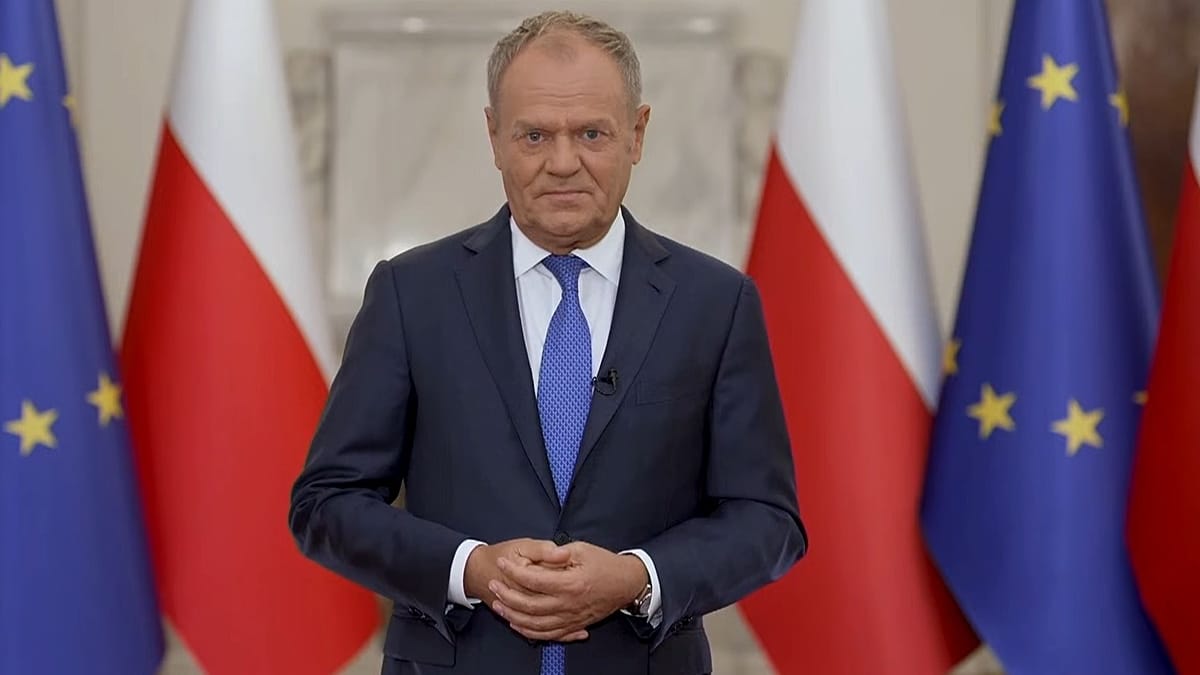
WARSAW — Prime Minister Donald Tusk struck a defiant tone on Saturday evening, telling Poles that the rule of law would prevail over violence and that there could be no compromise on judicial independence. His televised address came after a dramatic confrontation at the Constitutional Tribunal that saw police surround the building and President Karol Nawrocki attempt to enter, only to be blocked.
The standoff, broadcast live on national television, has pushed Poland's long-running judicial crisis to a new peak and drawn attention across Europe. The opposition, led by the nationalist Law and Justice party (PiS), accuses Tusk's government of staging a coup. The government insists it is restoring constitutional order after years of PiS interference in the courts.
A clash over the court's composition
The dispute dates back to 2015, when PiS and the then-ruling Civic Platform clashed over the appointment of five judges. Since then, the Tribunal's composition and the legitimacy of its rulings have been a constant source of friction. The latest flashpoint came when the Sejm, Poland's lower house, elected new judges to replace those whose terms had expired. The judges took their oaths, but President Nawrocki refused to formally receive them, and Tribunal President Bogdan Święczkowski barred them from taking up their duties.
In his address, Tusk described Friday's events as “scandalous incidents” and said he hoped such scenes would never be repeated. He stressed that restoring calm could not mean accepting lawlessness or violence. “A democratic state has to be strong and capable of enforcing justice,” he said.
Tusk said his government had tried to resolve the crisis through dialogue, but its proposals were blocked by PiS and the president. He noted that the parliamentary majority had waited patiently for the terms of PiS-appointed judges to expire, hoping to avoid a confrontation. “We waited calmly for new judges to be chosen, until the terms of their predecessors appointed by PiS expired. The Sejm made its choice, the judges took the oath, but the president did not deign to receive that oath,” he said.
The newly elected judges, Tusk insisted, were legally appointed and had been attacked. He criticised PiS-linked politicians and activists from the far-right Confederation party for their conduct during the confrontation. In a vivid analogy, he compared the situation to a thief stealing an elderly woman's handbag and then accusing others of violence when they try to recover it.
“In certain matters there can be no compromise,” Tusk said. “Lawlessness cannot be negotiated away.”
He added that physical force, aggression and party interests must not determine who is right in a state governed by the rule of law. No politician, including the president, had the right to enter a court or tribunal, issue instructions to judges or intimidate them. He was referring to Nawrocki's visit to the Tribunal building, which came after the president aborted a trip to Senegal, turning his plane around mid-flight.
Warnings of Russian exploitation
Tusk also warned that pro-Russian groups could exploit the political conflict. He pointed to Russian bots operating online that, in his assessment, were supporting opponents of Poland's current constitutional order. The warning echoes broader concerns in Europe about disinformation campaigns targeting democratic institutions.
The prime minister pledged that the Constitutional Tribunal would operate in accordance with the constitution and independently of the executive. As head of government, he said he would provide the institution with the security and conditions needed to carry out its duties. “And I intend to fulfil this task,” he said.
The crisis has also drawn attention to Poland's security posture. Warsaw has been a key NATO ally, and recent moves such as hosting Europe's only PAC-3 missile maintenance hub and signing a three-year defence pact with the UK underscore its strategic role. Tusk's government has been keen to project stability, but the judicial standoff risks undermining that image.
As the standoff continues, Poland's European partners are watching closely. The European Commission has long raised concerns about judicial independence in Poland, and the current crisis is likely to reignite debates in Brussels about the rule of law. For now, Tusk's message is clear: there will be no retreat.