Evacuees from the southern Ukrainian city of Oleshky, which has been under Russian occupation, landed in Belarus on Saturday as part of a humanitarian corridor agreed between Kyiv and Moscow. The operation, which began earlier this week, is being closely watched as a rare instance of cooperation between the two sides amid the ongoing war.
Dmytro Lubinets, Ukraine's parliamentary commissioner for human rights, shared video footage on social media showing residents stepping off a plane after arriving in Belarus. “We will be home soon! For now, we are on the territory of the Republic of Belarus — together with our people and even their beloved pets!” he wrote.
David Arakhamia, a senior Ukrainian politician, announced that the fourth and final aircraft carrying evacuees had touched down in Gomel, a city in southeastern Belarus. “In just a few hours, all Ukrainian citizens evacuated from Oleshky, together with the Ukrainian delegation, will be back on Ukrainian soil,” he said on Telegram.
Russia's defence ministry confirmed that residents of Oleshky who had requested to leave were flown to Gomel, and released footage of coaches arriving and people boarding a plane. The ministry did not specify how many people were on board, but the operation is part of a ceasefire that began on Friday and is set to last until Sunday evening.
A fragile window of calm
The localised truce was brokered with the involvement of US First Lady Melania Trump, who said on Friday that a convoy was ready to evacuate more than 750 people “who voluntarily choose to leave Oleshky.” She added that the convoy included 25 buses, 50 medical professionals, and ambulances.
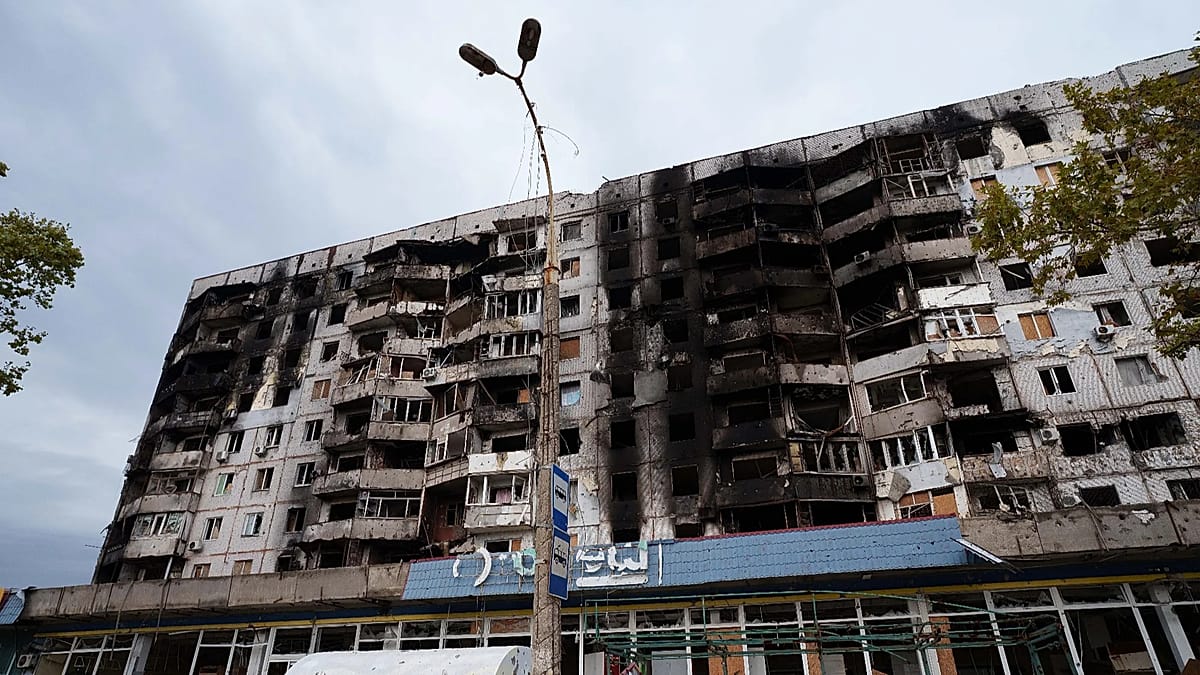
Oleshky, located across the Dnipro River from the regional capital Kherson, has been under Russian control since early in the invasion. The town has suffered extensive damage, and residents have faced severe shortages of food, water, and medical supplies. The evacuation is seen as a rare humanitarian success in a conflict marked by widespread destruction and displacement.
However, the truce remains limited in scope. Ukrainian officials have cautioned that it does not signal a broader de-escalation. A former Ukrainian prime minister warned that the Oleshky ceasefire is unlikely to lead to a wider truce, given the fundamental disagreements between the two sides.
Meanwhile, the humanitarian situation in other parts of Ukraine remains dire. Ukrainian President Volodymyr Zelenskyy reported that Russian strikes overnight had left around 280,000 households without electricity. “Russian strikes have created a difficult situation with electricity supplies across our regions,” he wrote on X.
According to Zelenskyy, approximately 200,000 households in the Dnipro area and its surroundings were without power, while more than 80,000 households in the Kyiv region were also affected. The attacks have further strained Ukraine's already fragile energy grid, which has been a repeated target of Russian missile and drone strikes.
The evacuation from Oleshky comes amid ongoing diplomatic efforts, including a planned meeting between US envoy Steve Witkoff and President Zelenskyy in Oslo before Witkoff travels to Moscow for talks with Vladimir Putin. These discussions are part of broader attempts to find a path toward ending the war, though significant obstacles remain.
For the evacuees, the journey to Belarus is a temporary stop before returning to Ukrainian-controlled territory. The operation has raised concerns among some observers about the potential for forced deportations, but Ukrainian officials have stressed that participation is voluntary. Some analysts have expressed fears that the evacuation could be used as a pretext for forced relocation to Russia, though no such evidence has emerged so far.
The localised ceasefire in Oleshky is a small but significant step in a war that has caused immense suffering. As the truce enters its final hours, the focus remains on ensuring the safe passage of all those who wish to leave, and on the broader humanitarian needs of millions of Ukrainians affected by the conflict.