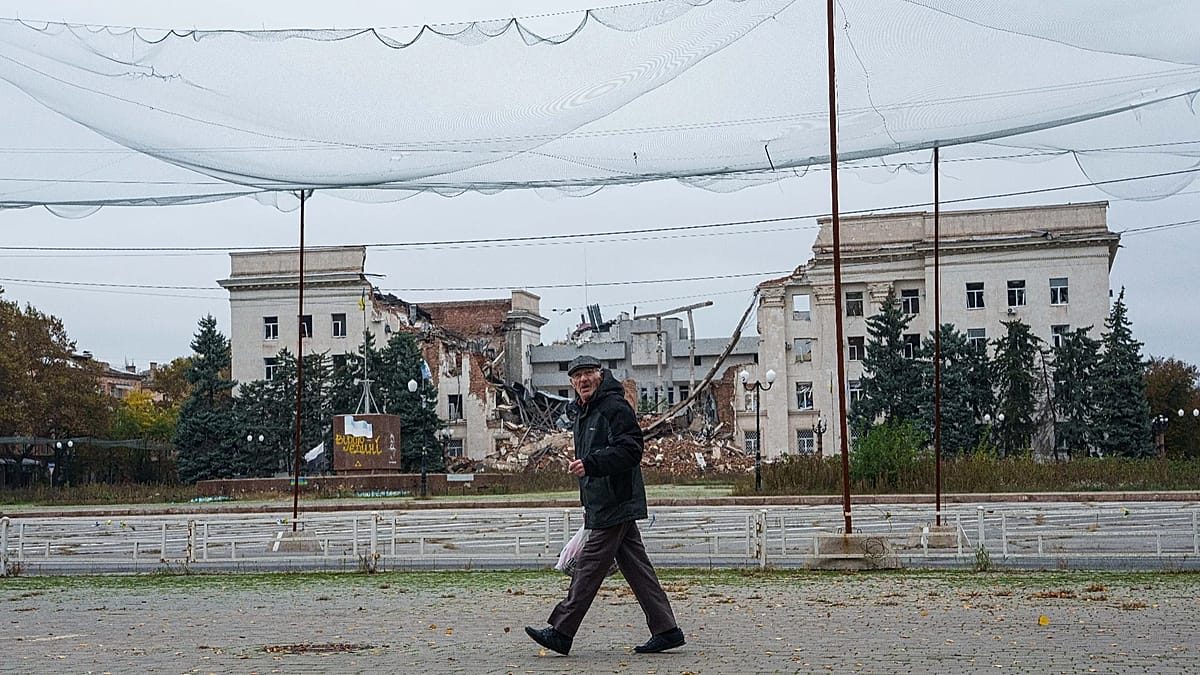
A fragile ceasefire in the Russian-occupied town of Oleshky, in Ukraine's southern Kherson region, has opened a narrow window for humanitarian aid and civilian evacuations. Yet the terms of the operation have sparked alarm, with reports suggesting that residents who agree to leave may first be transported through Russian-controlled territory—either to occupied Crimea or into Russia itself—before they can continue their journey.
The evacuation plan, brokered with the involvement of US First Lady Melania Trump, includes a temporary halt in fighting, the delivery of food and medicine, and preparations to move civilians out. But the prospect of routing evacuees through Russian-held areas has revived painful memories of the forced transfers from Mariupol and other occupied coastal towns in 2022, when thousands were taken to Russia or Russian-occupied regions under duress.
First 30 hours of calm
The ceasefire took effect on Tuesday and is scheduled to last until 1 November. Ukraine's Human Rights Ombudsman, Dmytro Lubinets, reported on Wednesday that the first 30 hours passed without a single incident—a rare moment of respite for the estimated 2,000 civilians still trapped in Oleshky, who face severe shortages of food, medicine, and other essentials.
The truce has also allowed some Ukrainians displaced from the Kherson region to visit their homes and loved ones in liberated areas for the first time in years. Previously, relentless Russian drone attacks—including the deliberate targeting of civilians in what has become known as a "human safari"—made such journeys too dangerous.
Ukrainian officials declined to comment on the evacuation details, citing the sensitivity of the operation and the fragility of the ceasefire.
Echoes of Mariupol's forced deportations
In 2022, civilians fleeing Mariupol and other occupied areas along the Sea of Azov coast were transported into Russian-controlled territory, where many underwent compulsory security screenings known as "filtration." These involved interrogations, searches, and the collection of biometric data.
Human Rights Watch documented cases where civilians had no meaningful choice but to travel to Russia or Russian-occupied areas. Amnesty International recorded accounts of beatings, electric shocks, and threats of execution during filtration-related detentions. Both organisations concluded that Russia's forcible transfers constituted war crimes and could amount to crimes against humanity.
The precedent raises questions over whether those leaving Oleshky will be able to choose their destination and travel onwards without restrictions. Passage through Russia or occupied Crimea would not, in itself, constitute forced deportation. The crucial issue is whether departures are genuinely voluntary and civilians retain freedom of movement.
Moscow's assurances raise further concerns
Russia has rejected suggestions that residents could be forcibly removed from Oleshky, insisting that any evacuation would take place only with their consent. But Russia's Human Rights Commissioner, Yana Lantratova, fueled concerns by insisting that Oleshky is Russian territory and that Russian law alone applies there.
The town remains internationally recognised as part of Ukraine, and Moscow's claims of sovereignty do not alter its status under international law. Lantratova maintained that residents should be free to decide whether to leave and where to go. She said the mission would deliver food, medicine, and hygiene supplies and help those wishing to depart, although she claimed relatively few residents wanted to leave.
Years of isolation and a humanitarian crisis
Oleshky, across the Dnipro River from the Ukrainian-controlled city of Kherson, has been under Russian occupation since the early days of Moscow's full-scale invasion in February 2022.
According to the Institute for the Study of War (ISW), Russian occupation authorities stopped deliveries of food and other essential supplies in late December 2025, with no food or medicine reaching the town since May 2026. The US-based think tank said Moscow had rejected Ukrainian proposals for local humanitarian ceasefires in May, July, and September, prompting Ukrainian forces to deliver food by drone. It holds Russian occupation authorities responsible for the humanitarian crisis, accusing them of repeatedly obstructing aid and evacuation routes.
For Oleshky's remaining residents, the uncertainty remains. The success of the operation will depend not only on whether the ceasefire holds and aid reaches the town, but on whether those who wish to leave can do so freely and reach the destination of their choice.
As the situation unfolds, the broader context of the war continues to evolve. Europe's shifting stance on direct talks with Russia and the trilateral talks set for November may influence the fate of Oleshky's civilians. Meanwhile, the ceasefire itself has been marred by Russian strikes on Kyiv, underscoring the fragility of any pause in hostilities.