After months of hesitation and internal discord, Europe is now signalling more clearly than ever that it is prepared to engage directly with Russia to end the full-scale invasion of Ukraine and shape the continent's future security order. The shift marks a departure from the previous stance of refusing bilateral contact with Moscow.
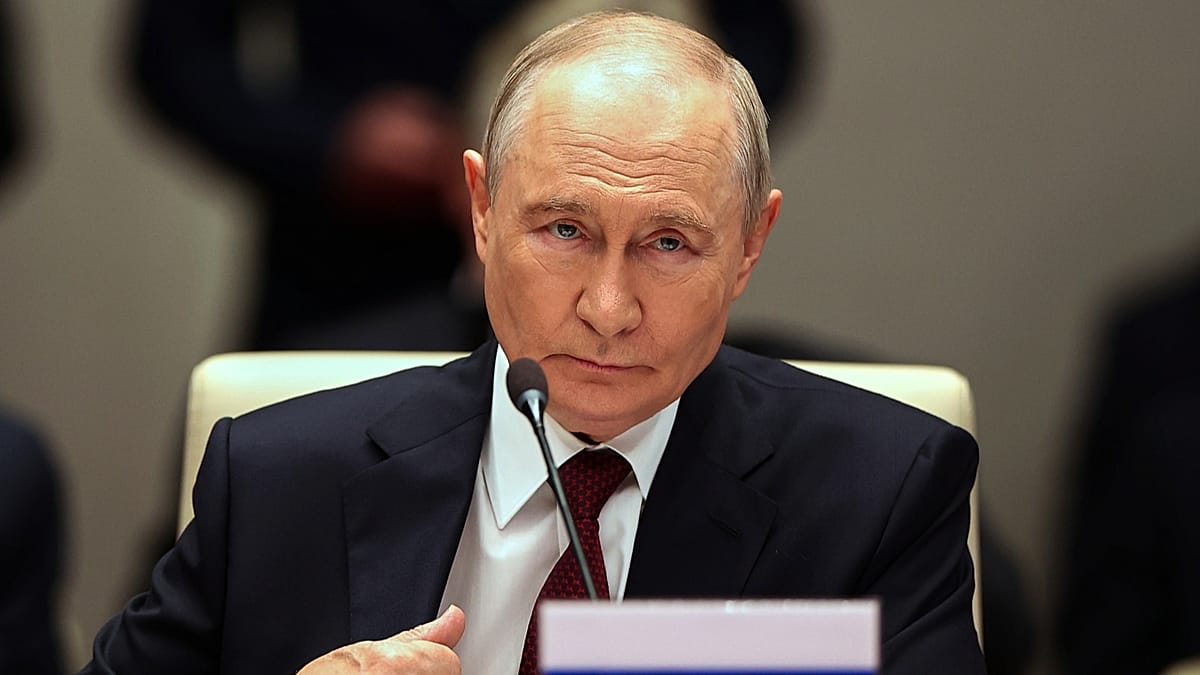
Finnish President Alexander Stubb and Norwegian Prime Minister Jonas Gahr Støre took the initiative this week by holding a phone call with Russian President Vladimir Putin, discussing the potential restart of peace negotiations. Although they acted as national leaders rather than representatives of the EU, their move immediately positioned the Nordic pair as key intermediaries in the emerging diplomatic landscape.
The Kremlin's readout of the call noted that the three leaders had "agreed to maintain direct telephone contact in the future," signalling Moscow's willingness to keep channels open with European counterparts.
Meanwhile, the European Commission and the European Council are preparing a joint team of senior officials to attend the next round of talks, expected to take place in Abu Dhabi in early November. Bjoern Seibert, chief of cabinet to Commission President Ursula von der Leyen, is tipped to lead the delegation. A Commission spokesperson stated: "We are adamantly committed not just to putting an end to the war but to achieve peace that will be just and sustainable. That is our aim and that is the stance we are defending in the ongoing talks."
What makes this development notable is that Brussels is now openly endorsing a multilateral format for the negotiations, which would bring Europeans, Ukrainians, Americans, and Russians to the same table simultaneously. This has never happened before in the peace process; until now, the US primarily spoke with Russia, with occasional trilaterals involving Ukraine. Kyiv and Moscow also maintain a parallel track for prisoner-of-war exchanges.
Even more striking is that Russia has not outright rejected European participation, as it has repeatedly done in the past. Instead, Moscow appears to be seeking it. Yury Ushakov, a close aide to Putin, said last week: "It's not enough to talk only to Kyiv. We need to talk to the whole of Europe, which fully supports Kyiv."
Elusive consensus
The question of whether to break the diplomatic isolation imposed in February 2022 and speak directly with Russia has long divided European leaders. The debate intensified earlier this year when French President Emmanuel Macron and Italian Prime Minister Giorgia Meloni issued back-to-back calls in favour of engagement. The idea of appointing a special European envoy sparked a flurry of possible names.
Austria, Belgium, Bulgaria, the Czech Republic, Luxembourg, and Slovakia gradually endorsed the strategy, arguing that the stakes were too high for Europe to remain absent. In contrast, Germany, Poland, Sweden, Denmark, and the Baltic states resisted, warning that Russia's positions remained as maximalist as on the first day of the war.
The lack of consensus was laid bare in June when European Council President António Costa unexpectedly opened a channel of communication with the Kremlin. His decision drew political backlash and was discreetly put on hold. The Stubb-Støre call with Putin also raised eyebrows in some corners. Danish Prime Minister Mette Frederiksen said in a rare moment of Nordic divide: "I am very sceptical about this independent initiative by Norway and Finland. I honestly don't know what they think can be achieved by this."
Poland's Donald Tusk advised Stubb and Støre to be "vigilant" and proceed with caution in their newfound engagement with Putin. "Russia's agenda and interests are quite precisely defined, and that one should harbour any illusions about getting an agreement," Tusk said. Their warnings were underscored by the Kremlin's readout, which made evergreen references to the "root causes" of the war and Europe's "confrontational policies," leaving no doubt that Russia's maximalist demands remained intact.
A turn for the worse
But the situation has changed dramatically since June, when Costa was rebuked. Back then, European allies were fresh from a successful G7 summit in France, where US President Donald Trump promised to reimpose sanctions on Russian oil and discuss licences for Patriot missiles with Ukrainian President Volodymyr Zelenskyy. Now, they are in shock as Trump cuts a diesel deal with Putin, lifts long-standing sanctions on Russia, lambasts Zelenskyy, and demands new elections in Ukraine.
Sudden limits on Kyiv's use of Starlink technology and the early warning system, both crucial for its defence, set off alarm bells. Overnight, the dreaded scenario that Trump would push Ukraine into a take-or-leave-it capitulation crystallised. The rapid deterioration prompted Stubb and Støre to hastily organise a new round of talks in Oslo. Following the meeting, Zelenskyy emerged with a tempered attitude, and Starlink speeds and the early warning system were subsequently restored.
Still, anxiety over Trump's turn to Putin remains palpably high. European officials have realised that contacts between Washington and Moscow are more extensive than previously thought. The two sides are reportedly discussing deals involving Lukoil assets, nuclear technology, Arctic LNG, and, most controversially, the restart of the Nord Stream pipeline and the release of immobilised Russian assets. For Europeans, the US approach is fundamentally flawed because it ignores Putin's fixation with territorial conquest, the core reason he launched the invasion.
As Europe moves towards a more proactive diplomatic role, the coming weeks will test whether it can translate its newfound readiness into a coherent strategy that balances pressure on Moscow with support for Kyiv. The Nordic leaders' push for peace talks may be a first step, but the road ahead remains fraught with challenges, as defence pacts and security concerns continue to shape the continent's response.