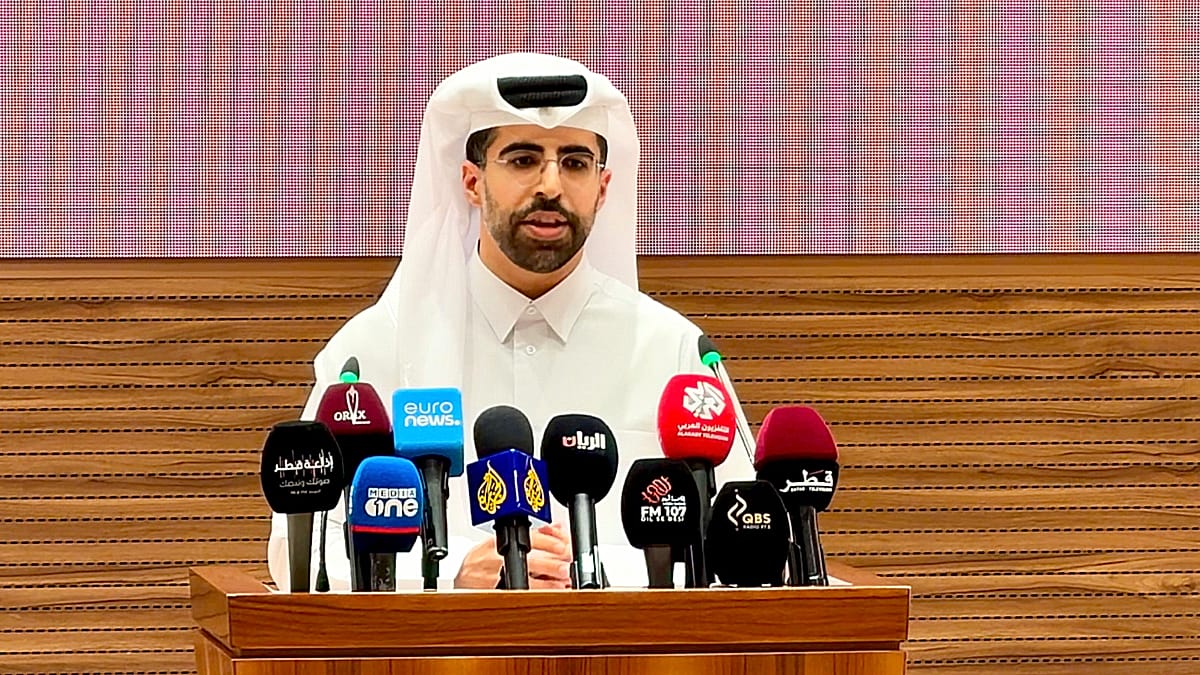
Qatar on Tuesday urged Iran to “show goodwill” by ceasing threats against its neighbours and reopening the Strait of Hormuz, as diplomatic efforts to broker a deal with the United States continued. The appeal came from Ibrahim bin Sultan Al Hashmi, director of the media and communication department at Qatar’s foreign ministry, during a weekly briefing in Doha.
“We have heard positive statements from the Iranian side on this issue, but they still need to show goodwill,” Al Hashmi said. He confirmed that a Qatari delegation’s recent visit to Tehran was part of broader mediation efforts involving Pakistan and other regional partners.
Asked whether the delegation had carried a new proposal, Al Hashmi said messages and ideas were still being exchanged with both sides. He offered no details of any proposal and did not announce a breakthrough. Both Washington and Tehran had spoken about further escalation as well as the possibility of a diplomatic solution, he noted. “The mediator always holds on to this window of hope,” he added.
Regional security talks intensify
The Qatari appeal follows a series of high-level meetings in Tehran. On Monday, Saudi Defence Minister Prince Khalid bin Salman, Pakistan’s army chief Asim Munir, and Turkish intelligence chief Ibrahim Kalin met Iranian leaders. The three countries signed the Mecca mutual defence pact in August, and Iranian state media said all four nations agreed to continue talks on peace and security.
Al Hashmi said Qatar and its Gulf neighbours were ready to take part in a regional security framework based on respect for sovereignty and a commitment not to attack one another. He added that Saudi Arabia’s efforts complemented the work of Qatar and Pakistan.
The talks come amid continuing attacks on Saudi Arabia by Yemen’s Iran-backed Houthis. Egypt’s parliament on Monday authorised military support to help defend the kingdom. The European Parliament has also urged the EU to blacklist the Houthis as terrorists, reflecting growing concern in Brussels about the spillover effects of the conflict.
Strait of Hormuz: a global chokepoint
The Strait of Hormuz is a critical artery for global energy supplies, with about a fifth of the world’s oil passing through it daily. The current war, which began with US and Israeli strikes on Iran in late February, has severely disrupted shipping in the strait. Iranian restrictions and a US blockade have choked traffic, raising fears of energy shortages and price spikes across Europe and beyond.
For European capitals, the stability of the strait is not a distant concern. Many EU member states rely on Gulf oil and gas, and any prolonged disruption could have immediate economic consequences. The EU’s climate chief has warned of a 3°C warmer Europe, but the immediate energy security challenge is equally pressing.
The US and Iran remain divided over the terms of any deal. Tehran wants the US blockade of its ports lifted and sanctions on Iranian oil exports removed. Washington is demanding that Iran reduce its nuclear enrichment activities. These fundamental disagreements have so far prevented a breakthrough.
Qatar, which has often played a mediating role in regional conflicts, appears determined to keep the diplomatic channel open. “The mediator always holds on to this window of hope,” Al Hashmi reiterated, underscoring the fragile but persistent efforts to find a way out of the crisis.
As the war continues, the human and economic costs mount. The disruption to shipping has already affected global supply chains, and the threat of further escalation looms. For now, the focus remains on whether Iran will heed the calls for goodwill and take concrete steps to de-escalate.