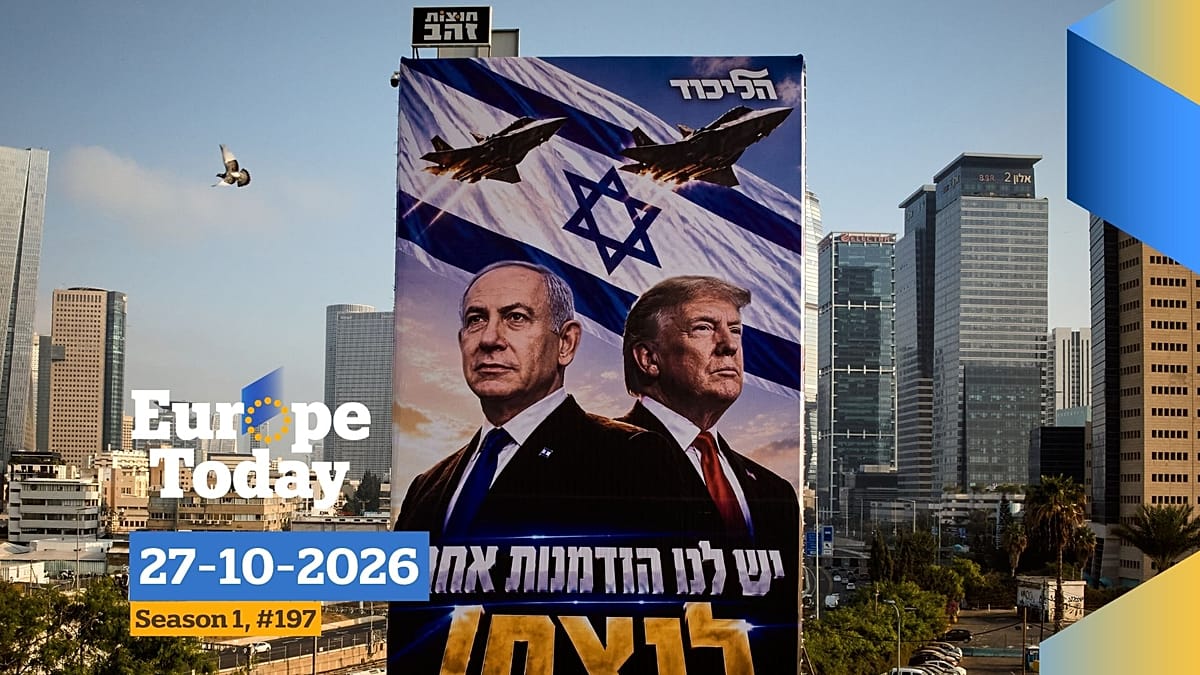
Israelis are casting ballots today in their first national election since the 7 October attacks, a vote widely seen as a referendum on Prime Minister Benjamin Netanyahu's leadership. The campaign has been dominated by questions of wartime strategy, accountability, and the prime minister's legal troubles, with opinion polls suggesting a tight race that could reshape the country's political landscape.
Speaking to Europe Today, Yossi Mekelberg of Chatham House said the election is essentially a judgment on Netanyahu's handling of the war and its aftermath. “This is not just another election; it is a battle for the country's future,” he noted, adding that the shadow of 7 October looms over every campaign rally and debate. The outcome will determine whether Netanyahu secures another term or whether a new coalition can form, potentially altering Israel's approach to Gaza, the West Bank, and its regional relations.
Orbán floated for UN chief
In a separate development, the Wall Street Journal reported that Washington is floating Hungarian Prime Minister Viktor Orbán as a candidate for UN secretary-general. The report has sparked debate across European capitals, given Orbán's contentious relationship with Brussels over rule-of-law issues and his overtures to Moscow. Sándor Zsiros, our correspondent, noted that while Orbán's chances are slim, the mere suggestion reflects a shifting geopolitical calculus. “It would be a seismic shock for the EU, which has repeatedly clashed with Budapest over democratic standards,” Zsiros said. The UN Security Council's permanent members would need to agree on any nominee, making the prospect highly uncertain.
EU climate preparedness under scrutiny
After a summer of devastating wildfires across southern Europe, EU Climate Commissioner Wopke Hoekstra has called for new rules to prepare the bloc for a warmer continent. In an interview with our Europe editor Maria Tadeo, Hoekstra stressed that adaptation is no longer optional. “We are facing a 3°C warmer Europe if we do not act decisively,” he warned. The proposed measures include better early-warning systems, cross-border firefighting coordination, and investments in resilient infrastructure. Hoekstra also addressed the upcoming EU elections, saying climate policy must remain a cornerstone of the European project.
Lula's return and the Mercosur deal
Brazil's Luiz Inácio Lula da Silva has won a fourth term, raising questions about the future of the EU–Mercosur trade agreement. Evelyn Regner, the Austrian Social Democrat MEP who chairs the European Parliament's delegation for relations with Mercosur, told Europe Today that Lula's victory could revive the stalled negotiations. “His return offers a window of opportunity, but the EU must be clear about its environmental and labour standards,” she said. Regner acknowledged that reopening parts of the deal would be complex, but insisted that a modernised agreement is in both regions' interest. The EU has been seeking to finalise the pact for over two decades, and Lula's pro-environment stance may help bridge differences.
Beyond these headline stories, Europe continues to grapple with broader challenges. In Serbia, a student-led movement has ousted long-time leader Aleksandar Vučić in a historic election upset, a development the EU has welcomed as a step toward reform. The bloc's eastern flank remains on alert over security threats, while economic pressures from inflation and energy costs persist. As the continent looks ahead to European Parliament elections, voters are weighing issues from climate change to migration, with populist parties gaining ground in several member states.
For now, all eyes are on Israel's ballot boxes. The results, expected later tonight, will not only determine Netanyahu's fate but also set the tone for regional diplomacy. European leaders, mindful of the war's spillover effects on migration and security, will be watching closely. Whether the next Israeli government pursues a ceasefire, escalates military operations, or engages in broader peace talks will have profound implications for the Middle East and for Europe's own foreign policy.
As the day unfolds, Europe Today will bring you analysis and reaction from Jerusalem, Brussels, and beyond. Stay with us for the latest updates.