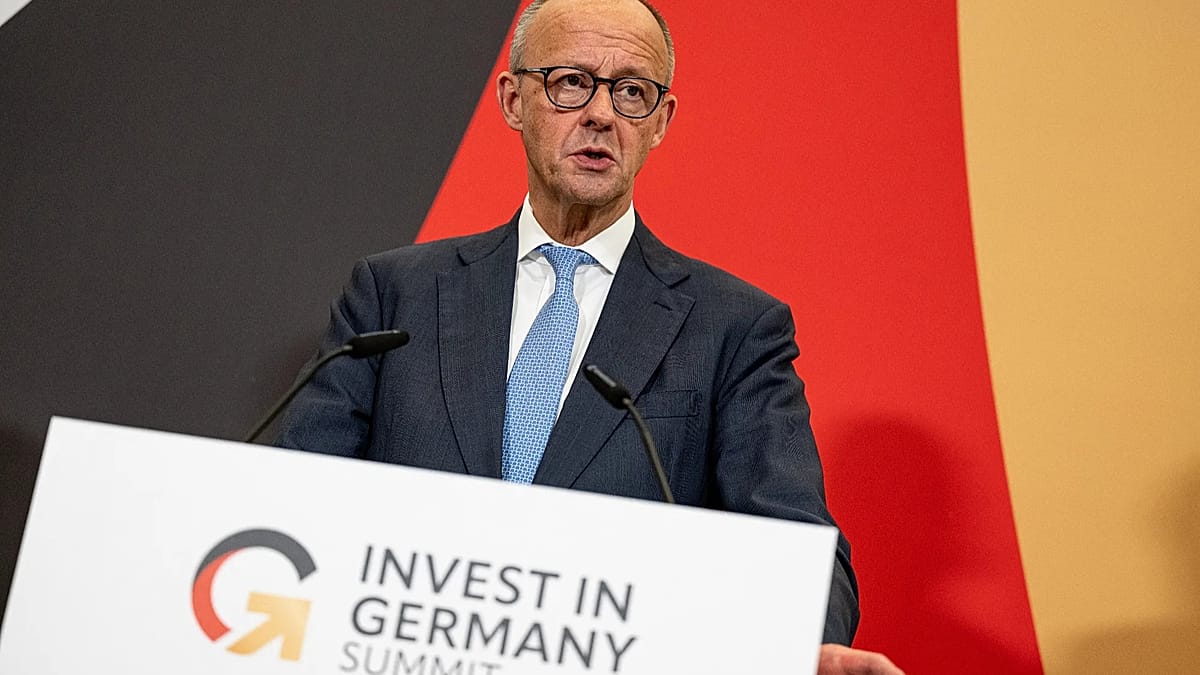
German Chancellor Friedrich Merz kicked off a three-nation tour of Asia on Tuesday with a clear message: Europe remains a safe and stable place to invest. Speaking in Singapore, the first stop before Japan and South Korea, Merz sought to reassure investors that the continent's fundamentals are sound, even as political headwinds gather in Berlin.
"There are no uncertainties in Europe," Merz told reporters after talks with Singapore's Prime Minister Lawrence Wong. "Under the federal government I lead, investment opportunities will be continuously improved." He added that he encounters "a great deal of confidence in Germany and in Europe as locations for investment."
The chancellor's upbeat pitch comes at a delicate moment. At home, his coalition has been shaken by the resignation of a key minister from the junior partner, Bärbel Bas, and by slipping approval ratings as support for the far-right Alternative für Deutschland (AfD) grows. In France, weeks of protests have been accompanied by widespread looting, adding to a sense of unease across the bloc.
Yet Wong struck a more patient note, saying Singaporean investors retain strong confidence in Germany and Europe. "They take a long-term view rather than one tied to a single election cycle," he said, suggesting that short-term political turbulence does little to dent the region's appeal.
Diversifying beyond China
Berlin has been actively seeking to broaden its economic and strategic partnerships, wary of both the reliability of the United States and China's emergence as a competitive rival. While China remains Germany's largest economic partner in Asia, it is increasingly viewed through a more cautious lens.
Merz emphasized that Singapore, Japan, and South Korea share "common interests" with Germany. "If we undertake these efforts together, then our independence from other countries will grow significantly," he said, without explicitly naming which countries he meant—though the implication was clear.
The trip is part of a broader German push to deepen ties with like-minded democracies in the Indo-Pacific, a region that has become a focal point for European diplomacy. Germany's recent business morale has shown signs of improvement, driven by a rebound in manufacturing, which could bolster Merz's case that the economy is on a firmer footing.
Still, the chancellor's domestic challenges are hard to ignore. The resignation of Bas, a prominent figure from the Social Democrats (SPD), has exposed fractures within the coalition. Merz's approval ratings have dipped, while the AfD has gained ground in polls, capitalizing on public discontent over migration and the cost of living.
In France, President Emmanuel Macron faces his own crisis, with protests turning violent in several cities. The unrest has raised questions about the stability of the eurozone's second-largest economy, though Merz's comments suggest he is keen to project an image of continental resilience.
For Asian investors, the message is one of continuity. "Europe's strengths—its rule of law, skilled workforce, and single market—remain intact," said one analyst in Singapore. "Political noise is part of the landscape, but the fundamentals are solid."
Merz's tour is also a signal of Germany's intent to play a more active role in shaping the region's security architecture. With the war in Ukraine ongoing and tensions in the Taiwan Strait simmering, Berlin is keen to align with partners who share its concerns about the global order.
The chancellor's itinerary includes stops in Tokyo and Seoul, where he is expected to discuss trade, technology, and defense cooperation. Germany has been particularly interested in deepening ties with Japan and South Korea in areas like semiconductors and green energy, sectors where both countries have significant expertise.
As Merz continues his charm offensive, the question remains whether his assurances will resonate beyond the boardrooms of Singapore. For now, the chancellor is betting that Europe's long-term appeal outweighs its short-term political noise.