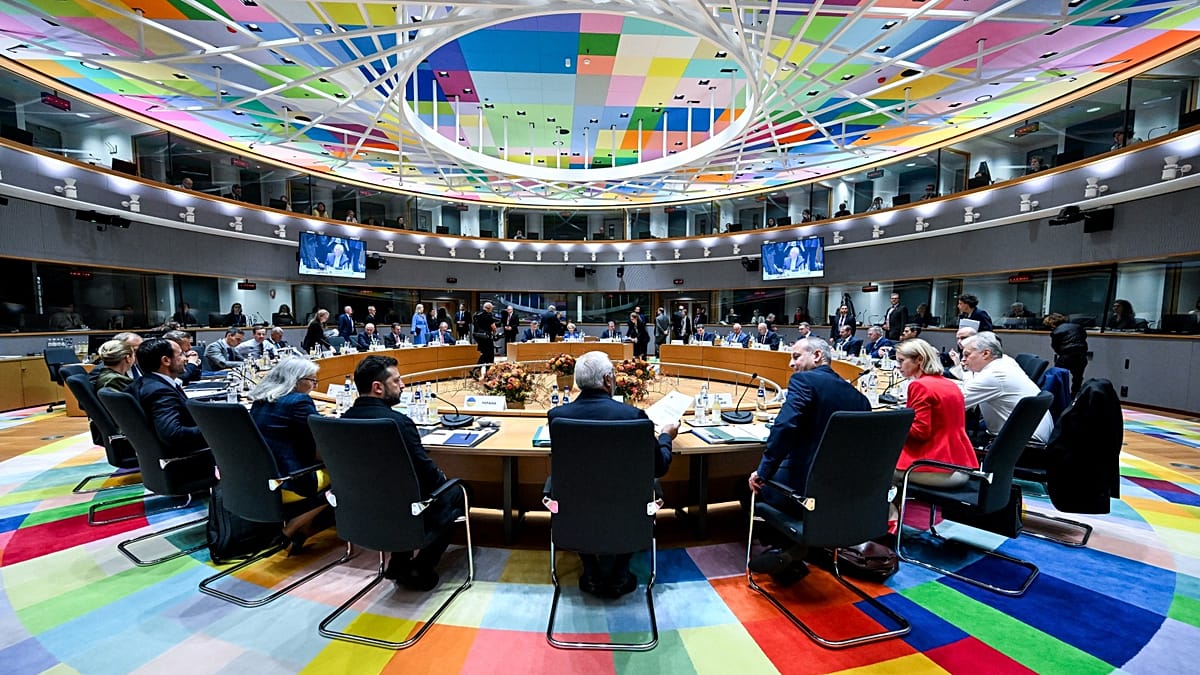
The European Union's next seven-year budget negotiations have entered a decisive phase, and the timing could hardly be more awkward. As member states clash over spending priorities, they must also confront a €70 billion hole in Ukraine's finances for 2027—a figure that was only confirmed at this month's summit in Brussels.
Kyiv's shortfall had long been anticipated, given Russia's escalating war and the strain on Ukraine's economy. But the scale of the gap has forced a change of agenda. The special summit originally planned for November to focus solely on the budget has been extended to two days, 26 and 27 November, to accommodate discussions on Ukraine. The European Commission has been asked to present options for bridging the gap, with joint borrowing emerging as the most likely route.
The EU is expected to cover roughly two-thirds of the request—about €46 billion—with allies such as the UK, Canada, Norway and Japan contributing the rest. Technically, the budget and Ukraine financing are separate files, but politically they are becoming inseparable. As one diplomat put it: “These are the most pressing issues for the remainder of the year, definitely.”
Two battles, one deadline
The entanglement is driven by two factors. First, both are about money. The budget fight pits the so-called “Frugals” (or “Sensible Six”) against the “Friends of Cohesion”. The Frugals—who are net payers—demand steep cuts across the board, while the Friends want to preserve larger envelopes for agriculture and cohesion policy.
Second, both face a pressing deadline set by the French presidential election. Marine Le Pen, the far-right candidate who leads in the polls, has vowed to cap France's contribution to the EU budget at €5 billion a year and has called any pre-election deal a “democratic scandal”. She has also promised to halt French support for Ukraine. President Emmanuel Macron has told fellow leaders that reaching an agreement between January and April would be “complicated”.
The prospect of a Le Pen victory weighs heavily on officials in Brussels. They admit that both issues—the budget and Ukraine—must be resolved by the end of the year, before the window of opportunity closes. As one national official warned: “Our internal cohesion is fragile. If that starts to unravel, the consequences for Ukraine could be even greater than anything Trump says or does.”
That official added: “We need a structural solution for financing Ukraine. We can't keep scrambling at the end of every year under pressure. Support for Kyiv needs to be properly built into the next budget. It's good that these discussions are coming together in November.”
Easier or harder?
Whether Ukraine makes the budget deal easier or harder remains unclear. One school of thought suggests it could ease the path, because the Frugals include some of Ukraine's largest bilateral donors—Denmark, Finland, the Netherlands, Sweden and Germany. A strong collective decision on Ukraine might make a larger budget more palatable to them. As another diplomat put it: “It might be helpful to get it done.”
But an alternative view is that the Frugals' insistence on cutting agriculture and cohesion funding could make it impossible for some Friends of Cohesion to back a Ukraine deal without facing a backlash at home. The Czech Republic, Hungary and Slovakia are signalling they will exempt themselves from any joint debt for Ukraine, and Bulgaria is expected to follow suit. All of them sit in the cohesion camp.
Slovak Prime Minister Robert Fico was blunt: “It would be very dangerous, and I want to make this absolutely clear, if anyone tried to link the financing of Ukraine to the budget.”
The talks will also unfold against a bleak backdrop of elevated energy prices, high borrowing costs and public discontent across Europe. The pressure on French public finances is a reminder of how fragile the political and economic environment has become.
Meanwhile, the EU is pushing for a seat at the table in any Ukraine peace talks, as the US shifts its stance. The EU's diplomatic efforts are intensifying, but the financing question remains the most immediate test of unity.
As the November summit approaches, the two issues are set to dominate the agenda. Whether they are resolved together or separately, the outcome will shape the EU's credibility and its ability to support Ukraine in the years ahead.