A US-brokered ceasefire in the Russian-occupied city of Oleshky, in southern Ukraine, came into effect early on Tuesday, offering a narrow window for humanitarian relief to reach thousands of trapped civilians. The local pause in fighting began at 3 am local time, ahead of an aid mission planned for later this week.
The ceasefire was announced last Friday by US First Lady Melania Trump, who said she had brokered the deal after talks with civilian negotiators from both Russia and Ukraine. Her office said she had also consulted UN officials who briefed her on the dire situation in Oleshky, a city on the eastern bank of the Dnipro River that has been under Russian control since the early days of the full-scale invasion.
Up to 2,000 residents remain stranded in Oleshky with dwindling food and medicine supplies, according to the UN. They are unable to leave because of explosive mines and the constant threat of drone attacks in the area. The ceasefire is intended to allow civilian officials from both sides to visit residents in their homes and assess their needs.
“Residents who wish to evacuate will receive coordinated support and transportation to their preferred destination. I anticipate some will want to go to Russia, and some to Ukraine,” Melania Trump said in a statement. The US-brokered talks are expected to resume next month, with a new round aimed at ending the war that has now lasted more than four and a half years.
Russian and Ukrainian negotiators, as well as the military commands of both countries, confirmed in separate statements that the ceasefire had begun. However, the pause in fighting applies only to Oleshky and does not extend to other parts of the front line. The US cable network Newsmax has said it was granted “exclusive television access” to accompany observers entering the city on Thursday.
Russian strikes hit Kyiv and Kharkiv
Minutes after the ceasefire took effect in Oleshky, multiple ballistic missile explosions shook Kyiv, and air alerts sounded across the country. A Russian strike damaged a major bridge spanning the Dnipro River in the capital, according to Mayor Vitaly Klitschko. “A strike hit the Southern Bridge. Metro infrastructure on the bridge was also damaged,” he wrote on Telegram, adding that train services across the bridge had been suspended.
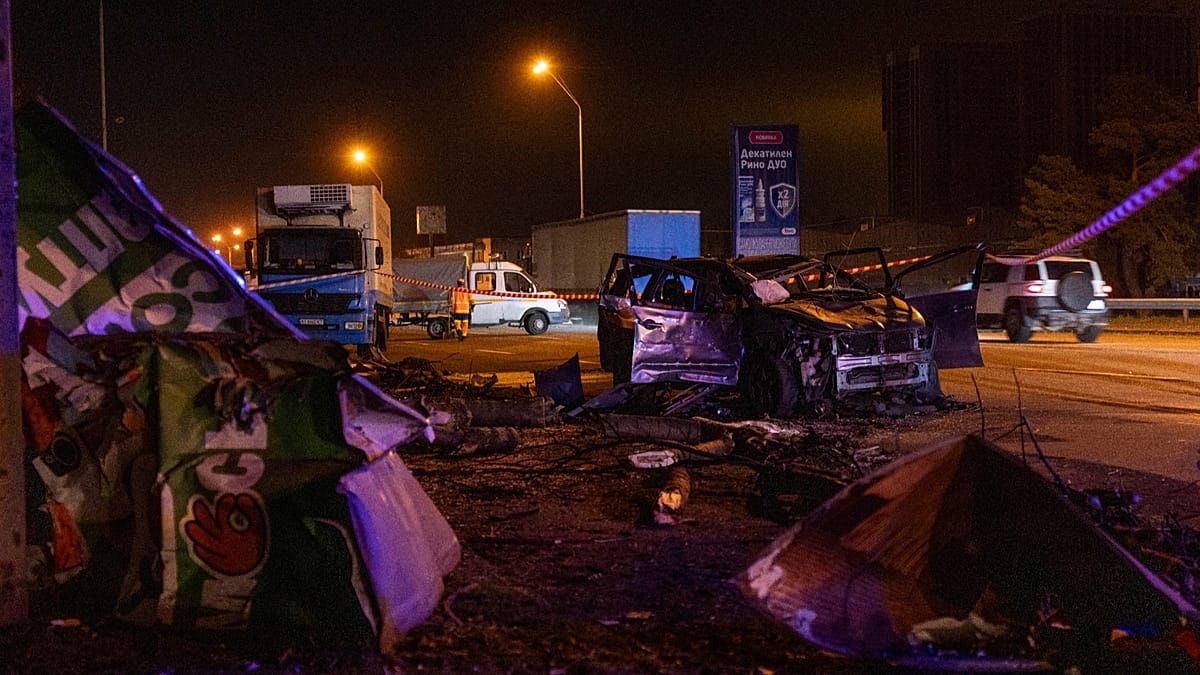
Late Monday, the capital had already come under attack when Russian ballistic missiles damaged the grounds of a university, killing one person and injuring ten others. Klitschko said the latest strikes had also damaged medical facilities. “A blast wave shattered the windows in an intensive care unit,” he said, adding that at another medical facility in the same district, windows were shattered in two wards, though no patients or staff were wounded.
In a separate attack, a building in a non-residential area was hit, with preliminary reports indicating one fatality near a supermarket. A strike near a university dormitory shattered windows, wounding a 20-year-old woman. Ukrainian President Volodymyr Zelenskyy condemned the attacks, saying “Russian ballistic missiles struck the grounds of a university in Kyiv and the area around it – effectively the campus, Kyoto Park, the area near a metro station, and residential buildings.” He stressed that “the missiles hit very crowded areas, and there is not a single military facility nearby. This was a strike directly on the city, on its infrastructure.”
In Kharkiv, Ukraine’s second-largest city, authorities reported that attacks late Monday killed two people and injured four. Zelenskyy wrote in an online post: “It is important that the world sees that Russia is showing nothing but a desire to kill and continue waging war.” The strikes came as Russian attacks across Ukraine have killed at least nine people in the past 24 hours, according to Ukrainian officials.
The contrast between the localised ceasefire in Oleshky and the continued bombardment of major cities highlights the challenges of negotiating a broader truce. While the US has pushed for a full cessation of hostilities, Moscow has shown little willingness to halt its air campaign. The upcoming talks, expected next month, will test whether the Oleshky model can be replicated elsewhere. Meanwhile, Zelenskyy has backed freezing the front line as a first step towards a wider ceasefire, but the latest strikes suggest that Russia remains intent on escalating the war.