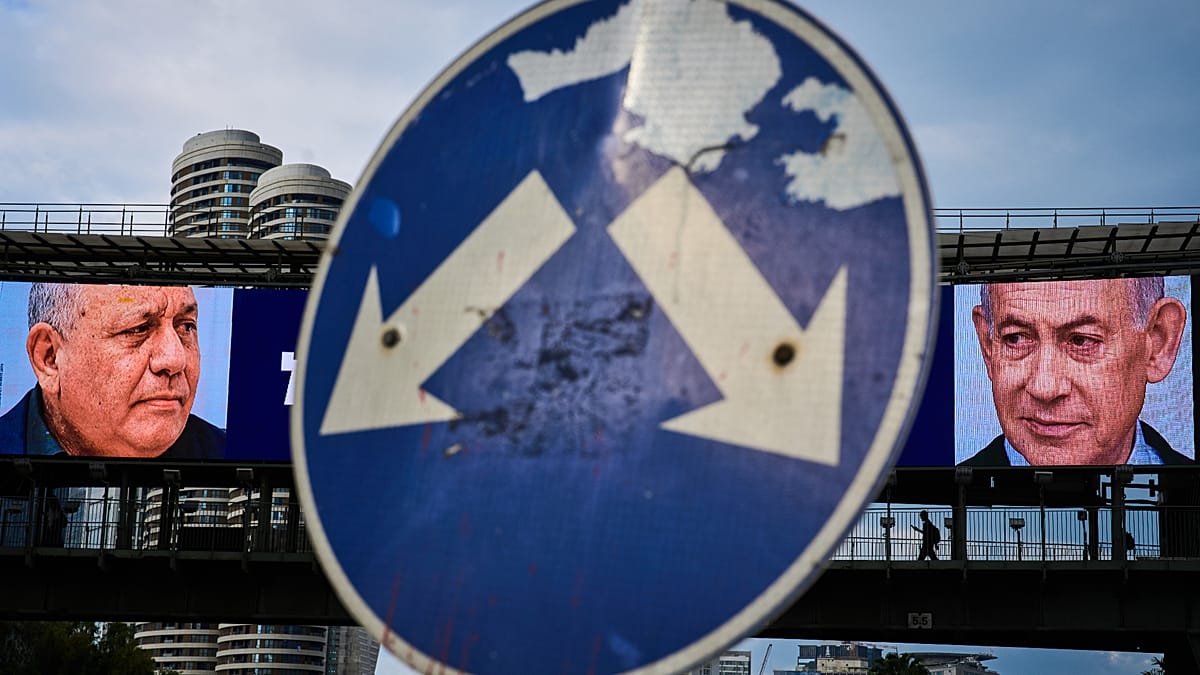
Israelis are heading to the polls today in a general election that polls suggest is too close to call, with Prime Minister Benjamin Netanyahu and his main centrist rival, Gadi Eisenkot, locked in a dead heat. The vote, the first since the Hamas-led attacks of 7 October 2023, is being closely monitored in European capitals, where the war in Gaza has strained ties with Israel.
Around 7.3 million people are eligible to vote, including hundreds of thousands of first-time voters. Tens of thousands of Israelis living abroad are reported to have flown home to cast their ballots, underscoring the high stakes of this election.
Netanyahu, 77, Israel's longest-serving prime minister with more than 19 years in office, has campaigned on his security record and his close relationship with US President Donald Trump, arguing that he is best placed to keep the country safe. Eisenkot, 66, a former military chief and political newcomer, leads the Yashar party and an informal bloc that stretches from the right to the centre-left. He has promised an independent state inquiry into the security failures surrounding the 7 October attack, something the current government has resisted.
A divided electorate
Voters at polling stations reflected the deep divisions in Israeli society. “He’s a man who’s not afraid to take action,” said 85-year-old Zipporah Bennett, explaining her support for Netanyahu. In Jerusalem, 65-year-old Alexandra said: “I want change in our country.”
Arab-majority parties, which represent around 21% of the population, could prove kingmakers if the result is as tight as expected, though neither leading candidate has publicly said he would partner with them. Analysts caution that replacing Netanyahu would not necessarily mean a break with the policies driving European criticism, pointing out that Eisenkot has opposed Palestinian statehood. He has, however, promised to crack down on violent settlers.
The election comes amid a backdrop of mourning for the victims of 7 October, with families of those killed and taken hostage still pressing for answers and accountability. The campaign has been dominated by questions of war and responsibility, as Netanyahu's fate hangs in the balance.
European stakes
The vote is being watched across Europe. The EU is Israel's largest trading partner, but relations have come under strain over the war in Gaza. In April, Spain, Ireland and Slovenia renewed a push to suspend the EU-Israel Association Agreement at a meeting of foreign ministers, but Germany and Italy blocked the move. The outcome of this election could shape the future of that agreement and broader EU-Israel relations.
European leaders are also mindful of the broader regional implications. A change in leadership in Jerusalem could alter the dynamics of the conflict, though many analysts doubt that Eisenkot would fundamentally shift policy on Palestinian statehood. Still, his pledge to address settler violence has been noted in Brussels and other European capitals.
As Israelis cast their ballots, the possibility of weeks of coalition talks looms. No party is expected to win an outright majority, and the horse-trading that follows could be as consequential as the vote itself. For Europe, the outcome will determine whether the continent's relationship with Israel enters a new phase or continues on its current, fraught trajectory.