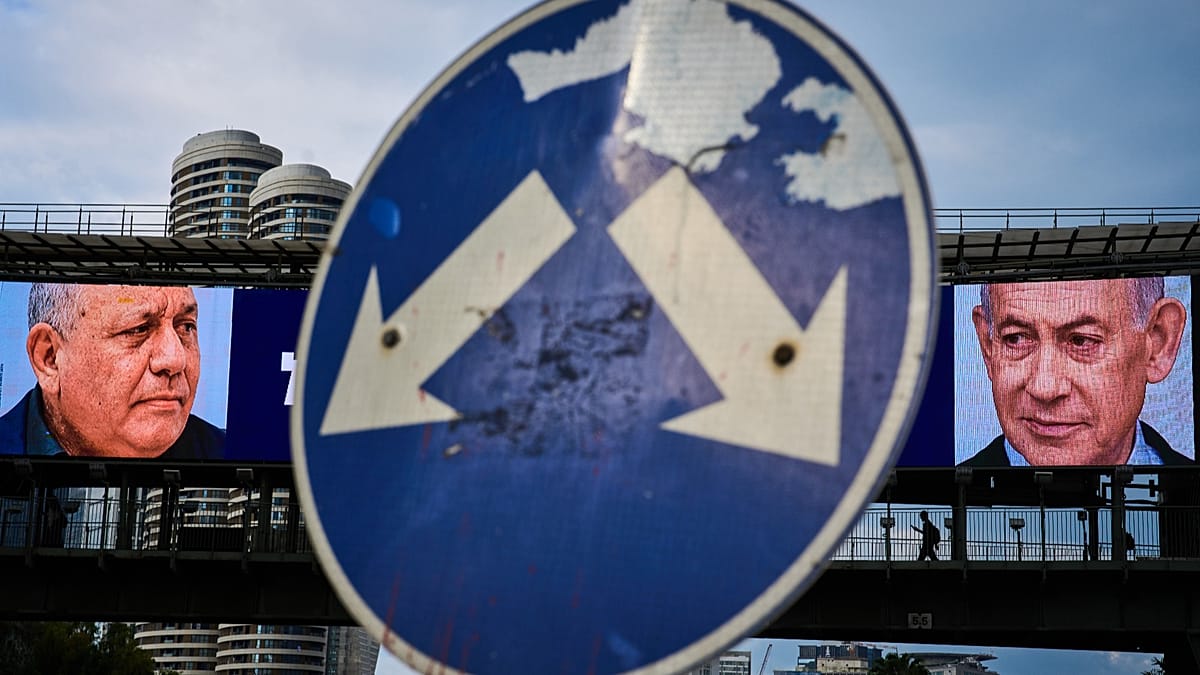
As Israelis head to the polls on Tuesday, the parliamentary election is less a contest of rival policy platforms than a referendum on the man who has dominated the country's politics for decades. Prime Minister Benjamin Netanyahu's future, national security, and the unresolved trauma of the 7 October 2023 attacks are the issues shaping the vote.
Eylon Levy, a former Israeli government spokesperson, told European Pulse that the debate over Netanyahu's leadership has become the central fault line in Israeli politics, making coalition-building increasingly fraught. "The question of whether he should or shouldn't be prime minister has contaminated, frozen, poisoned Israeli politics for a decade now," Levy said. "Like him or loathe him, he really is a once-in-a-century kind of leader."
Netanyahu, Israel's longest-serving prime minister, faces intense scrutiny over the security failures that allowed the Hamas-led assault on 7 October 2023, which killed more than 1,200 people and triggered the ongoing war in Gaza. His criminal trial on corruption charges adds another layer of division, with supporters seeing a vendetta and critics pointing to a leader unfit to govern.
Levy suggested that Netanyahu's eventual departure would fundamentally realign the political landscape. "The day after Netanyahu, whenever that happens, I think we can expect to see Israeli politics being realigned. Until then, the battle lines really are drawn around, yes Bibi or no Bibi," he said.
An election in the shadow of October 7
This is Israel's first election since the attacks, and the memory of that day permeates the campaign. Demands for a state commission of inquiry into the government's failures have grown louder, with families of victims and reservists pressing for accountability.
"These elections are taking place in the shadow of the October 7 massacre and that issue is absolutely everywhere," Levy told European Pulse. He identified three central issues: responsibility for the attacks, Hamas's continued rule in Gaza, and the social and economic costs of the war.
The question of who will govern Gaza after the conflict remains unresolved, fueling public anger and a sense of uncertainty. Political parties are competing over who can deliver lasting security, with right-wing factions advocating for a more aggressive military posture and centrist and left-leaning groups calling for a diplomatic horizon.
The war has also taken a heavy toll on Israeli society, with reservists called up for extended duty, businesses disrupted, and a housing crisis exacerbated by the need to rebuild communities near the Gaza border. The economic strain is a key concern for voters, many of whom feel the government has not done enough to support those affected.
Prospect of renewed war with Iran
Beyond domestic issues, Levy predicted that military hostilities with Iran could resume after the US midterm elections on 3 November. "I think that a return to war in Iran is extremely likely after the midterm elections," he said.
Levy described the current standoff with Tehran as unsustainable, pointing to tensions over the Strait of Hormuz and Iranian military activity in the region. He also suggested that US President Donald Trump was reluctant to resume hostilities before the midterms because of concerns about oil prices. "President Trump has said he doesn't want to return to the war before the midterms, clearly worrying what will happen to oil prices," Levy said.
According to Levy, Netanyahu would be likely to seek a more decisive outcome from any future confrontation, including the removal of Iran's leadership. Such a move would have profound implications for the entire Middle East and for European security, given the risk of wider escalation and the impact on energy markets.
The election comes at a time of regional flux. In Europe, the recent student-led political upheaval in Serbia has drawn attention to the fragility of democratic institutions, while Israel's own democratic resilience is being tested. The outcome of Tuesday's vote will be watched closely in Brussels and other European capitals, where concerns about the rule of law and the two-state solution remain central to EU-Israel relations.
As Israelis cast their ballots, the choice is not merely about who will lead the next government, but about the kind of country Israel will become. The question of Netanyahu's future, as Levy put it, is the lens through which all other issues are filtered. Whether he stays or goes, the next government will face the daunting task of rebuilding trust, addressing the failures of October 7, and navigating a volatile security environment.