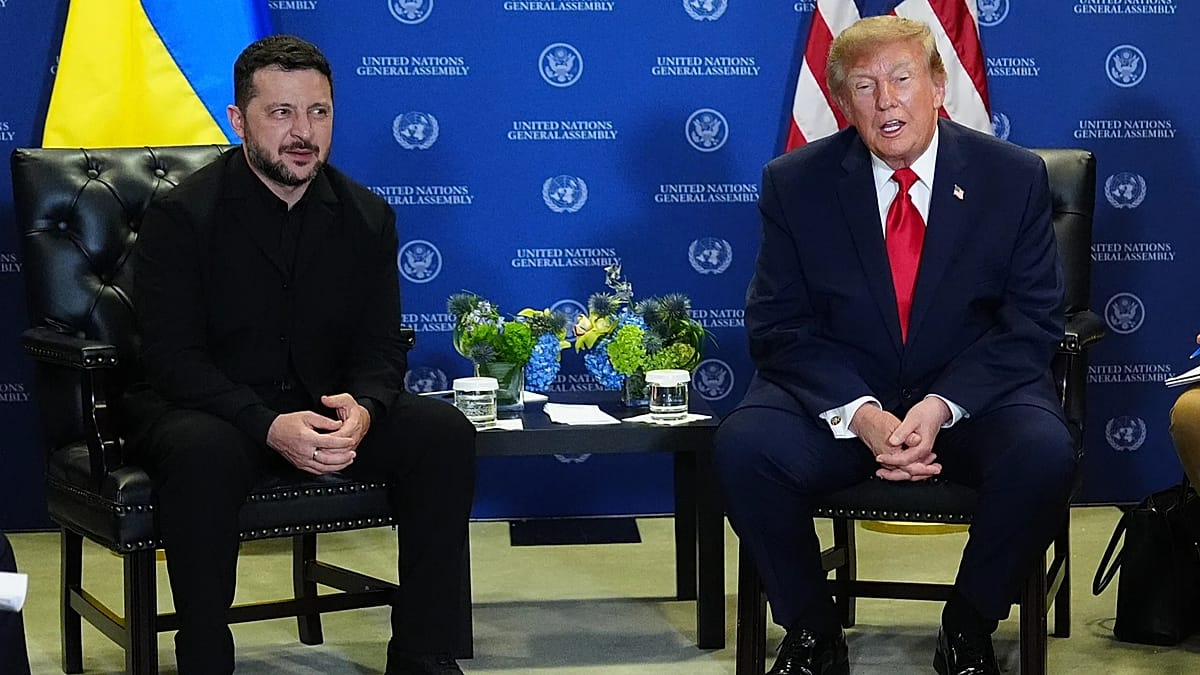
Ukrainian President Volodymyr Zelenskyy has confirmed that a trilateral meeting involving Ukraine, the United States, and Russia will take place in November, in a renewed effort to restart peace negotiations that have been stalled for months.
"We are ready to talk. If it's a territorial issue, it must be addressed at a leadership level. Other issues fall within the remit of the technical groups. All this can therefore be discussed in November," Zelenskyy said in an interview with Ukrainian television on Sunday.
The announcement comes amid intensified diplomatic activity by the Trump administration, which has been pushing for a swift end to the conflict. US envoy Steve Witkoff met with Zelenskyy and European leaders in Oslo on Tuesday, before travelling to St. Petersburg for talks with Russian President Vladimir Putin on Wednesday.
Following those meetings, both Kyiv and Moscow expressed readiness to resume direct talks under Washington's mediation. Putin's foreign affairs adviser, Yuri Ushakov, told reporters that the Russian leader had agreed "in principle" to restart negotiations after 10 November. The talks, he said, would focus on "building a security system for Russia and Ukraine after the conflict ends."
Zelenskyy has voiced support for the US push to accelerate the process. "The agenda is clear: to end the war, bring peace closer, and, as I understand it, prepare everything for a meeting at the leaders' level," he said in an audio message issued late Wednesday.
The three countries held three rounds of negotiations earlier this year, meeting twice in Abu Dhabi in January and February, followed by further talks in Geneva in February. Those discussions, however, failed to produce a breakthrough, and fighting has continued unabated.
European concerns over exclusion
The prospect of trilateral talks has raised concerns in European capitals, where leaders fear being sidelined from decisions that will shape the continent's security architecture. The EU has been pushing for a seat at the table, as reported in EU efforts to join peace talks, but so far Washington and Moscow have shown little appetite for expanding the format.
European officials have pointed to the broader implications of any settlement, particularly for NATO's eastern flank and the future of European security. The Budapest reset has signalled a new chapter in EU-Hungary relations, but the bloc's unity on Ukraine remains fragile.
Meanwhile, the human cost of the war continues to mount. Overnight Russian strikes killed four people in Dnipro and wounded 28 others across Ukraine, underscoring the urgency of any diplomatic breakthrough.
Analysts remain cautious about the prospects for a meaningful agreement. The territorial question, which Zelenskyy says must be addressed at the leadership level, remains the most contentious issue. Russia currently occupies roughly a fifth of Ukrainian territory, and any deal would require significant concessions from one or both sides.
For now, the November meeting offers a glimmer of hope, but the path to peace remains fraught with obstacles. As European leaders watch closely, the coming weeks will be critical in determining whether this diplomatic push can translate into a lasting ceasefire.