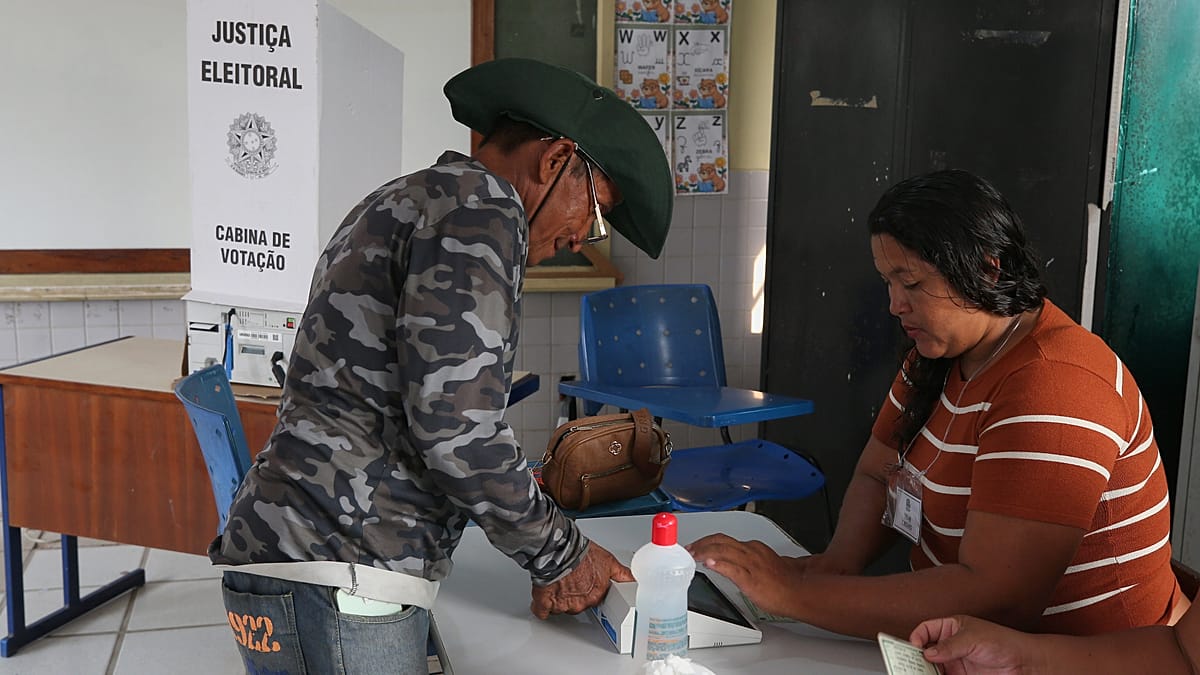
Brazil's presidential runoff on Sunday drew voters from the far reaches of the Amazon to the urban centers of Rio de Janeiro and São Paulo, with many braving long queues and unconventional journeys to cast their ballots. The election, which pits former president Luiz Inácio Lula da Silva against incumbent Jair Bolsonaro, is seen as a decisive moment for the country's democratic future and its role on the global stage.
In the Amazon, voters paddled canoes along rivers to reach polling stations, while in Rio de Janeiro, lines stretched for blocks as citizens waited patiently under the tropical sun. In Brasília, a giant inflatable doll of Lula was spotted among crowds, symbolizing the fervor that has marked this campaign. The high turnout reflects the intense polarization that has divided families, communities, and even political institutions.
A continent watching closely
While the election is a domestic affair, its outcome carries significant implications for Europe. Brazil is a key partner for the European Union on trade, climate change, and international diplomacy. The result could influence negotiations on the EU-Mercosur trade agreement, which has stalled over environmental concerns, particularly regarding deforestation in the Amazon.
European leaders, from Brussels to Berlin, have been monitoring the race with keen interest. A Lula victory would likely signal a return to more robust environmental protections and a more active role in global climate talks, aligning with the EU's green agenda. Conversely, a Bolsonaro re-election could further strain relations, given his administration's record on deforestation and its skepticism toward international climate commitments.
The election also resonates with European observers because of the broader trend of populist and anti-establishment movements that have swept across the continent. From Hungary to Poland, leaders have challenged EU norms on rule of law and democratic backsliding, and Brazil's contest offers a parallel case study in democratic resilience.
Voter experiences and regional contrasts
In the Amazonian state of Pará, indigenous communities traveled for hours by boat to reach remote polling stations. Many expressed hope that the election would bring change, citing concerns over land rights and environmental protection. In contrast, voters in São Paulo, Brazil's financial hub, cited economic stability and anti-corruption measures as their top priorities.
In Rio, the atmosphere was a mix of tension and civic pride. "I've never seen so many people at my polling station," said Maria da Silva, a 54-year-old teacher. "It shows that people care about the future of our country." Similar scenes unfolded in other major cities, with voters braving long waits and occasional technical glitches to exercise their democratic right.
The election has also drawn international attention, with observers from the Organization of American States and the European Union monitoring the process. The EU has a particular interest in ensuring the vote is free and fair, as it seeks to strengthen democratic institutions in Latin America.
As the results begin to trickle in, both campaigns have urged patience and calm. The Superior Electoral Court has implemented measures to ensure transparency, including a public audit of the electronic voting system. Still, Bolsonaro has repeatedly questioned the reliability of the voting machines, raising fears of a contested outcome.
For Europe, the stakes are clear. A stable and democratic Brazil is essential for addressing global challenges, from climate change to food security. The EU has already signaled its willingness to work with whichever candidate emerges victorious, but the tone and substance of that cooperation will depend on the election's outcome.
As Brazilians await the final count, the world watches with bated breath. The result will not only shape Brazil's future but also send ripples across the Atlantic, influencing everything from trade negotiations to environmental diplomacy. For now, the focus remains on the voters, who have shown remarkable determination to make their voices heard, whether by canoe or by foot.