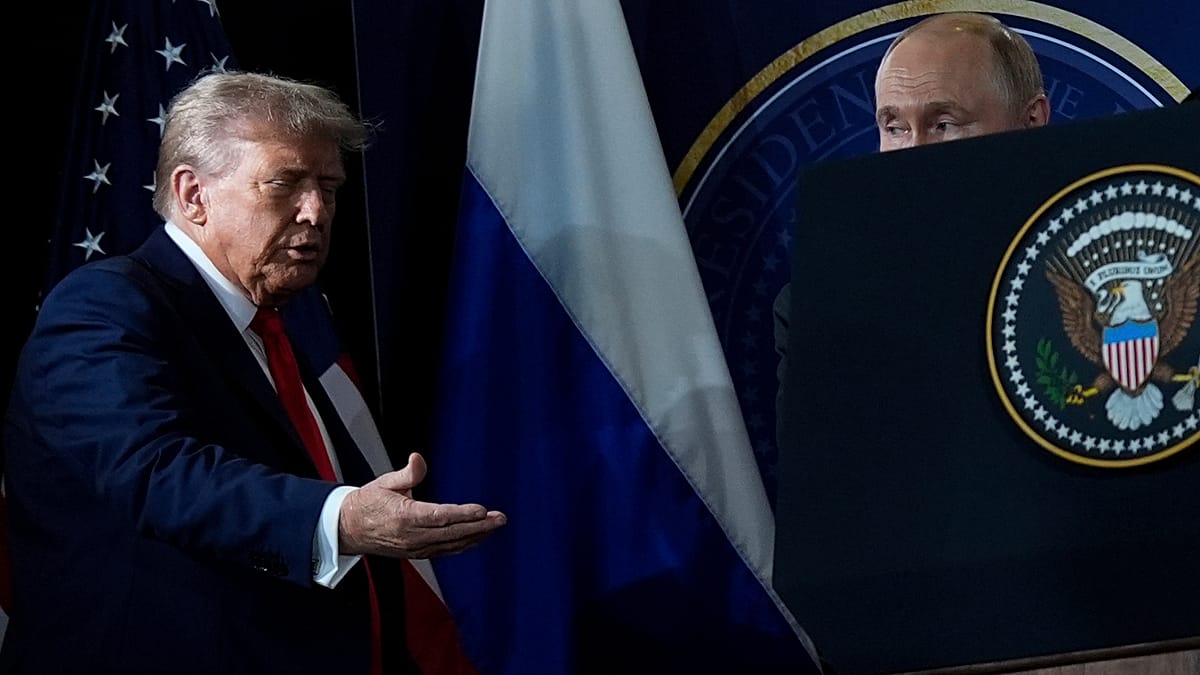
From Brussels, the signals out of Washington and Moscow are growing more disquieting by the day. Russian President Vladimir Putin has floated the idea of a trilateral meeting with US President Donald Trump and Chinese leader Xi Jinping to discuss a settlement in Ukraine—a war that Putin himself started. Trump, for his part, has not dismissed the notion, even suggesting that such a gathering could be beneficial for global stability if it also touched on denuclearisation.
If this prospect does not send a chill down the spine of every European leader, it should. Putin is angling for a modern-day Yalta—a summit that would restore Russia's great-power status and redraw the map of influence, much as the 1945 conference did in the aftermath of World War II.
The Ghost of 1945
In February 1945, with the defeat of Nazi Germany imminent, Franklin D. Roosevelt, Winston Churchill, and Joseph Stalin met in the Crimean resort of Yalta to shape the post-war order. The agreements reached there laid the groundwork for spheres of influence across Europe, with the Soviet Union soon tightening its grip on nearly all of Eastern Europe. Churchill, despite his wartime heroism, left the conference disillusioned. He foresaw that the Soviets would swallow half the continent, leaving it divided by an Iron Curtain for decades. Poland, the Baltic states, much of Central Europe, and parts of the Balkans would be sacrificed—and he was right. Yet he had little choice but to accept the deal.
Yalta not only dictated the terms of a new world order but also set the stage for the Cold War. The echoes of history are cruel: Yalta itself has been under Russian occupation since 2014, following Moscow's illegal annexation of Crimea.
Now, Putin seems to want a sequel. A modern-day triumvirate of Trump, Xi, and Putin would, in his vision, divide the world for the next century—one piece for you, another for me. The likely agenda would include Ukraine and Taiwan. If Yalta 2.0 functions like its predecessor, the three would strike a backroom deal, and the rest of the world would be left to accept the fait accompli.
Putin would emerge as the clear winner, which is precisely why he is pitching this meeting. Russia is a nuclear power, but it is no longer a great power. Putin, who once called the collapse of the Soviet Union “the greatest geopolitical catastrophe of the century,” has long sought to restore Moscow's lost influence. If Trump agrees to meet, he would hand the Russian leader his most significant strategic victory since the Soviet Union's collapse.
Such a move would also alienate America's allies. Trump may not value them, but they are indispensable. Washington's global policing role has brought it lucrative deals, enormous influence, and military bases that serve its own security—whether the president admits it or not. A new Yalta without allies would certify the death of the West as we know it.
Europeans should be deeply concerned, as they too are on the chopping block in this dangerous ménage à trois. A backroom deal over Kyiv's head would spell the end of the transatlantic relationship and erode NATO's deterrence. Brussels may insist it is in the game, but much is happening behind its back already.
The EU needs its own peace plan and a clear definition of what a good outcome entails—for Ukraine and for Europe. This inevitably forces the bloc to confront uncomfortable questions it has long avoided: which territories Ukraine may not recover, and what security guarantees Europe must provide in exchange for a US backstop. That means boots on the ground to ensure peace, and it cannot be just France and the UK.
Funding for Ukraine must also be ring-fenced as political cycles turn against continued support. It is expensive, and it is becoming unpopular as protests over the cost of living mount. European politicians need to do a much better job of explaining that our security is at stake too, with more than 4,000 kilometres of Europe's eastern flank at play. It is in Europe's interest to reach a fair deal in Ukraine; the opposite will come back to haunt us.
The first step is to appoint a special envoy who can secure a seat at the negotiating table, set out a clear negotiating position, and report back. This should have been done a year ago. The “Trump whisperer” strategy does not work; it is futile as long as Europe is not represented by someone with a political mandate.
If you are not at the table, you are on the menu. Serve it while it's hot.