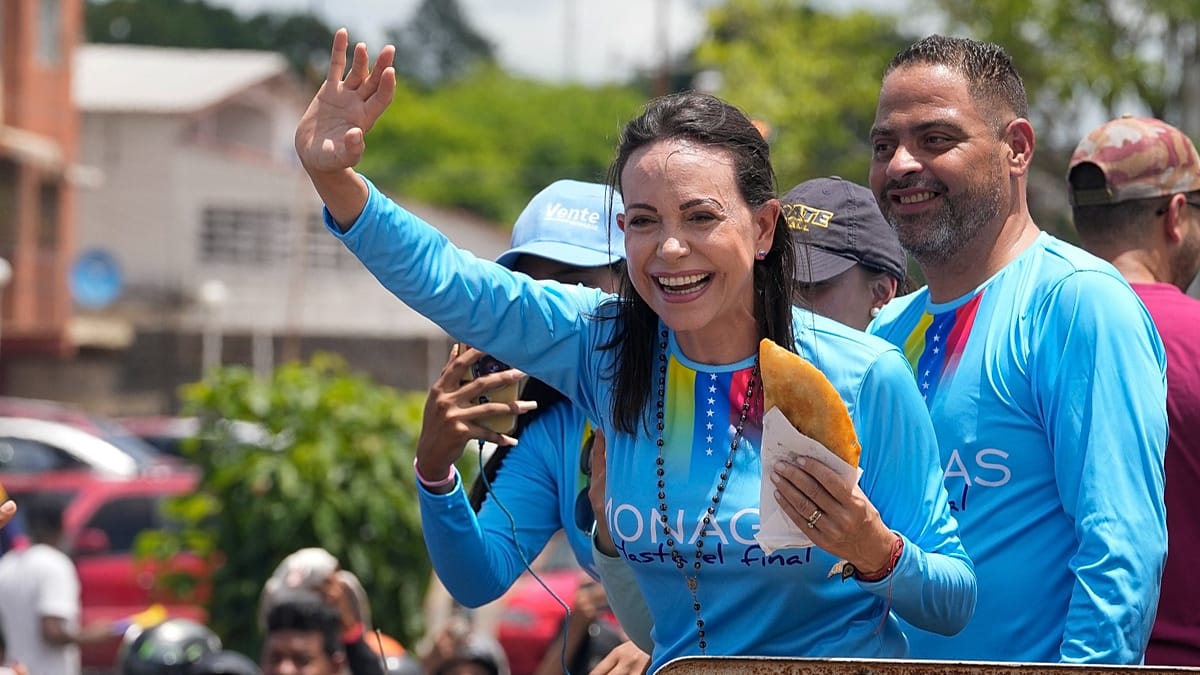
María Corina Machado, the Venezuelan opposition leader and Nobel Peace Prize laureate, has returned to her homeland after nearly ten months abroad. She announced her arrival on social media platform X, writing simply: "I am here. With you."
Machado left Venezuela covertly in December 2025 to receive the Nobel Peace Prize in Oslo. Shortly after, US forces seized longtime president Nicolás Maduro and flew him to New York to face criminal charges. Since then, Washington has allowed Maduro's deputy, Delcy Rodríguez, to serve as interim president.
According to her party, Machado attempted to return on seven occasions over the past three months, from the United States, Panama, and Curaçao, but was repeatedly blocked by Venezuelan authorities. Many observers suspected that Washington played a role in preventing her return, given US President Donald Trump's repeated expressions of satisfaction with Rodríguez. US Secretary of State Marco Rubio has denied those claims.
A political comeback under scrutiny
Machado has spent the last few months trying to regain her place on Venezuela's political stage, while talks on the country's future moved forward without her direct participation from within. This past week, she called on Venezuelans to take to the streets and demanded that a date be set for presidential elections, one of her main demands of the Rodríguez government.
She had accused the Rodríguez government of fearing her return. Now that she is back, the question is no longer when she would manage to return, but what role she will be able to play in a political landscape shaped by negotiations between Chavismo, different sectors of the opposition, and the United States.
Her return also comes at a time of heightened political tension across the region, with several European governments watching closely. The European Union has maintained a cautious stance, balancing support for democratic opposition with the need to engage with the de facto authorities in Caracas. The bloc's foreign policy chief has repeatedly called for a peaceful and democratic resolution to Venezuela's crisis.
Machado's presence in Venezuela could shift the dynamics of the opposition, which has been fragmented between those willing to negotiate with the government and those who, like her, have called for a more confrontational approach. Her ability to mobilize supporters will be tested in the coming weeks, especially if she follows through on her call for street protests.
Meanwhile, the international community remains divided. While the United States has recognized Rodríguez as interim president, several European countries have not formally done so, preferring to wait for a negotiated solution. The situation is further complicated by the ongoing legal proceedings against Maduro in New York, which have created an unprecedented diplomatic challenge.
For now, Machado's return marks a new chapter in Venezuela's turbulent politics. Whether she can translate her symbolic presence into concrete political gains remains to be seen, but her arrival has already energized her supporters and raised the stakes for the Rodríguez government.