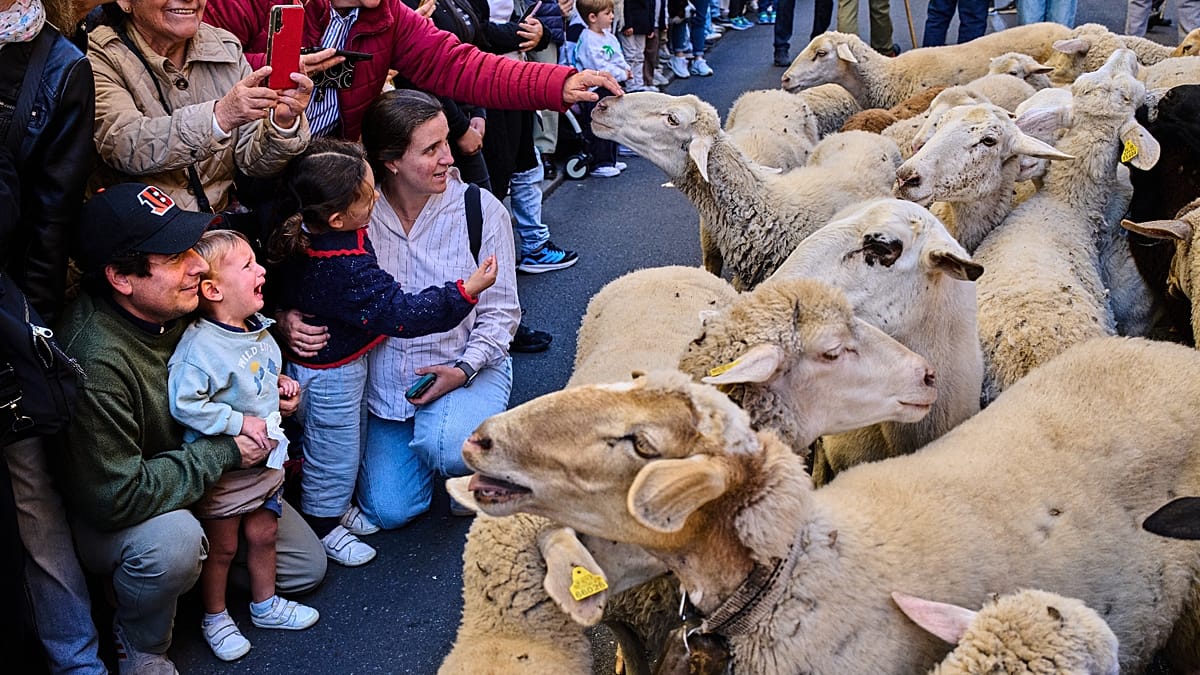
On a crisp Sunday morning, the sound of bleating replaced the usual hum of traffic in central Madrid as more than 1,400 sheep and goats trotted through the city's grand boulevards. The occasion was the 33rd annual Transhumance Festival, a celebration of the ancient practice of moving livestock between seasonal grazing grounds—a tradition that has shaped Spain's rural landscape for centuries.
Spectators lined the streets, many with children on their shoulders, to watch the flock pass by landmarks such as the Puerta del Sol and the Plaza de Cibeles. Shepherds in traditional woolen cloaks and wide-brimmed hats led the animals, while bells clanked rhythmically against the asphalt. The festival, which began in 1994, is partly a protest itself: it defends the rights of shepherds to use historic drovers' routes that have been encroached upon by urban development and modern infrastructure.
A route adjusted for urban tensions
This year, organizers made a notable change to the procession's path. To avoid a scheduled housing protest in the city center, the flock was diverted along a slightly different route. The decision reflects the growing sensitivity around housing issues in Madrid, where rents have soared and evictions have sparked public anger. The city has seen recent demonstrations over pensions and living costs, and housing has become a flashpoint in local politics.
The festival's organizers emphasized that the change was made in a spirit of cooperation. "We want to celebrate our heritage without adding to the tensions that already exist in the city," said a spokesperson for the Trashumancia y Naturaleza association, which coordinates the event. "The sheep are not here to compete with anyone's right to protest."
Madrid's housing crisis has drawn comparisons to other European capitals. In Lisbon, thousands recently gathered to demand affordable housing under the slogan "A house cannot be a privilege", while similar grievances have fueled protests in Paris, Berlin, and Amsterdam. The transhumance festival, with its rural roots, offers a different lens on the pressures facing Spanish cities.
An ancient practice with modern relevance
Transhumance—the seasonal migration of livestock—has been practiced in the Iberian Peninsula for over 6,000 years. The network of cañadas, or drovers' roads, spans more than 125,000 kilometers across Spain, and some of these routes pass directly through what is now Madrid. The festival is a reminder that the city was once a pastoral crossroads, not just a political and financial hub.
Beyond the spectacle, the event carries a serious message about biodiversity and sustainable land management. Shepherds argue that their traditional methods help prevent wildfires, maintain soil health, and support a range of plant and animal species. In an era of climate change, these practices are gaining renewed attention from ecologists and policymakers across the European Union.
The festival also highlights the economic pressures facing Spain's livestock sector. Young people are increasingly reluctant to take up shepherding, and the average age of active shepherds is over 60. "We are not just preserving a folkloric image," said María González, a veterinarian who attended the event. "We are trying to keep a profession alive that is essential for our countryside."
Madrid's city council has supported the festival since its inception, and this year's edition included educational workshops and exhibitions on rural life. For many spectators, the sight of sheep trotting past modern glass towers was a striking juxtaposition—one that sparked conversations about the relationship between urban and rural Spain.
As the flock made its way back to the outskirts, where trucks awaited to return them to their home pastures, the festival concluded with a sense of continuity. For one day, the ancient and the contemporary coexisted on Madrid's streets, offering a brief, woolly respite from the city's usual pace.