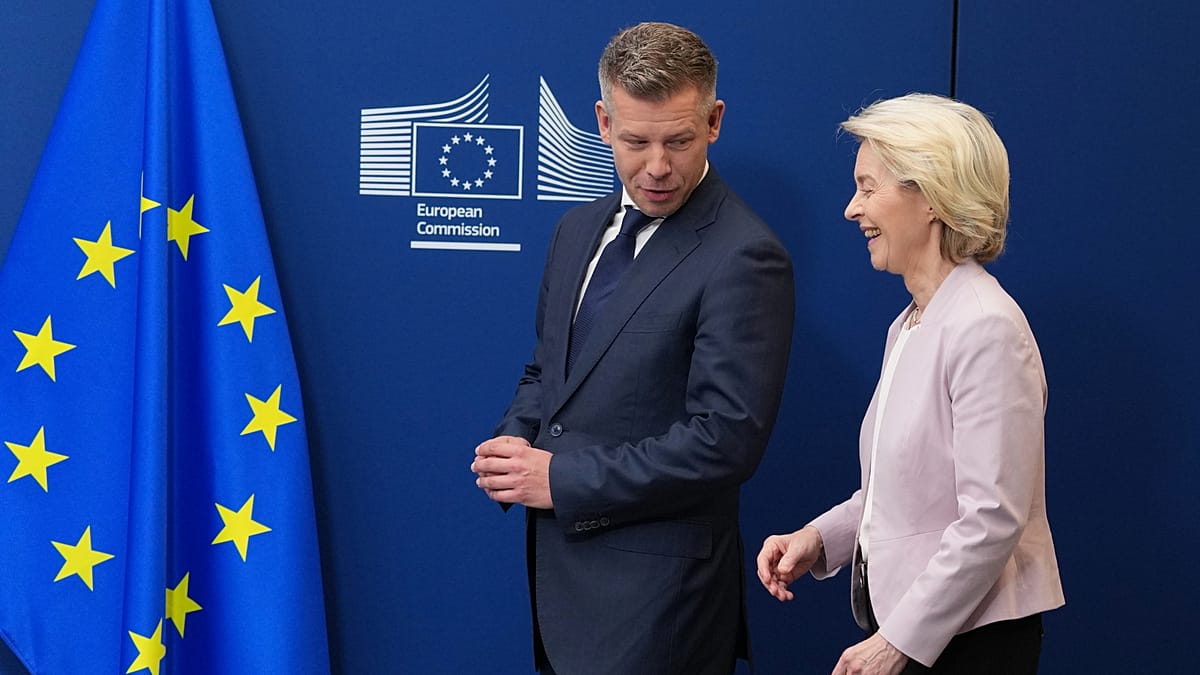
European Commission President Ursula von der Leyen and European Council President António Costa are in Budapest today for the 70th anniversary of Hungary's 1956 anti-Soviet uprising, in what is being read as a clear signal of a new chapter in EU-Hungary relations. Von der Leyen is expected to address parliament alongside Prime Minister Péter Magyar, marking a striking turnaround after years of acrimony under his predecessor, Viktor Orbán.
The thaw is all the more notable given that von der Leyen was once depicted on Hungarian billboards as a public enemy. She will now speak in the same chamber where, just months ago, Orbán lashed out at the EU. The commemoration is the first major international event for Magyar since he took office in May, and his invitation to Ukrainian President Volodymyr Zelenskyy—first reported by Euronews—signals a desire to reset ties with Kyiv. Zelenskyy is unlikely to attend, but diplomatic relations between Ukraine and Hungary have improved dramatically since Magyar's election.
Yet Budapest surprised EU diplomats earlier this week by blocking the next steps in Ukraine's accession talks, despite Kyiv having met previous demands. The move underscores the delicate balancing act facing the new Hungarian government as it seeks to mend fences with Brussels while maintaining its own political base.
French President Emmanuel Macron had been due to attend but cancelled his trip amid riots in France. Moldovan President Maia Sandu and Georgian Prime Minister Irakli Kobakhidze are both expected in Budapest.
Putin's latest rhetoric and the scramble for peace
Meanwhile, Vladimir Putin has offered yet another remarkable explanation for Russia's war against Ukraine: Moscow, he claims, does not want to fight its neighbour—it is Ukraine that insists on fighting Russia. He also reiterated that Russians and Ukrainians are effectively "one people," a narrative Moscow has long used to justify its invasion and occupation. Putin expressed confidence that an agreement could be reached, provided it serves Russia's imperial interests. "Well, then it will be otherwise," he warned, promising that Russia would achieve all its "objectives" if Ukraine does not agree.
Zelenskyy is awaiting a briefing from US envoy Steve Witkoff on Friday, followed by further consultations between Ukrainian, American, and European teams. As diplomacy hangs in the balance, Moscow continues its military pressure. Overnight on Thursday, Russia launched ballistic missiles carrying cluster warheads at Kyiv, targeting the historic city centre and damaging monastery buildings, homes, shops, and cafés.
Europe is also grappling with Donald Trump's embrace of Putin, which has revived fears that the two presidents might secretly thrash out a deal that ends in Ukraine's capitulation. Moscow's pitch for a summit between Trump, Putin, and Chinese President Xi Jinping has further fuelled the impression that Europe's security architecture is hanging by a thread. "It's very disturbing. It's terrifying," a senior official said. "We're simply not built to operate in this kind of ruthless transactional environment."
Despite the alarm, European officials insist that engagement with the Trump administration must continue to ensure the European point of view is reflected in the peace process. For Ukraine, European presence is fundamental to counter Washington's transactional approach. Russia has indicated it is prepared to resume trilateral talks at the technical level with the US and Ukraine in mid-November. Brussels hopes the format can expand into multilateral talks to include European representatives, though it is far from guaranteed that Moscow would agree.
The stakes are high, and the coming weeks will test whether Europe can translate its diplomatic weight into a seat at the table. As Russian strikes continue to kill civilians, the urgency for a credible peace process grows.
PHP security flaw exposes European web vulnerabilities
In a separate but significant development, a critical security flaw in the PHP programming language—which powers a large portion of the internet—has forced organisations worldwide to shut down websites. The bug, which went undetected for over a decade, was uncovered with the help of AI models from OpenAI and Google, turning a long-suspected weakness into a working attack.
European institutions and governments have been particularly affected. The Dutch government pulled its DigiD digital identity system, the Overheid.nl portal, and the lower house of parliament's website, with the Port of Rotterdam, hospitals, and the country's five largest political parties following suit. Even the Dutch National Cyber Security Centre took its own site down. Finland's state IT provider Valtori switched off government web services wholesale as a precaution, France's Interior Ministry put local administration sites into maintenance mode, and Germany's federal IT service ITZBund took down several portals.
CERT-EU, the cybersecurity service for the EU institutions, went further than most, telling any organisation unable to patch immediately to take its websites offline rather than risk being hacked. The European Commission, ENISA, CERT-EU, Europol, and the EU's network of national cyber response teams issued a joint statement urging organisations to act immediately, prioritising systems exposed to the internet.
The incident highlights the fragility of digital infrastructure that underpins modern governance and commerce. As Brussels rethinks EU-wide taxes and other policy priorities, cybersecurity remains a pressing concern for the bloc's resilience.