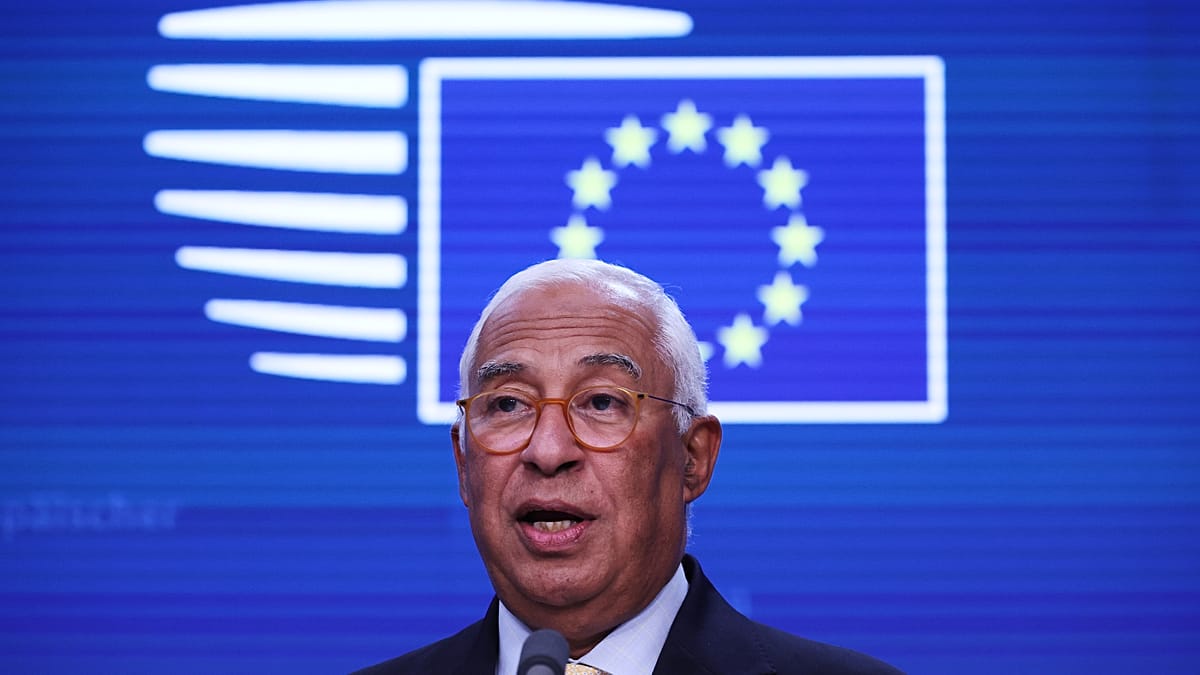
European Council President António Costa is back at the drawing board, searching for new sources of EU-wide revenue to fund the bloc's next long-term budget. Last week's summit in Brussels ended without a breakthrough, as national governments remain deeply divided over how much they are willing to contribute.
With capitals reluctant to increase their payments, Costa is exploring a range of options to raise money directly for the EU budget: taxes on large corporations, digital services, tobacco, carbon emissions, and even online gambling. As negotiations enter a critical phase, few ideas are being ruled out.
“To reach an agreement, we need to keep national contributions at a reasonable level, while preserving our ambition and the means to deliver on our common priorities,” Costa told reporters after the summit. “For this to be possible, it is fundamental to consolidate the work on the new own resources.”
During his tour of European capitals, Costa has repeatedly made the same argument: without fresh EU-wide taxes, it will be impossible to reconcile strained national budgets with the bloc's growing spending ambitions—from defence and competitiveness to climate action and enlargement.
An Irish compromise, but little consensus
The Irish presidency of the Council put forward a compromise proposal, but it has drawn criticism from all sides. Thomas Byrne, Ireland’s Minister of State for European Affairs, outlined three tests for new own resources: they must command unanimity, deliver substantial funds, and be ready by 1 January 2028.
The European Parliament was particularly disappointed. Czech MEP Danuše Nerudová said the presidency “refused to take any decision on the revenue side, proposing only minor adjustments.” She added that none of Parliament’s proposals were taken on board, despite positive feedback from many member states.
One of the most contentious ideas is the Corporate Resource for Europe (CORE), a levy on large companies. Critics argue that taxing businesses runs counter to the EU’s competitiveness agenda, especially at a time when the bloc is trying to attract investment. The European Commission defends CORE, noting it would only apply to firms with a net annual turnover above €100 million, and that the contribution would typically be lower than executive bonuses.
Now, the Commission is examining whether CORE could be combined with a digital levy—a proposal that risks angering Washington, since most of the world’s largest tech firms are American. Under the emerging idea, the tax would not target a specific sector; instead, the threshold would be set high enough to capture mainly large foreign companies, whether American or Asian.
Other revenue sources face headwinds
As some options stall, others are also running into opposition. One proposal would divert 30% of revenues from the EU’s Emissions Trading System (ETS) into the EU budget. Poland has been particularly vocal against this, and the issue is so politically sensitive in Warsaw that the government may struggle to accept it ahead of next year’s elections.
The Irish compromise also kept the Tobacco Excise Duty Own Resource (TEDOR), which would see member states pay the EU a 15% call rate on tobacco excise duties. Governments fear it could fuel the black market and lead to a drop in quality. Luxembourg, though a small net contributor, is especially opposed and may use its political capital to block it.
Some proposals have broader support. A revenue source linked to the Carbon Border Adjustment Mechanism (CBAM), which puts a carbon price on imports like steel and cement, is relatively uncontroversial. A tax based on the amount of electronic waste each country produces is also largely accepted, with most remaining issues being technical.
However, Parliament’s proposed tax on online gambling has met strong opposition from Malta, which hosts most of the EU’s betting websites. A tax on capital gains from crypto assets is widely seen as extremely difficult to implement, given the market’s volatility and uncertain yields.
Greece has suggested coordinating national 6G spectrum auctions to finance the EU budget, but member states have long resisted harmonising spectrum allocation, which traditionally brings in significant national revenue.
“Now is the moment to evaluate the situation and assess the best way forward. We do not exclude taking on board any proposals,” an EU official with direct knowledge of the matter told Euronews on condition of anonymity.
As Costa prepares to steer the next phase of negotiations, the challenge is clear: finding revenue sources that can command unanimity, deliver real money, and be operational by 2028. With national budgets tight and the bloc’s ambitions growing, the search for new own resources is far from over.