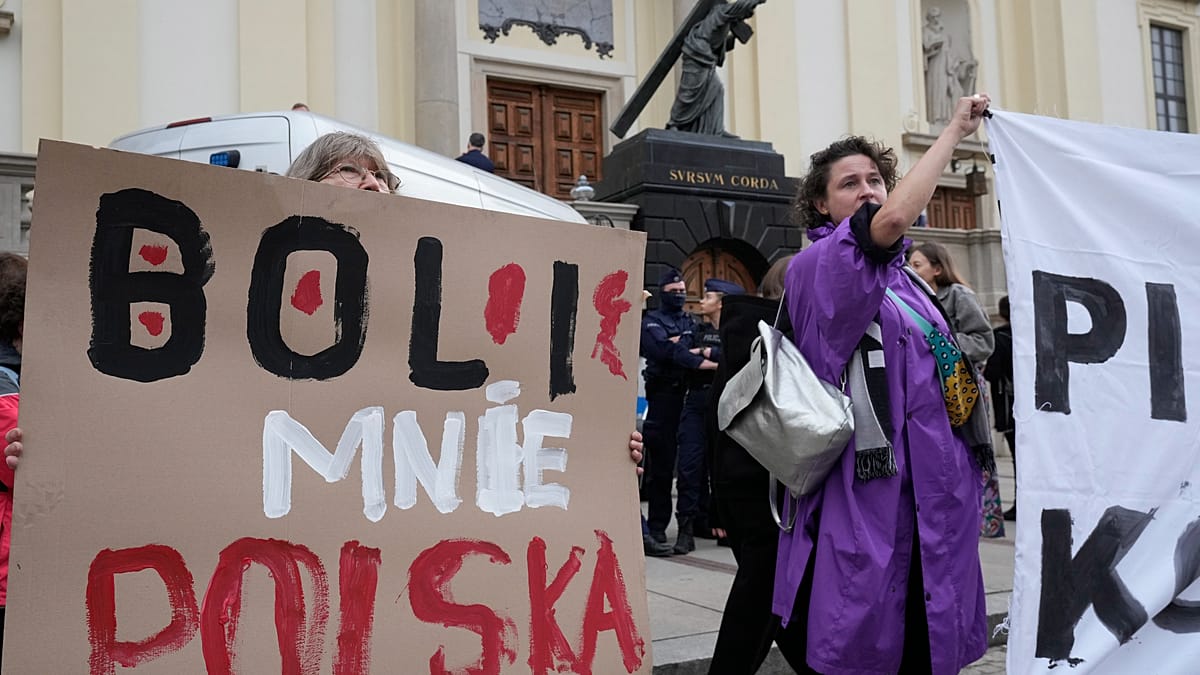
Warsaw — Poland's parliament, the Sejm, has taken a cautious step toward loosening the country's strict abortion laws, passing two bills that would ease criminal penalties for those who help women access abortion and restore the procedure in cases of severe foetal abnormalities. Yet even if the legislation survives the expected presidential veto, Poland would remain one of the most restrictive countries in the European Union on reproductive rights.
The votes on Tuesday mark the first significant movement on abortion in the Polish parliament in years, but they fall far short of the promises made by Prime Minister Donald Tusk's coalition, which pledged to legalise abortion on request up to 12 weeks of pregnancy. That pledge, made during the 2023 election campaign, remains unfulfilled.
A narrow step forward
The first bill, passed with 217 votes in favour, 213 against and three abstentions, would exempt doctors, nurses and midwives from criminal liability when an abortion results from a medically necessary procedure to protect a pregnant woman's health or life. It would also remove penalties for those who assist a woman in obtaining an abortion or encourage her to have one, a practice currently punishable by up to three years in prison.
The second bill, approved with 233 votes in favour, 203 against and one abstention, would again permit abortion in cases of severe and irreversible foetal abnormalities or an incurable condition threatening the foetus's life. This would overturn the effect of a 2020 ruling by Poland's Constitutional Tribunal, which had declared such abortions unconstitutional.
“It's time to end the punishment of all those who love, worry, and respect our choices,” said Katarzyna Kotula, the government's equality commissioner and a lawmaker from the Left, in a post on X.
Leah Hoctor, Senior Regional Director for Europe at the Center for Reproductive Rights, described the votes as an “incremental step forward,” noting that it is the first time in years that the Polish parliament has moved on this issue. A similar attempt in July 2024 failed to secure the required majority.
Presidential veto looms
Despite the parliamentary support, the path to law is uncertain. The bills now go to the Senate, where they are likely to pass, but they will then require the signature of President Karol Nawrocki, who took office in 2025 and has said he will not support easing abortion restrictions. Nawrocki is aligned with the opposition Law and Justice (PiS) party, which tightened abortion laws in 2020.
Overriding a presidential veto would require a three-fifths majority in the Sejm, a threshold that Tusk's coalition does not command. As a result, the bills may never become law.
Even if they do, the changes would be narrow in scope. Poland would remain one of only two EU countries, alongside Malta, where abortion on request in early pregnancy is not legal. “The legal changes that these bills represent are so narrow in scope that for most women who need abortion care, that care will remain illegal,” Hoctor said, adding that women would still be forced to travel abroad for services.
This places Poland out of step with much of Europe, where abortion on request is legal in most countries and several governments have moved to reduce barriers and remove criminal penalties. “Poland is an outlier in the European context,” Hoctor said. “Globally, Poland and the US are two of only four countries in the last 30 years to have removed a ground for legal abortion from their laws.”
Under current Polish law, abortion is permitted only when the pregnancy threatens the woman's health or life or results from a criminal act such as rape or incest. This near-total ban has drawn criticism from international human rights bodies. The European Court of Human Rights has ruled against Poland in several cases involving barriers to abortion access, and in 2024 the United Nations Committee on the Elimination of Discrimination against Women found that Poland's abortion laws had led to grave and systematic violations of women's rights, calling for comprehensive reform.
For now, the fate of the bills rests with President Nawrocki, and the broader promise of restoring reproductive rights remains unfulfilled. As Poland pushes for a stronger EU defence posture, its domestic record on women's rights continues to draw scrutiny from Brussels and beyond.