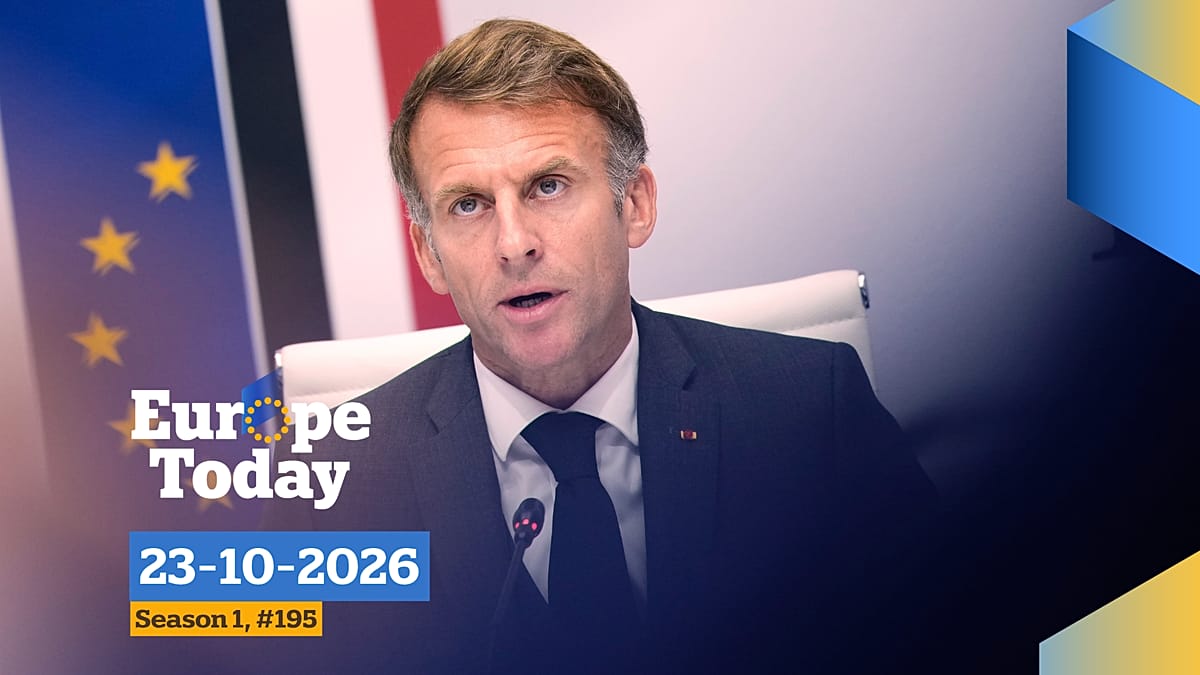
France is bracing for another weekend of mass demonstrations, following last week's violent clashes and looting that left cities on edge. The government has announced heightened security measures, but protesters remain determined to take to the streets, raising the stakes for President Emmanuel Macron's administration.
Estelle Nilsson-Julien reports from Paris, where the atmosphere is tense. The upcoming protests come after a security council meeting convened by Macron to address the unrest. The government is under pressure to restore order without alienating a public that is increasingly frustrated with social and economic inequalities.
Students take a stand
Alice de Brito, vice president of France's main student union UNEF, explains why students are at the forefront of the movement. "Students are protesting because they face a future of precarious work, unaffordable housing, and a climate crisis that the government refuses to take seriously," she says. The upcoming presidential election offers a glimmer of hope, but many young people are skeptical that the political establishment will deliver meaningful change.
The protests have also drawn international attention, with some foreign leaders commenting on the situation. Macron has rebuked those leaders for exploiting French unrest, insisting that France can manage its own affairs. Meanwhile, Polish Deputy Interior Minister Maciej Duszczyk highlights the growing divisions among EU leaders over migration, a topic that has resurfaced amid the chaos. Poland is demanding tougher migration rules, while tensions between Donald Tusk and Pedro Sánchez over the EU's Migration Pact remain unresolved.
EU leaders seek a Hungary reset
In a separate development, European Commission President Ursula von der Leyen and European Council President António Costa are visiting Budapest to mark the 70th anniversary of Hungary's 1956 uprising against Soviet rule. The visit, hosted by Prime Minister Péter Magyar, signals a potential reset in relations between Hungary and the EU after years of tensions under Viktor Orbán.
Sándor Zsíros, Euronews' Hungarian EU correspondent, notes that the symbolism is powerful. "This is a moment for both sides to move forward," he says. The EU has long clashed with Orbán over rule-of-law issues, but the new leadership in Budapest appears open to a fresh start. Whether this translates into concrete policy changes remains to be seen, but the visit is a clear diplomatic gesture.
Serbia's election test
Meanwhile, Serbia is heading to a snap parliamentary election, where a student-led movement hopes to challenge President Aleksandar Vučić after two years of demonstrations. Berta López Domènech, an analyst at the European Policy Centre, says the opposition is galvanized by concerns over electoral irregularities and the country's democratic direction. "The students have tapped into a deep well of discontent," she explains. "The question is whether they can translate that energy into political change."
The election is being closely watched across Europe, as Serbia's path toward EU membership hangs in the balance. Vučić's government has faced accusations of authoritarian drift, and the outcome could reshape the Western Balkans' relationship with Brussels.
As Europe navigates these multiple crises, the continent remains a patchwork of distinct national realities. From the streets of Paris to the corridors of Budapest and the polling stations of Belgrade, the challenges are interconnected. The EU's ability to respond will define its credibility in the eyes of its citizens.