Israel's parliamentary election has produced a deadlock, with neither Benjamin Netanyahu's right-wing bloc nor the opposition securing a clear path to a governing majority. The outcome, however, has handed the veteran prime minister a political lifeline, cementing his status as the central figure in the country's turbulent politics.
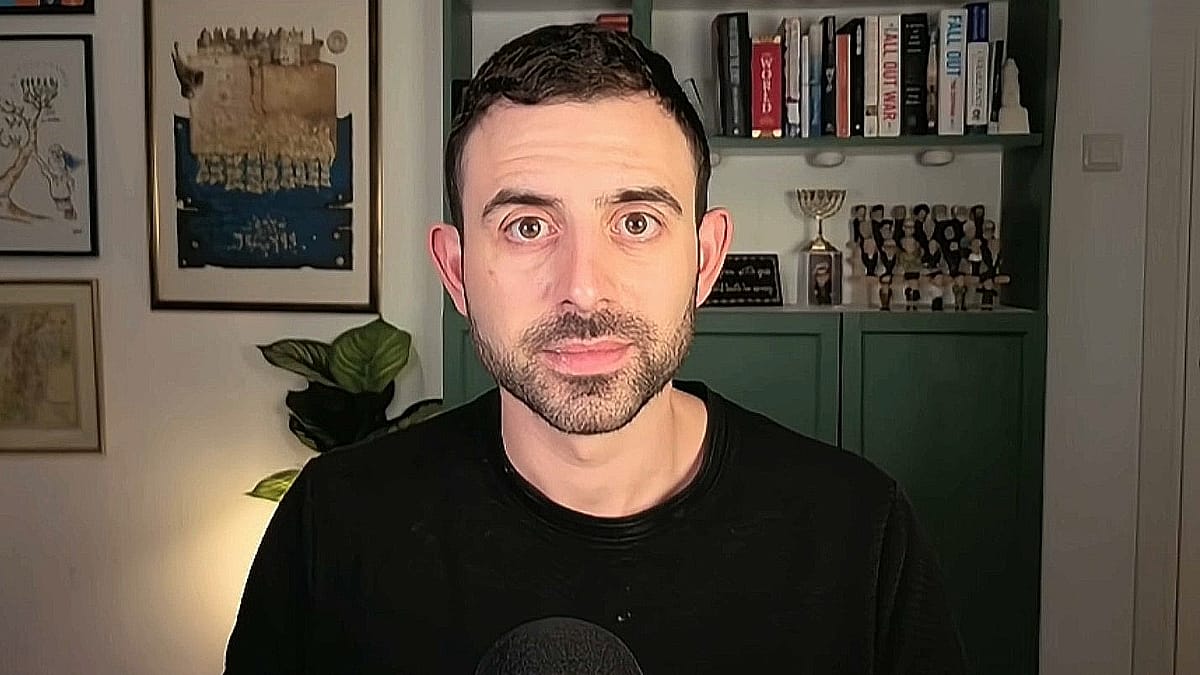
Eylon Levy, a former Israeli government spokesman, described the result as an "extraordinary comeback" for Netanyahu, who has faced intense scrutiny over the security failures surrounding the Hamas-led attacks of 7 October 2023 and the subsequent war. "This is an extraordinary comeback for Netanyahu, despite the October 7th massacre that happened on his watch, despite three years of war since then, despite huge public unrest and dissatisfaction over his alliance with the ultra-orthodox parties and their demand for an exemption from military service," Levy told Euronews.
The election leaves Israel facing three possible scenarios, according to Levy: a unity government, a minority administration, or fresh elections. "All of those are going to require someone to surrender on some very serious coalition promises," he said.
Netanyahu's strategic position
Although Netanyahu's Likud party made gains, the arithmetic of the Knesset remains unfavourable. "Netanyahu has lost his majority. It seems it's unlikely that he will hold on to a majority. But unless someone else manages to form a government, he remains the caretaker prime minister," Levy explained. That leaves Netanyahu in a potentially advantageous position: his rivals must assemble an alternative coalition, while failure to do so could extend his tenure as caretaker prime minister.
The political uncertainty comes as Israel's relations with Europe remain strained, with the Netherlands withdrawing from Eurovision 2027 amid a row over Israel's participation and European capitals closely watching the election's implications for regional stability.
Arab parties could hold the key
Arab parties have made substantial gains in the election, with early projections pointing to potentially record representation in the Knesset. Their performance has brought the politically sensitive question of their role in forming the next government back into focus. Their support could prove decisive in determining whether Gadi Eisenkot, Netanyahu's main opposition challenger, can assemble an alternative government, although several opposition figures have ruled out governing with them.
Levy said the possibility of an Eisenkot-led minority government supported by some Arab parties had been discussed, but warned that such an arrangement could provoke a political backlash. "Leaders within the change block are warning that would be extremely unpopular and would backlash and end up giving Netanyahu an even bigger majority in the next election," he said.
Levy pointed to deep ideological divisions between mainstream Israeli parties and Arab political factions, particularly over Hamas. He singled out Mansour Abbas, leader of the Arab Ra'am party, which participated in Israel's 2021–2022 governing coalition. Although Abbas has condemned the Hamas-led attacks of 7 October, he has repeatedly declined to explicitly describe Hamas as a terrorist organisation, a position Levy cited as an obstacle to political cooperation. "So they are still kryptonite for most of the mainstream parties," Levy said.
The election's inconclusive outcome has also raised the prospect of prolonged political paralysis, with Netanyahu potentially staying in power for months as coalition talks drag on. European governments, already concerned about the war in Gaza and rising tensions with Iran, are watching closely. The deadlock leaves Netanyahu's fate hanging, and the coming weeks will test whether Israel's fractured political system can produce a stable government or whether voters will be called back to the polls.