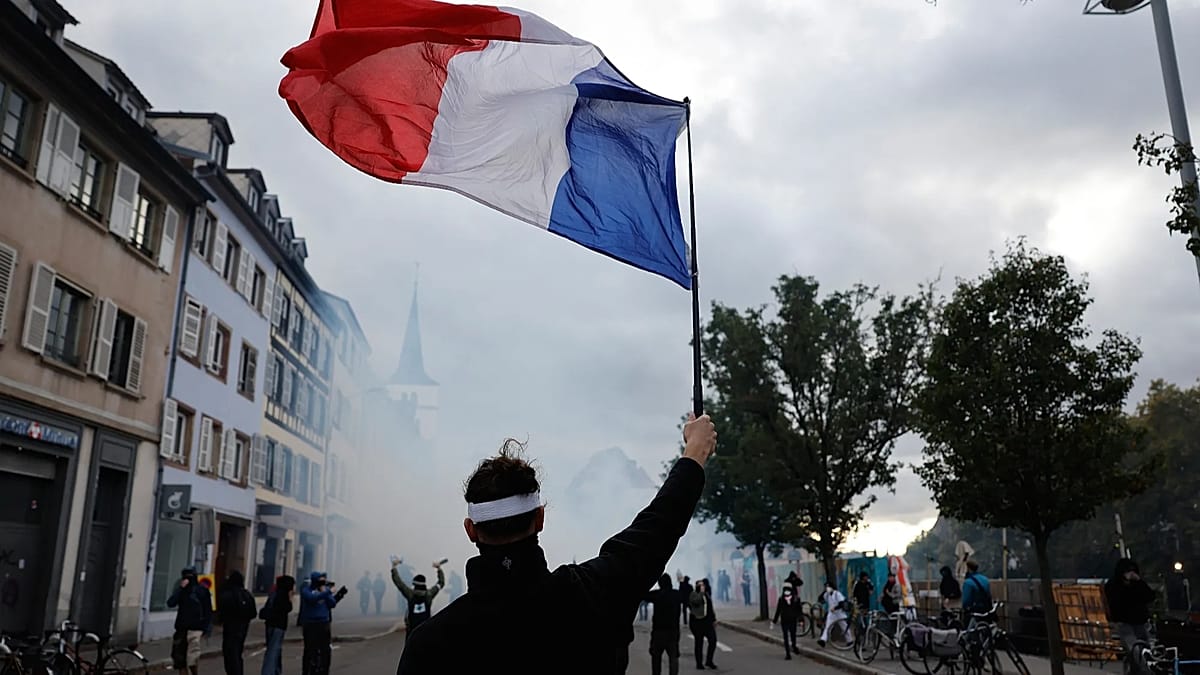
France is preparing for a third consecutive weekend of mass demonstrations, with authorities mobilising roughly 70,000 police officers on Saturday as unions, students and the yellow vest movement take to the streets on Halloween. A source close to the Interior Ministry warned on Friday of a “very high risk of public disorder,” echoing the violence that marred otherwise peaceful protests on 17 October.
The protests, which began in mid-September over school conditions in the Parisian suburbs, have snowballed into a broader movement against the cost-of-living crisis and rising fuel prices. Trade unions and student groups have called for marches across the country, including in Paris, Lyon, Marseille and Toulouse, with many demonstrations planned to coincide with Halloween festivities.
Security crackdown and restrictions
Interior Minister Laurent Nuñez announced on Thursday that protests in city centres would be banned, allowing only gatherings “on the outskirts of cities.” Organisers have been asked to “provide guarantees” that demonstrations would take place in “good conditions.” The move follows widespread looting and clashes with police during the 17 October protests, which saw cars burned and shop windows smashed in several urban areas.
Nuñez also warned that Halloween could encourage unrest to spill into the night, and said gatherings attempting to pass off as Halloween celebrations would be prohibited. He singled out social media posts from “ultra-left circles” urging a “revolution” and “insurrection,” which have proliferated in recent days.
Police leave has been cancelled across the country, and officers have been recalled to duty. In Paris, a curfew will be imposed on Saturday and Sunday nights in districts that experienced significant unrest on 17 October, including the Champs-Élysées and parts of the 16th arrondissement.
Unions cry foul
Trade unions and the yellow vest movement have criticised the restrictions as disproportionate. In a joint statement on Wednesday, major unions said they would explore “all possible avenues of appeal against this general and disproportionate ban on the exercise of a public freedom that is essential in a democracy.”
The government, for its part, has outlined several policies addressing student grievances, including increased funding for school maintenance and additional support staff. Unions have dismissed these measures as insufficient, arguing that they fail to tackle the root causes of the crisis, such as underfunded schools and soaring living costs.
Rights groups have repeatedly accused police of using excessive force against protesters, a charge that has gained traction after videos emerged of officers using batons and tear gas on peaceful demonstrators. The interior ministry has defended the police response, citing the need to prevent violence and protect public order.
The protests come roughly six months before France’s presidential elections, adding a political dimension to the unrest. President Emmanuel Macron’s government is under pressure to address the grievances, but critics say the security-first approach risks alienating the public and fuelling further anger.
As France braces for a tense weekend, the situation remains fluid. The authorities have urged the public to avoid city centres, while organisers vow to press ahead with their demands. The coming days will test the government’s ability to balance public safety with the right to protest, a challenge that resonates across Europe as other countries face similar social tensions.