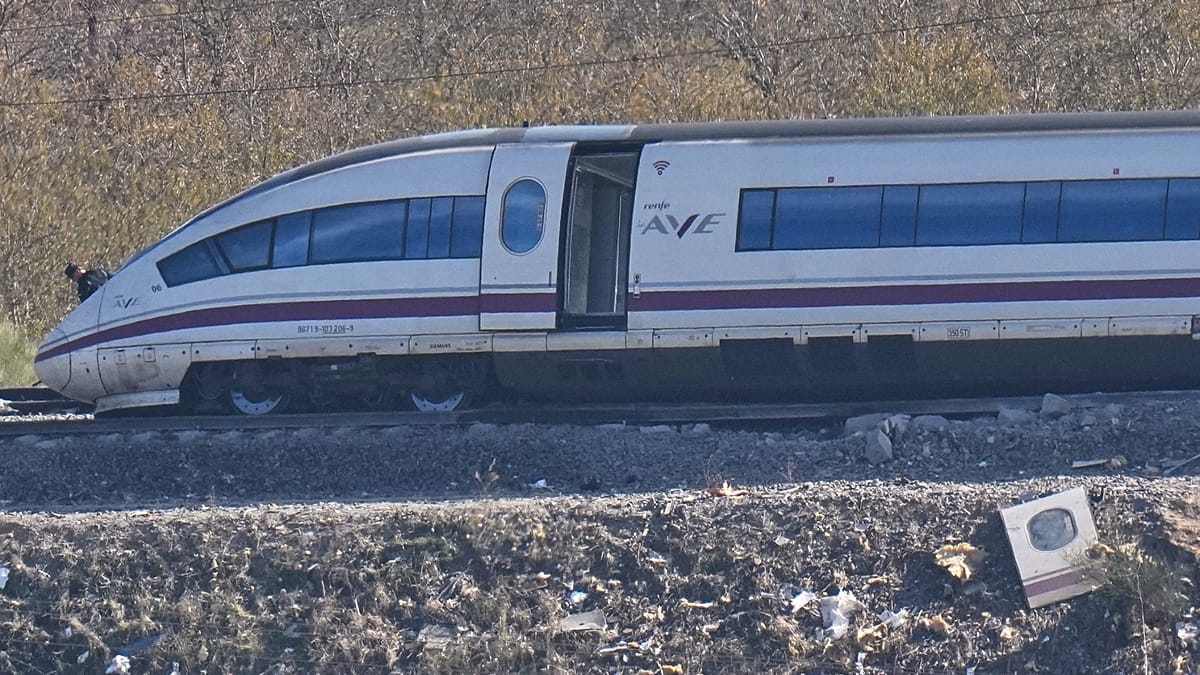
Spain is observing a third day of national mourning on Saturday following a catastrophic train collision near Urda, in the province of Toledo, which claimed at least 69 lives earlier this week. The disaster has plunged the country into grief and reignited a fierce debate over the safety of its rail network.
In the small village of Urda, residents and local officials gathered at the San Juan Bautista church for a memorial Mass. The pews were packed, and dozens more stood outside, many wiping away tears as they listened to the service. The emotional toll was evident as the community struggled to come to terms with the scale of the tragedy.
Meanwhile, the grim task of identifying the victims continued. Authorities in Castilla-La Mancha reported that 67 missing-person cases remain open, including 14 for foreign nationals from countries such as the United States, Canada, Australia, France, Japan, Mexico, Argentina, Venezuela, Tunisia, and the Czech Republic. A Portuguese citizen who worked on one of the trains is among the dead, according to Portugal's government. Thirty-nine injured people remain hospitalized in the region.
Prime Minister Pedro Sánchez said Spain was working "tirelessly" to complete the identification process, but the regional leader of Castilla-La Mancha, Emiliano García-Page, warned that the death toll could rise. Emergency services have collected 31 bags of partial remains, complicating the identification work, he said.
Union demands urgent safety measures
The Spanish Union of Train Drivers and Railway Assistants (Semaf) has called for immediate action to strengthen rail safety. In a statement, the union urged the State Railway Safety Agency (AESF) to "urgently" clarify and amend regulations governing the LZB train protection system, as well as procedures related to the European Rail Traffic Management System (ERTMS).
According to preliminary findings from the Independent Authority for the Technical Investigation of Accidents and Incidents (AITAT), the LZB system stopped functioning at 8:31 am on Wednesday, prior to the collision. However, investigators have not yet determined whether the failure directly caused the accident. Semaf is pushing for rules that would prevent trains from resuming normal operations if there is a risk of two trains occupying the same track section.
Transport Minister Óscar Puente, who has ruled out resigning, announced new measures aimed at reducing technical risks and "restoring public confidence" in the railway system, though he has not yet specified what those measures will be. The concerns raised by train drivers are not new. In January 2026, Semaf reported that hundreds of drivers had long been flagging incidents on the network without receiving adequate responses or corrective action.
Following an earlier accident in Adamuz (Córdoba), Semaf reached an agreement with the government to bolster railway safety, but the union says implementation has been delayed. The current disaster has prompted Semaf to call fresh strikes at state operator Renfe for November 10 and 12, demanding "structural measures" for rail safety, after a stoppage on Thursday that had been planned before the accident.
Political fallout and shattered confidence
The Urda collision is Spain's second major rail disaster in nine months, following a January crash in Andalusia that killed 46 people. The incident occurred on a key high-speed line linking Madrid to Seville, a route that has now seen two tragedies in quick succession. The death toll has climbed to 74 as authorities continue to recover remains.
Prime Minister Sánchez acknowledged on Friday that trust in the high-speed network was "shattered" and pledged "solutions" to prevent further accidents. The political pressure is mounting ahead of November elections, with the main opposition Popular Party, led by Alberto Núñez Feijóo, accusing the government of failing to replace an obsolete security system. "Who's going to get on a train now? Now you're scared when you do," Cecilio, a relative of a victim, told AFP. "Lots of lives have been lost in nine months. I think this should make everyone reflect - the whole of society, the politicians - about why this is happening in the 21st century."
The tragedy has also raised broader questions about rail safety across Europe. As Spain grapples with the aftermath, the European Union's efforts to harmonize rail systems, such as ERTMS, are under scrutiny. The 17 minutes of decisions before the fatal collision are now the focus of investigation, and the findings could have implications for rail operators across the continent.
For now, Spain mourns. The third day of national mourning is a somber reminder of the human cost of the disaster, and the demand for answers grows louder with each passing hour.