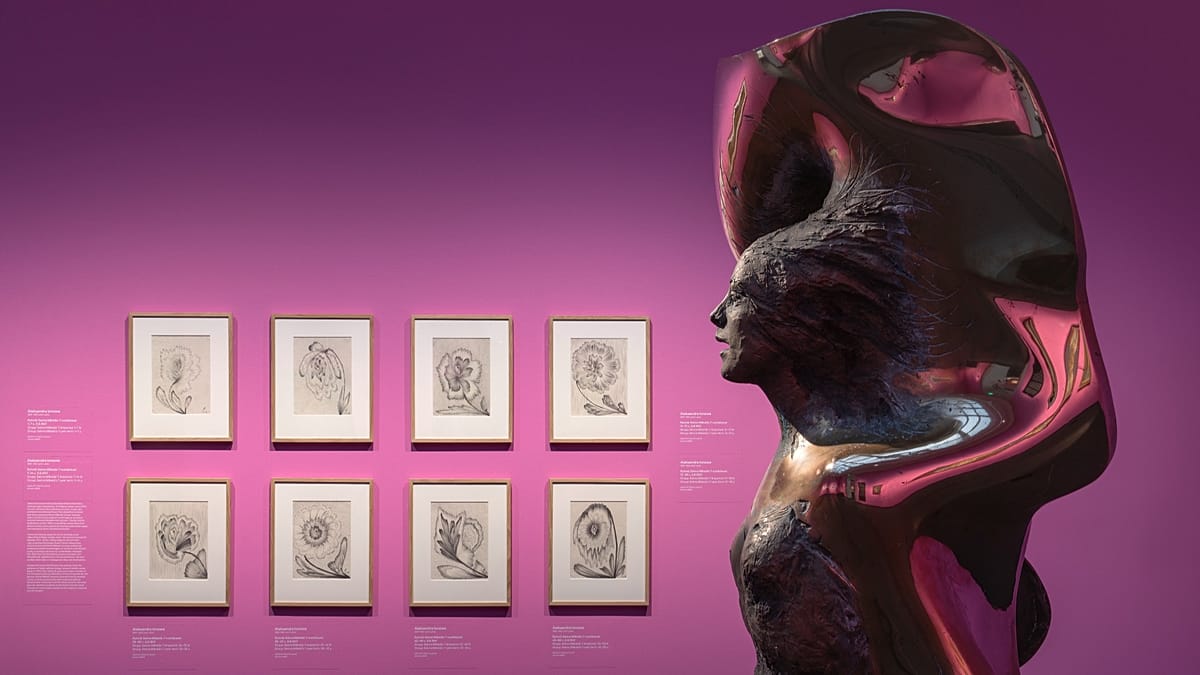
Helsinki's Ateneum Art Museum, part of the Finnish National Gallery, is hosting a landmark exhibition that repositions the role of women in the history of esoteric and spiritual art. Titled Arcana Borealis – Northern Women and Esotericism, the show brings together more than 200 works by 50 artists from across the Nordic region and Sápmi, spanning the 19th century to the present day.
The Latin title, meaning "hidden knowledge of the north," sets the tone for an exploration of themes that have long been marginalised in mainstream art history: the relationship between spirit and matter, the possibility of life after death, and the existence of a spirit world. The exhibition includes both celebrated figures such as Hilma af Klint, Tyra Kleen, and Tove Jansson, as well as lesser-known practitioners whose contributions have been overlooked.
Challenging the male genius narrative
According to Dr Marja Lahelma, Chief Curator at Ateneum and co-curator of the exhibition, the project directly confronts the traditional art historical focus on individual male artists. "For quite a long time art history has been dominated by narratives focusing on male artists and on this notion of the individual genius," she told Euronews Culture. "Our focus is on women and we also draw attention to this idea of communality and working together."
That emphasis on collaboration is a key departure from earlier exhibitions on modern art and occultism, which have tended to centre on famous male figures. By foregrounding women, the curators aim to reveal a different kind of creative process—one that values shared knowledge and collective making over solitary inspiration.
Dr Nina Kokkinen from the University of Turku, who co-curated the show, explains that the exhibition demonstrates how boundaries begin to blur when viewed through the lens of artist women and esotericism. "The boundaries between art and spirituality, fine art and craft, object and process, individual authorship and collective making," she says, are all called into question.
A wide range of materials and traditions
The exhibition features an unusually broad array of media, including textiles, ceramics, metal engravings, and traditional sacral art forms such as stained glass and mosaics. This diversity reflects the importance of craft in the transmission of esoteric knowledge, particularly through matrilineal lines—skills and wisdom passed from one generation of women to the next.
A notable inclusion is Sámi duodji, the traditional craft tradition of the Sámi people, which integrates spirituality, tacit knowledge, and a deep respect for nature. By including such practices, the exhibition acknowledges that esotericism in the North is not solely a European urban phenomenon but also rooted in Indigenous worldviews.
Many of the artists represented claimed to be guided by non-human agencies—angels, guiding spirits, or forces of nature. This belief in external inspiration challenges the Romantic ideal of the solitary genius and instead suggests a more porous relationship between the artist and the unseen world.
Light and darkness, Halloween and Kekri
The exhibition is particularly timely for the autumn season. Dr Lahelma notes that it is "a perfect exhibition to visit for Halloween, or Kekri as we say in Finnish." She adds: "Esotericism is about light and darkness. We can explore themes such as death in art through this esoteric theme and sometimes the hidden knowledge, the secret knowledge that esotericism is all about, can be found through exploring darkness rather than light."
This framing invites visitors to consider how death and the afterlife have been imagined by women artists across the North—from the symbolic doves of Hilma af Klint to the mysterious landscapes of Tove Jansson. The exhibition also resonates with broader cultural conversations about spirituality and ecology, as seen in women-led sustainable practices that draw on traditional knowledge.
Arcana Borealis is on view at Ateneum Art Museum in Helsinki. It offers a rare opportunity to see how Nordic women have used art to explore the unseen, and to reconsider the history of modern art from a more inclusive perspective.