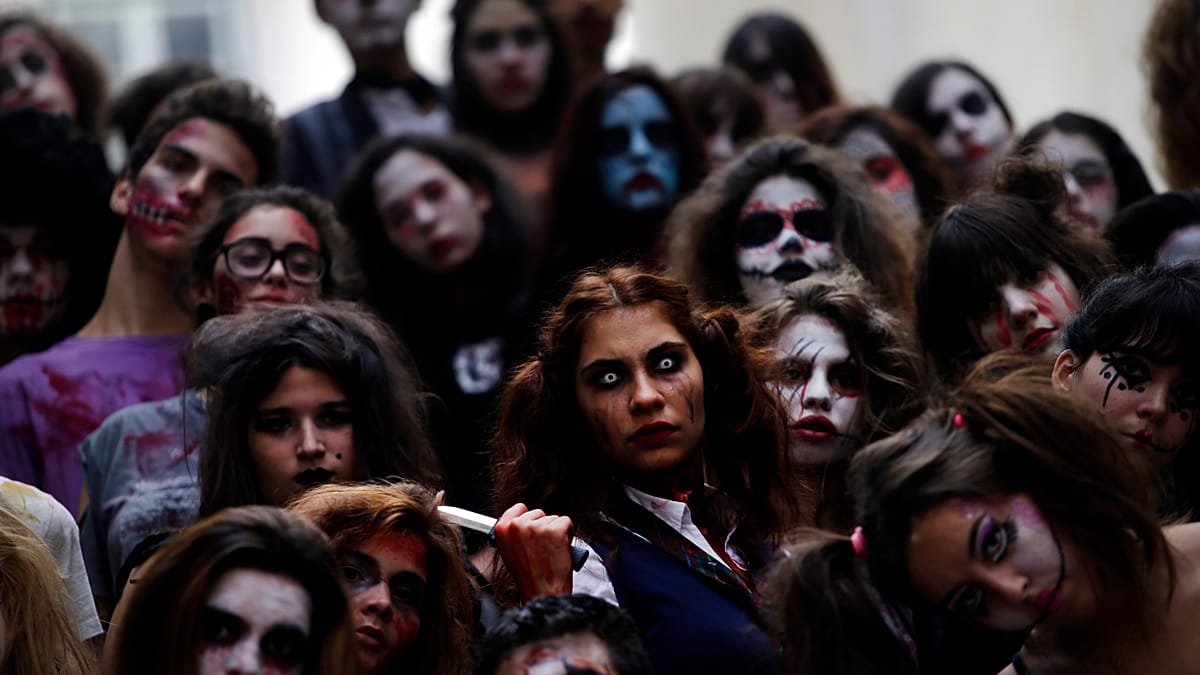
As October draws to a close, shop windows across Portugal fill with carved pumpkins, plastic cobwebs and grinning skeletons. The American-style Halloween, with its trick-or-treating and costume parties, has become increasingly popular since arriving in the 1990s. But the country also holds onto older, home-grown customs that mark this time of year with a distinctly Portuguese character.
Pão por Deus: a quieter kind of door-to-door
On the morning of 1 November, All Saints' Day, children in many parts of Portugal still take to the streets with cloth bags, often decorated by hand or provided by local councils. They knock on doors and recite traditional verses in exchange for bread, cakes, dried fruit, sweets or even small coins. This is Pão por Deus — literally “bread for God” — a tradition that predates the modern Halloween and carries a spirit of sharing rather than mischief.
The origins are debated, but many trace it to 15th-century pagan customs linked to remembering the dead. The 1755 Lisbon earthquake, which struck on 1 November and devastated the capital, gave the practice a new urgency: a year after the disaster, the poorest began going door-to-door to beg for bread. Over time, the offerings evolved, and today children might receive chocolate bars or a few cents alongside the traditional bolinhos (little cakes) and dried figs.
Regional variations abound. In Estremadura, the day is known as Dia do Bolinho, when seasonal cakes are given out. In the Azores, some communities still make caspiadas — skull-shaped cakes honouring the dead. In Beira Baixa, godparents give their godchildren a cake called the Santoro. The verses sung by children vary too, with quatrains such as: “Pão por Deus, Fiel de Deus, little cake in the bag, you walk with God.”
Celtic echoes in the north
While Pão por Deus is gentle and communal, the north of Portugal preserves more fiery rituals with deep Celtic roots. In the village of Cidões, in the Bragança district, the Festa da Cabra e do Canhoto (Festival of the Goat and the Canhoto) takes place around a large bonfire. The canhoto is a large burning log that symbolises evil and hidden forces; tradition holds that it must be stolen to burn properly. Goat meat is cooked in huge pots over the flames, and roasted chestnuts are shared among the crowd.
The festival revives the ancient Celtic celebration of Samhain, which marked the end of the “bright season” and the beginning of the “dark season”. The Celts, including the Zoelas tribe, once inhabited this region, and they believed that at this transition the worlds of the living and the dead drew close. The event features Celtic-style performances, fire-breathers, pipers, drums, and the arrival of the Careto — a masked figure from Trás-os-Montes — on an ox-drawn cart.
Further north, in Vilar de Perdizes in the municipality of Montalegre, the Noite dos Fachos (Night of Torches) is observed. Participants, often young people, “steal” straw and climb to the top of the Serra do Larouco, a mountain range over 1,500 metres high, carrying lit torches (fachos) and shouting to scare away spirits, demons and witches. The name Larouco comes from a Celtic deity, underscoring the area’s ancient supernatural associations. The village also hosts an “Aldeia Assombrada” (Haunted Village) event, which has become a draw for those seeking a spooky experience.
A globalised Halloween with local roots
Today’s Halloween is itself a product of globalisation, blending Celtic, Christian and American influences. In Portugal, it sits alongside Pão por Deus and the northern fire festivals, creating a rich tapestry of ways to mark the darkest time of year. For those interested in exploring Europe’s spookier side, the continent offers plenty of options, from haunted hotels to historic cemeteries that have become Halloween destinations. And for a truly Portuguese twist, the bonfires of Cidões and the torch-lit mountains of Vilar de Perdizes offer an authentic alternative to the plastic pumpkins of the commercial season.