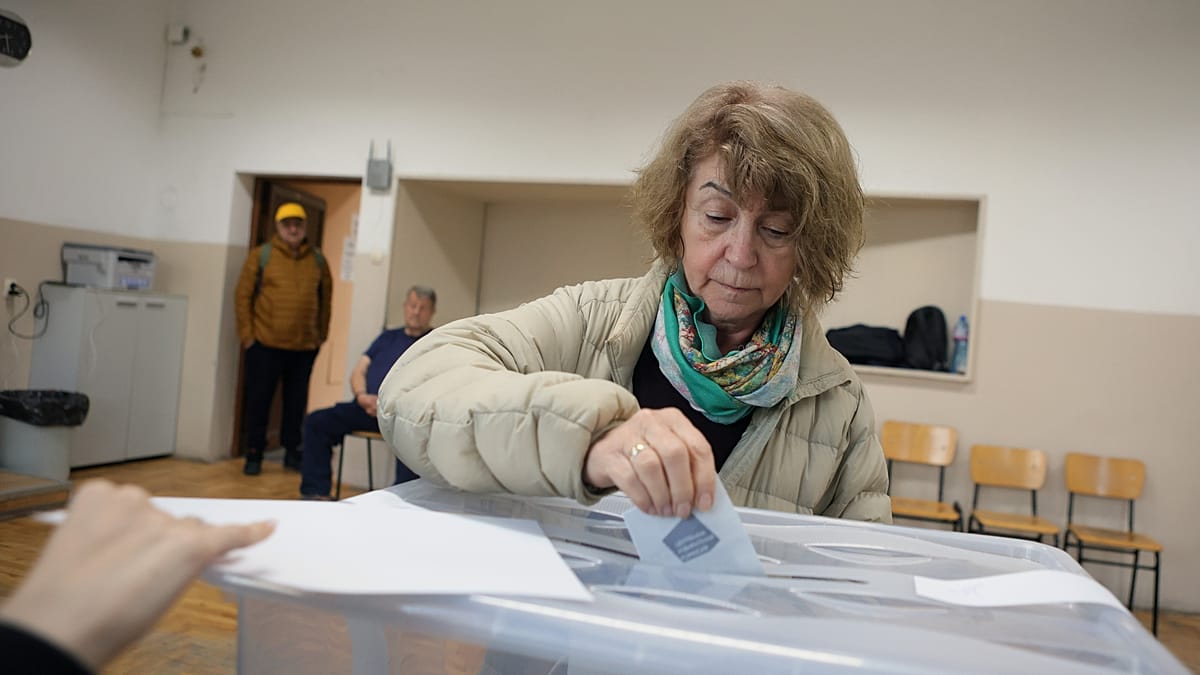
Bulgarians are casting ballots on Sunday in a presidential election that has become a referendum on the country's position toward Russia and its handling of economic pressures. The vote comes as the Black Sea region grows more volatile and households across the country grapple with rising costs.
The race pits incumbent President Iliana Yotova, backed by Prime Minister Rumen Radev's Progressive Bulgaria party, against Andrey Gyurov, a former caretaker prime minister supported by pro-Western opposition parties. With a record 27 candidates, the contest is widely expected to go to a runoff.
A campaign dominated by war and prices
Campaign rhetoric has centered on Russia's invasion of Ukraine and the escalating hostilities in the Black Sea, where recent drone strikes on commercial vessels off Bulgaria's coast have heightened security fears. As a NATO and EU member, Bulgaria has called on allies to help bolster its maritime defenses, reflecting concerns that Moscow may be seeking to expand the conflict.
Economic anxiety is equally pressing. Inflation and energy prices have squeezed families, particularly in rural areas, where many struggle to make ends meet. Candidates have offered competing visions on how to shield citizens from the cost-of-living crisis while navigating the country's energy transition.
Yotova, who took over the presidency earlier this year when Radev stepped down to run for parliament, has advocated for dialogue with Moscow and opposed military aid to Ukraine. Her stance resonates with a segment of the electorate that remains wary of deepening involvement in the conflict. If elected, she would become Bulgaria's first female president, a milestone that would also bolster Radev's political standing.
Gyurov, an economist and former deputy governor of the central bank, has taken a firmly pro-Western line. During his brief tenure as caretaker prime minister in early 2026, he signed a security cooperation agreement with Kyiv. His campaign has emphasized the importance of aligning Bulgaria firmly with the EU and NATO, arguing that the country's future lies in closer integration with the West.
Polling suggests Yotova is ahead, with support between 41% and 47%, while Gyurov trails with 28% to 31%. Kostadin Kostadinov, leader of the pro-Russian far-right Vazrazhdane party, is in third place with 10-13%, reflecting the persistent appeal of nationalist rhetoric in parts of the country.
The election is being closely watched across Europe, as it comes amid broader debates about the continent's response to Russian aggression. The outcome could influence Bulgaria's role in regional security and its approach to the EU's push for a seat at Ukraine peace talks, a topic that has gained urgency as the United States shifts its stance.
For many voters, the choice is not just about personalities but about the country's trajectory. "We need a president who can stand up for Bulgaria's interests without isolating us from our allies," said Maria Petrova, a 45-year-old teacher in Sofia, reflecting a common sentiment. Others, like Georgi Ivanov, a pensioner from Plovdiv, worry about the economy: "Prices keep going up, and I don't see anyone offering real solutions."
The election also takes place against a backdrop of regional instability. Recent Russian strikes across Ukraine have underscored the ongoing threat, while Finnish MEPs warn that Putin now targets all of Ukraine, including Kyiv. These developments have sharpened the debate in Bulgaria about how to balance neutrality with collective defense.
Polling stations close at 8 pm local time, with exit polls expected shortly after. Preliminary results are likely to be announced on Monday, setting the stage for a runoff in two weeks if no candidate secures an outright majority.
Whoever wins will face immediate challenges: managing public anxiety over the economy, responding to Black Sea security threats, and navigating Bulgaria's delicate position between East and West. The next president will also play a key role in shaping the country's response to broader European efforts to reset relations with Hungary and other member states amid the Ukraine peace scramble.