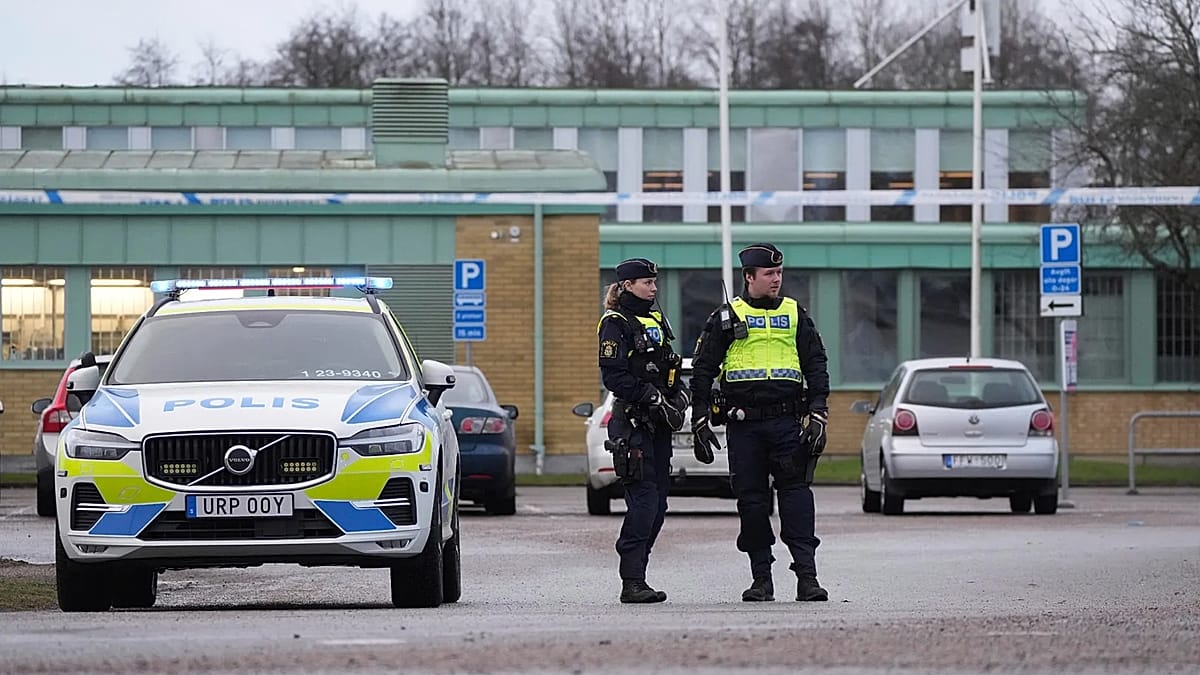
Swedish police have released stark statistics showing that 23 innocent bystanders have been killed and 30 wounded in gang-related shootings over the past three years. The figures, published on Monday, underscore the country's ongoing struggle to contain violent crime linked to drug markets and score-settling.
The victims include individuals struck by stray bullets, cases of mistaken identity, and relatives of targeted gang members, according to police data. Alexander Wallenius, operations coordinator at the Swedish police's department of national operations, told news agency TT that the high number of bystander casualties is partly due to the youth of the perpetrators.
“We are dealing with very young perpetrators who, in many cases, have no previous experience of violent crime, which means a greater risk that third parties or the wrong target will be hit,” Wallenius said.
Youth Recruitment and Legal Loopholes
Swedish gangs frequently use social media and encrypted messaging apps to recruit teenagers, often under the age of 15, to carry out crimes. Because Sweden's age of criminal responsibility is 15, these recruits cannot be prosecuted and instead fall under the purview of social services, making them valuable assets for criminal networks.
This dynamic has fueled a cycle of violence that has persisted for more than a decade. The government, a minority right-wing coalition supported by the far-right Sweden Democrats, has been advancing proposals to crack down on crime and immigration ahead of a general election scheduled for 13 September.
Last week, the government announced plans to introduce legislation requiring social media platforms such as TikTok and Snapchat to remove gangs' “murder adverts” within one hour or face substantial fines. Additionally, it has proposed lowering the age of criminal responsibility from 15 to 13 for crimes punishable by at least four years in prison.
The issue has drawn international attention, as Sweden's gang violence contrasts with its reputation for social stability. The country's approach to youth crime and digital regulation may offer lessons for other European nations facing similar challenges.