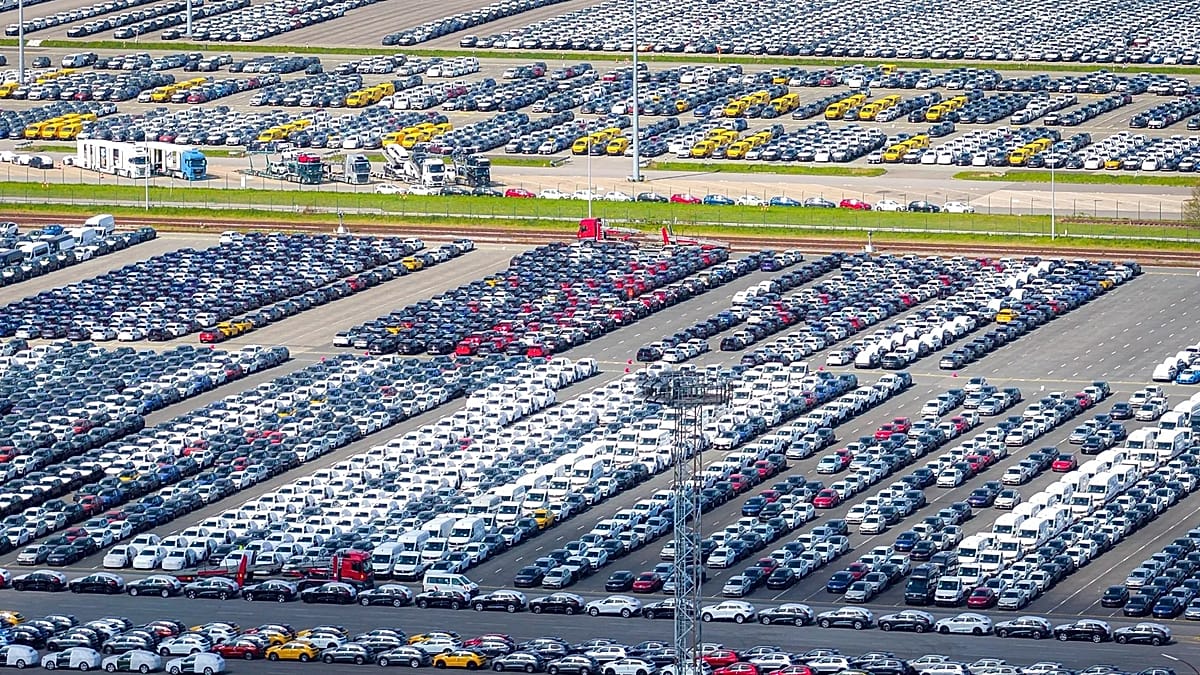
US President Donald Trump announced on Friday that he will increase tariffs on cars and trucks imported from the European Union to 25%, effective next week. The decision, posted on his Truth Social account, accuses the bloc of failing to honour the terms of the Turnberry Agreement, a trade framework struck with European Commission President Ursula von der Leyen in July 2025.
“The EU is not complying with our fully agreed to Trade Deal,” Trump wrote, without elaborating on specific violations. The announcement comes at a moment of heightened tension between Washington and Brussels, as the White House pushes European allies to support its military campaign against Iran. On Thursday, Trump renewed criticism of German Chancellor Friedrich Merz, urging him to focus on ending the war in Ukraine rather than “interfering” on Iran. He also described Spain and Italy as “absolutely horrible” for refusing to join the conflict.
Germany in the Crosshairs
Germany, home to major automakers such as Volkswagen, BMW, and Mercedes-Benz, would be the hardest hit by the tariff hike. The country accounts for a significant share of EU auto exports to the United States. The original Turnberry Agreement, named after Trump’s golf course in Scotland, set a 15% tariff ceiling on most goods. Both sides had reaffirmed their commitment to the deal, but its status was thrown into doubt after the US Supreme Court ruled earlier this year that Trump lacked the legal authority to declare an economic emergency and impose tariffs on EU goods. That ruling effectively reduced the tariff ceiling to 10%, as the administration launched new investigations into trade imbalances and national security risks.
The EU had estimated that the bilateral deal would save European car manufacturers between €500 million and €600 million per month. According to Eurostat, EU-US trade in goods and services reached €1.7 trillion in 2024, or an average of €4.6 billion per day.
“A deal is a deal,” the European Commission said in February after the Supreme Court ruling. “As the United States' largest trading partner, the EU expects the US to honour its commitments set out in the Joint Statement, just as the EU stands by its commitments. EU products must continue to benefit from the most competitive treatment, with no increases in tariffs beyond the clear and all-inclusive ceiling previously agreed.”
The Trump administration’s ongoing investigations could ultimately put the Turnberry Agreement at risk of violation, potentially triggering a broader trade dispute. The tariff hike also exacerbates a growing transatlantic rift, with Trump threatening troop cuts in Germany, Spain, and Italy over their reluctance to engage in the Iran war. For more on these tensions, see Trump Escalates Attack on Merz, Threatens Troop Cuts as Transatlantic Rift Deepens and Trump Threatens Troop Cuts in Spain and Italy Over Iran War Disputes.
The broader economic context adds to the strain. Eurozone inflation has hit 3%, driven by oil price spikes and stalled growth, raising fears of stagflation across the continent. The tariff hike could further disrupt supply chains and push up consumer prices on both sides of the Atlantic. For an analysis of the economic outlook, see Eurozone Inflation Hits 3% as Oil Spike and Stalled Growth Raise Stagflation Fears.
As the EU braces for the new tariffs, the bloc’s leaders are weighing retaliatory measures while seeking to preserve the core of the Turnberry Agreement. The coming weeks will test whether the transatlantic partnership can withstand the combined pressures of trade disputes and geopolitical confrontation.