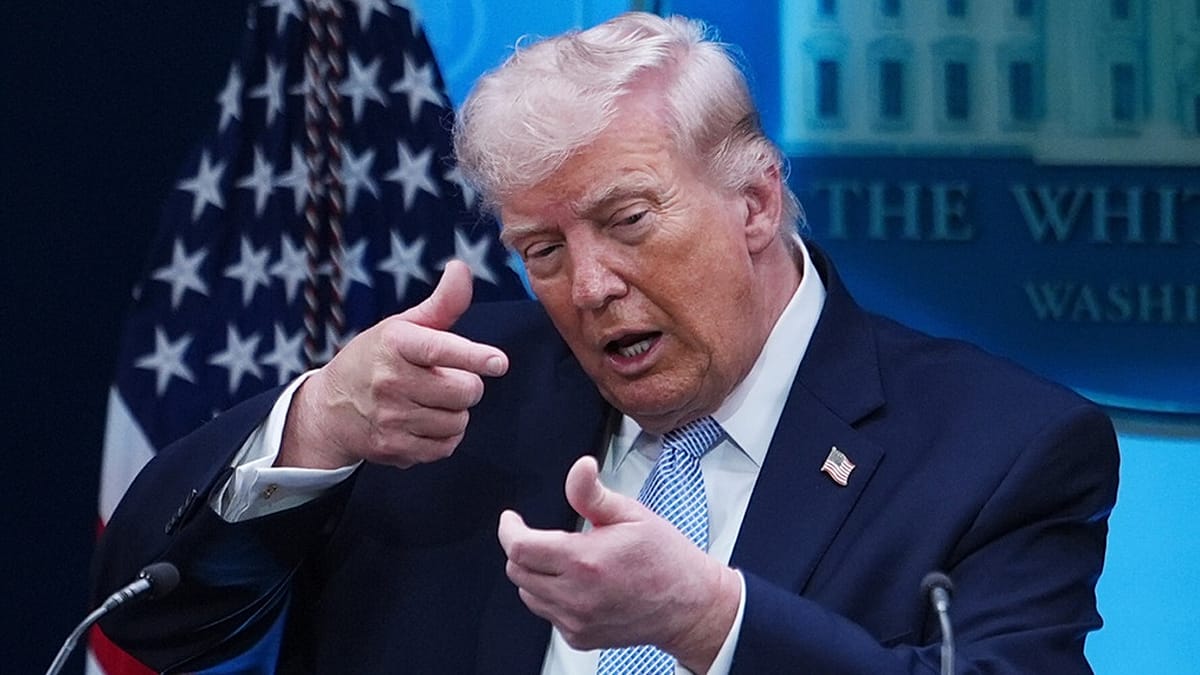
US President Donald Trump has signalled he is weighing a reduction of American military forces in Spain and Italy, citing their governments' opposition to the US-Israeli military campaign in Iran, now in its third month. The remarks, made to reporters in the Oval Office on Thursday, came just a day after he proposed a similar drawdown in Germany following Chancellor Friedrich Merz's criticism of Washington's war strategy.
“Yeah, probably, I probably will. Why shouldn't I?” Trump said when asked about Spain and Italy. “Italy has not been of any help to us and Spain has been horrible, absolutely horrible.”
The US president argued that the conflict in Iran benefits all nations, including those he accused of failing to contribute. He described them as “so-called allies” for not joining efforts to “eliminate the Iranian nuclear threat.”
Troop Numbers and Potential Reductions
As of late 2025, the United States maintained 36,436 active-duty troops in Germany, 12,662 in Italy, and 3,814 in Spain. The scale of any potential reduction remains unclear, though some US media outlets have suggested it could be substantial. The Trump administration has been sharply critical of NATO allies for not assisting with the US-Israeli operation or helping to keep the Strait of Hormuz open for oil tankers and maritime traffic.
Trump's relationship with Italian Prime Minister Giorgia Meloni has soured dramatically. After Meloni criticised the war last month, Trump launched a personal attack on his former right-wing ally, accusing her of lacking courage for bowing to domestic pressure rather than endorsing the campaign. The rift with Spain, however, has deeper roots, beginning with Madrid's stance against Israel over the war in Gaza and later extending to disagreements over NATO defence spending.
Trump had pushed all NATO members to raise defence expenditure to 5% of GDP. At last year's NATO Summit in The Hague, all members agreed except Spain. Prime Minister Pedro Sánchez stated he would only do what benefits his country, keeping spending unchanged. The administration has since repeatedly lashed out at Spain, threatening trade cuts and even calling for its removal from the alliance.
Last week, reports emerged that Washington was again considering suspending Spain from NATO over its refusal to support the Iran war, which has destabilised the broader region and sent global oil prices soaring. Brent crude closed at around $114 a barrel on Friday, a dramatic rise from pre-war levels of $70.
The escalating transatlantic rift echoes earlier tensions with Germany, as detailed in Trump's escalating attack on Merz. Meanwhile, the economic fallout continues, with energy costs driving inflation higher in Germany and Spain ahead of the ECB's next rate decision.
As the war in Iran grinds on, the Trump administration's pressure on European allies shows no sign of abating, testing the cohesion of the NATO alliance and the broader transatlantic relationship.