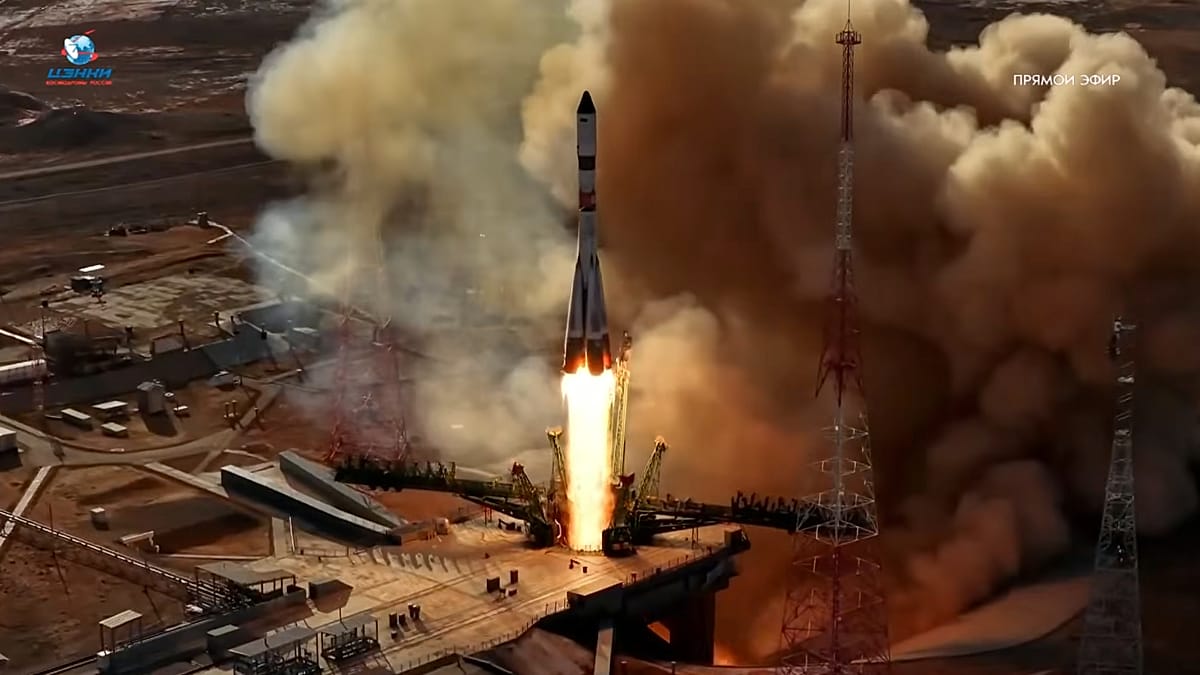
Russia's state space corporation Roscosmos conducted the first test flight of its new Soyuz-5 rocket from the Baikonur Cosmodrome in Kazakhstan late on Thursday night. The launch, which took place at 23:00 local time (Astana) from Site 45, marks a significant step in the development of a medium-class launch vehicle intended to modernize Russia's space capabilities.
The Soyuz-5, also known as Sunkar, is equipped with what Roscosmos describes as the world's most powerful liquid-fuelled rocket engine. During the test, the first and second stages operated as expected, and a payload mock-up was placed on a planned suborbital trajectory before splashing down in the Pacific Ocean.
Technical and Environmental Ambitions
Roscosmos says the new rocket is designed to reduce the cost of launching payloads while doubling capacity to up to 17 tonnes. It also uses environmentally cleaner fuel components, a shift from older Soviet-era designs. The Baiterek project, a joint initiative between Kazakhstan and Russia launched in 2004, aims to modernize launch facilities at Baikonur and facilitate the transition to greener rocket systems.
Baikonur holds a storied place in space history: it was the launch site for Yuri Gagarin's pioneering flight in 1961. After the Soviet Union's collapse, Russia continued to operate the cosmodrome under a lease agreement with Kazakhstan, which was extended in 2021 until 2050.
The launch of Soyuz-5/Sunkar is a turning point for Kazakhstan's space ambitions, positioning the country closer to becoming a new space power. However, the broader geopolitical context remains complex. Russia's space program has faced international scrutiny, particularly after its invasion of Ukraine, which led to sanctions and reduced cooperation with Western partners. The test flight comes amid ongoing tensions, as highlighted by EU warnings against direct talks with Russia and incidents such as the arrest of a Kazakh national in Berlin on espionage charges.
While the Soyuz-5 represents a technical achievement, its commercial prospects remain uncertain. The rocket is intended to compete in the global launch market, but Russia's isolation from Western space agencies and supply chains may limit its appeal. Roscosmos has not disclosed a timeline for operational flights or specific customers.
The test also underscores the enduring partnership between Russia and Kazakhstan in space, despite broader geopolitical shifts. For Astana, the collaboration offers a path to develop its own space industry, though it must navigate the risks of association with a sanctioned Russian state.