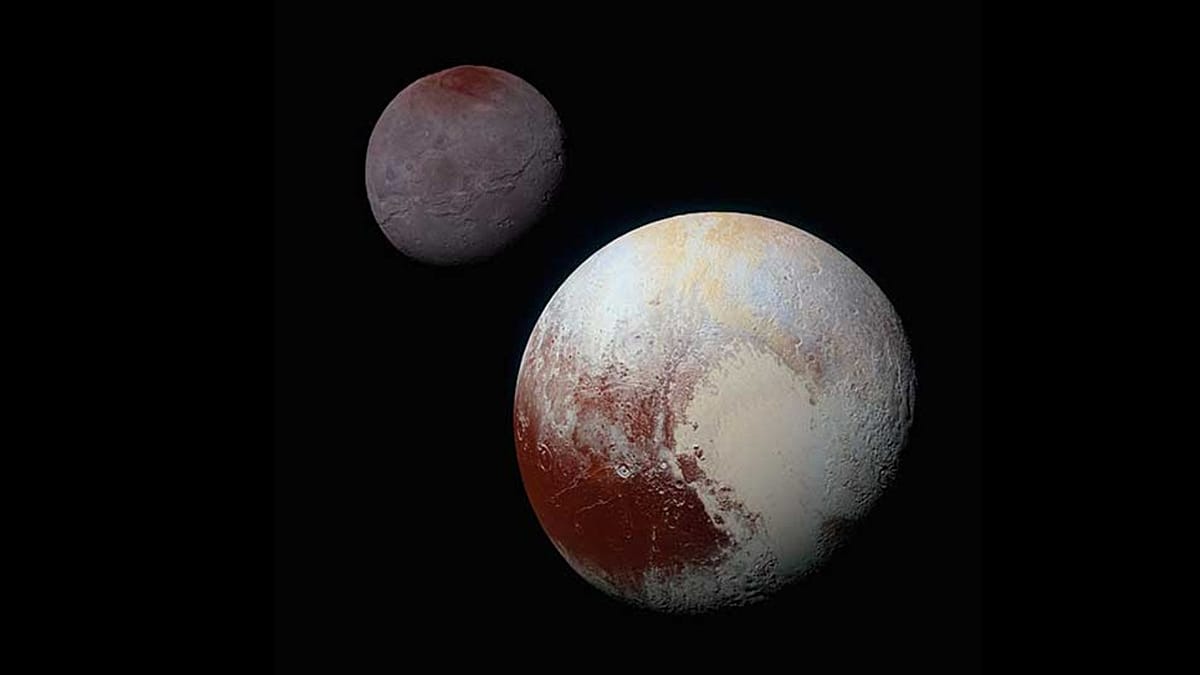
Nearly two decades after the International Astronomical Union (IAU) downgraded Pluto to a dwarf planet, the question of its status has resurfaced in an unexpected venue: a United States Senate hearing on NASA's budget. NASA Administrator Jared Isaacman told lawmakers that he personally favors restoring Pluto's planetary classification and that the agency is preparing scientific papers to push for a formal review.
The exchange took place during a hearing on the agency's 2027 budget request, when Republican Senator Jerry Moran of Kansas—whose home state produced Pluto's discoverer, Clyde Tombaugh—raised the topic. Isaacman replied that he is “very much in the camp” of those who want Pluto reinstated, and that NASA is working on research that he hopes to “escalate through the scientific community to revisit this discussion.”
What the IAU Decided—and Why It Matters
The IAU's 2006 definition requires a planet to meet three criteria: it must orbit the Sun, have enough gravity to pull itself into a spherical shape, and have cleared its orbital neighbourhood of debris. Pluto satisfies the first two but fails the third, as it resides in the Kuiper Belt, a region crowded with other icy bodies. That led to its reclassification as a dwarf planet, a decision that has never been formally revisited.
The debate is not merely semantic. Classification shapes how scientists allocate research funding, how textbooks present the solar system, and how the public engages with astronomy. For European researchers, the issue also touches on the role of the IAU, which is based in Paris and remains the sole internationally recognised authority for naming celestial objects. Any change would require a vote by its membership, which includes astronomers from across Europe and the world.
New Evidence from New Horizons
Part of the renewed interest stems from data gathered by NASA's New Horizons spacecraft, which flew past Pluto in July 2015. The probe revealed a geologically active world with mountains, nitrogen-ice glaciers, and a complex atmosphere—features that challenge the notion of a inert rock. These findings have led some planetary scientists to argue that Pluto's internal structure and surface processes are more planet-like than previously assumed.
European space agencies have also contributed to the study of Kuiper Belt objects. The European Space Agency's Gaia mission, for instance, has provided precise orbital data for thousands of trans-Neptunian bodies, helping refine our understanding of Pluto's neighbourhood. A reclassification could also affect future mission planning, as the European Space Agency considers its own exploration of the outer solar system.
The debate comes at a time when Europe is grappling with its own scientific and regulatory challenges. The housing crisis testing social stability and the push for social media age limits show how policy decisions—whether on Earth or in space—require clear definitions and international consensus.
What Happens Next
For now, the IAU has not indicated any plans to reopen the 2006 decision. Isaacman's comments, while notable, carry no formal weight outside NASA. But they signal that the question is no longer dormant. If the agency follows through on its promise to publish papers and seek a broader scientific debate, the issue could come before the IAU's general assembly, which next meets in 2027.
Whether Pluto regains its planetary status or remains a dwarf planet, the discussion itself reflects a healthy scientific process—one that Europe, with its strong tradition of international collaboration in astronomy, is well placed to lead.