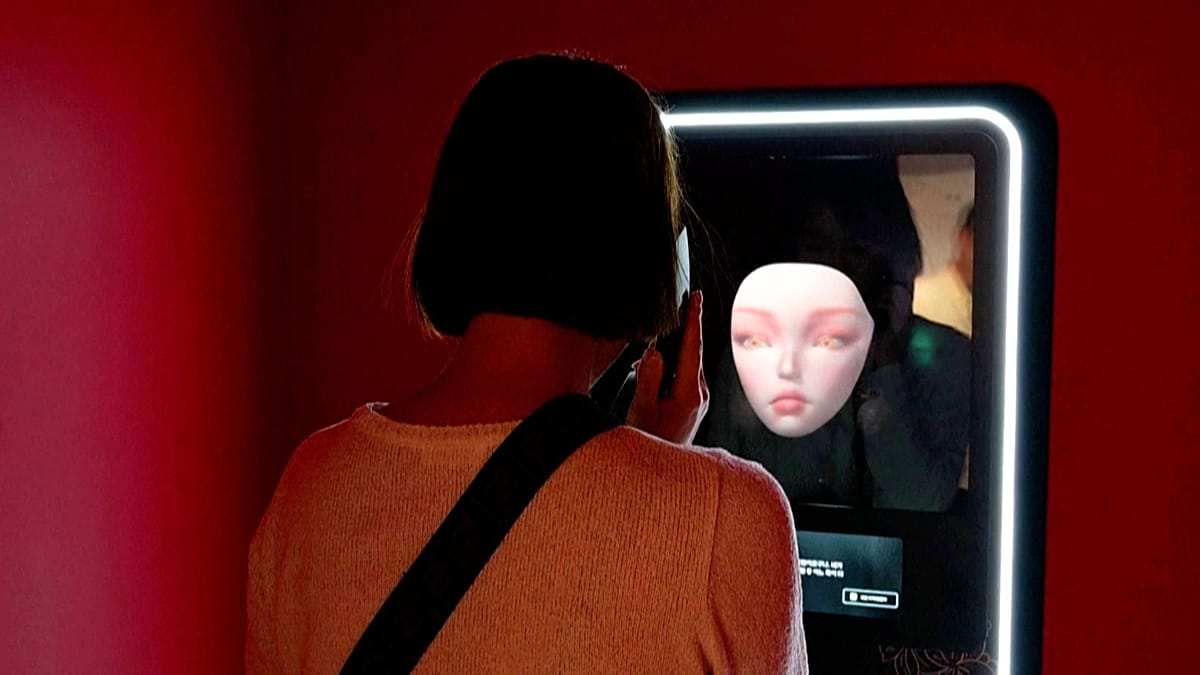
In a narrow alley of Seoul, a new kind of shaman has set up shop. This one, however, is not human. A storefront in the South Korean capital is pioneering the use of artificial intelligence to provide fortune-telling services, replacing traditional practitioners with digital avatars and robotic interfaces. The service is rooted in "saju," a Korean divination method dating back centuries that interprets a person's destiny based on the year, month, day, and hour of their birth.
The Algorithmic Oracle
Customers visiting the establishment input key personal data, which is then processed by an AI system. The algorithm analyzes this information according to the complex principles of saju, which traditionally considers the interplay of cosmic elements and their influence on an individual's life path. The resulting predictions—concerning career, relationships, and health—are delivered not by a person in ritual dress, but through a screen or a mechanized interface. This fusion of deep-seated cultural practice with cutting-edge technology highlights a unique facet of South Korea's rapid digital transformation, where the ancient and the ultra-modern frequently converge.
The development raises intriguing questions about authenticity, tradition, and the nature of trust in an automated age. While some may view it as a gimmick, proponents argue it makes an esoteric practice more accessible and consistent, free from human error or subjective bias. The trend also reflects broader global patterns where AI is being applied to domains once considered exclusively human, from creative arts to spiritual guidance. In Europe, similar explorations exist at the intersection of technology and personal insight, such as research into how gut microbiome patterns could predict Parkinson's disease risk years in advance, showcasing a different, medically-grounded form of algorithmic forecasting.
A European Perspective on Tech and Tradition
From a European standpoint, this Korean experiment is a compelling case study in how societies negotiate technological disruption with cultural heritage. Europe itself is no stranger to these tensions, whether in debates over AI regulation in Brussels or the preservation of intangible cultural practices from Sami joiking in Scandinavia to Flamenco in Spain. The EU is actively shaping the rules of the digital age, seeking to balance innovation with ethical guardrails—a conversation that inevitably touches on the human aspects of technology adoption.
The economic and business implications are also significant. South Korea is a global leader in consumer electronics and digital innovation. The commercialisation of AI-driven services, even in niche sectors like fortune-telling, points to a market eager to monetise automation and personal data. This has parallels in Europe's own tech landscape, where startups often seek to digitise and scale traditional services. However, it also invites scrutiny over data privacy, a cornerstone of European policy through regulations like the GDPR. The collection of sensitive personal information for spiritual analysis would undoubtedly trigger rigorous debate if such a service were launched in Berlin, Paris, or Amsterdam.
Furthermore, the story touches on a universal human desire to understand the future, a theme that transcends borders. While the methods may differ—from algorithmic saju to economic modelling or political forecasting—the impulse is the same. In European politics, for instance, analysts constantly attempt to predict outcomes, such as the institutional shifts that may follow debates on ending unanimity to prevent future vetoes in the EU Council. The tools are technical, but the goal of navigating uncertainty connects Seoul's digital shamans to policymakers in Brussels.
Culturally, the phenomenon underscores how technology is not merely a neutral tool but is shaped by and shapes the society that creates it. South Korea's specific history with shamanism and its contemporary status as a digital powerhouse create the unique conditions for this innovation. In contrast, Europe's diverse spiritual and philosophical traditions might interact with AI in profoundly different ways, perhaps through apps offering Stoic meditation or digital tarot readings filtered through a distinctly European aesthetic.
Ultimately, the Seoul AI fortune-telling shop is more than a curiosity. It is a window into how one advanced society is reconfiguring a deeply traditional practice for the 21st century. It challenges observers in Europe and beyond to consider what aspects of human experience can or should be automated, and where the line between cultural preservation and technological progress truly lies. As AI continues to permeate every layer of society, from healthcare to entertainment, the questions posed by a robotic soothsayer in a Korean alleyway are questions we will all have to answer.