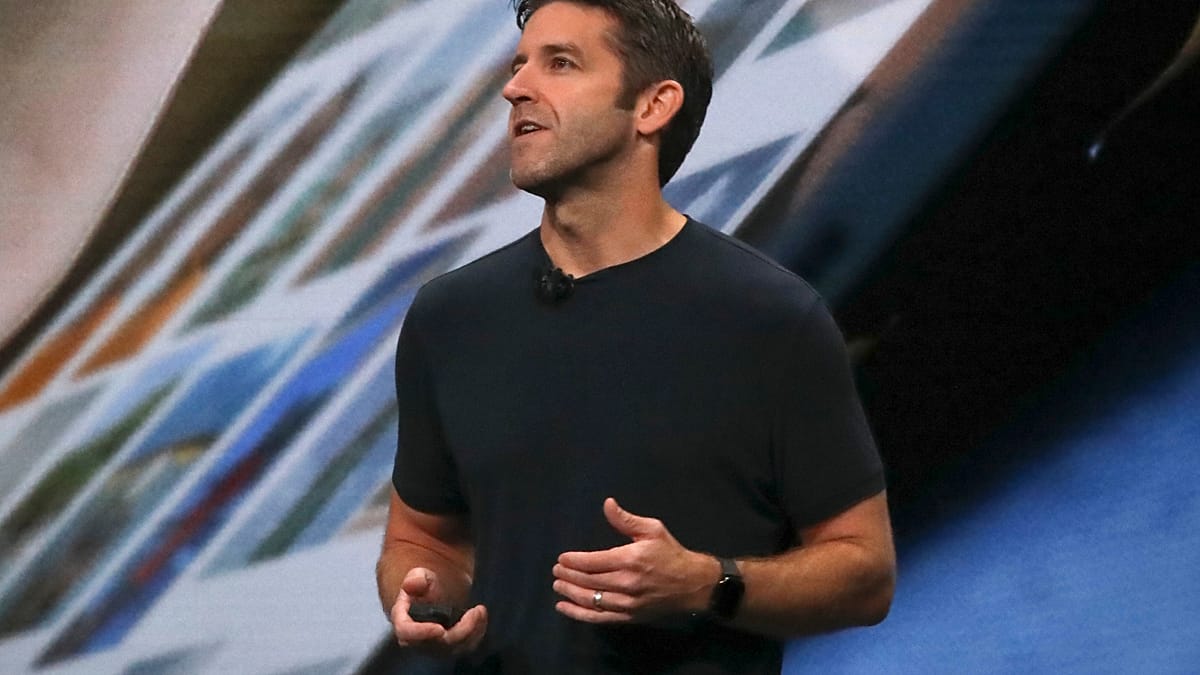
Apple's incoming chief executive, John Ternus, represents a choice of continuity for the world's most valuable company, but he assumes command at a moment of profound technological and geopolitical transition that will resonate across European markets. The 50-year-old hardware engineer, who has spent nearly his entire 25-year career at Apple, will take over from Tim Cook in September. Cook's tenure saw Apple's valuation soar to $4 trillion, but also entrenched its reliance on a global supply chain facing increasing strain.
Ternus, a University of Pennsylvania mechanical engineering graduate, joined Apple after a brief stint at a virtual reality startup. He rose steadily through the hardware engineering division, eventually overseeing the teams responsible for the iPhone, iPad, and Mac. His fingerprints are on pivotal products like the Apple Watch and AirPods, devices that helped the company expand its ecosystem beyond the smartphone.
“I am profoundly grateful for this opportunity to carry Apple’s mission forward,” Ternus stated in the appointment announcement. “Having spent almost my entire career at Apple, I have been lucky to have worked under Steve Jobs and to have had Tim Cook as my mentor. It has been a privilege to help shape the products and experiences that have changed so much of how we interact with the world.”
A Steady Hand for a Pivotal Shift
Tim Cook explicitly framed the succession as a vote for stability, calling Ternus “without question the right person” to lead. This suggests Apple's board is prioritising a smooth transition over a radical strategic departure. However, the challenges awaiting the new CEO are likely to push him far beyond his engineering roots and into the arenas of high-stakes geopolitics and cutthroat technological innovation.
The most immediate test is artificial intelligence. While Apple dominated the smartphone era, it is perceived to be trailing rivals like Google and Microsoft in the race to define the next AI-powered user experience. “The challenge for the new CEO is really to make sure Apple is able to crack AI as the new user interface,” Thomas Husson, an analyst at Forrester Research, told the Associated Press. For European consumers and regulators in Brussels, Apple's AI strategy will influence everything from data privacy standards to competitive dynamics in the digital single market.
This raises fundamental strategic questions: Will Apple accelerate development of its own proprietary AI systems, or deepen its existing partnership with Google to enhance Siri? The decision carries significant weight for a continent increasingly focused on technological sovereignty and the ethical governance of AI.
Navigating a Fractured Global Landscape
Beyond Silicon Valley, Ternus must manage Apple's intricate and politically sensitive global operations. The company's vast supply chain remains deeply anchored in China, a dependency that creates vulnerability amid rising geopolitical tensions and trade pressures. Cook spent years cultivating political relationships, including with the Trump administration, to steer Apple through tariff wars. That diplomatic mantle now passes to his successor.
For Europe, this has direct implications. Supply chain diversification efforts could benefit manufacturing hubs in Central Europe, while trade disputes could affect pricing and availability for consumers from Lisbon to Helsinki. Furthermore, Apple's ongoing battles with the European Union over competition rules, tax arrangements, and the Digital Markets Act will require deft navigation. The company's relationship with Brussels is as critical as any with Washington or Beijing.
Global instability also presents indirect challenges. As the EU Energy Chief warns of prolonged price hikes from Middle East conflict, broader economic uncertainty could dampen consumer spending on premium electronics. Similarly, Apple, like all multinationals, must account for the wider human cost of conflicts, a reality underscored by stories like Darfur's enduring crisis, which shape the international context in which corporations operate.
Despite his long tenure, John Ternus remains an enigmatic figure outside of Apple's Cupertino headquarters. That anonymity will vanish swiftly. As he prepares to lead a company whose products are woven into the daily fabric of life from Berlin to Barcelona, the low-profile engineer must prove he can do more than build exceptional devices—he must define Apple's next chapter in an increasingly complex world. His success or failure will ripple through European economies, influence regulatory debates, and determine the technological tools used by millions.