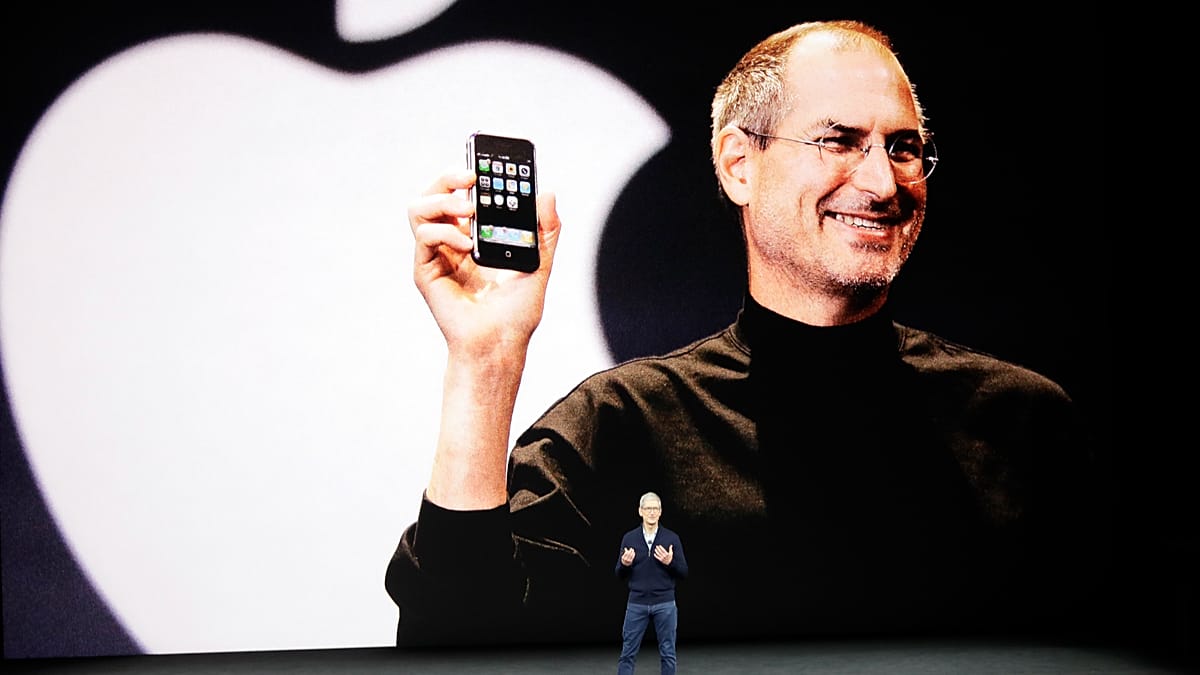
Tim Cook will conclude his tenure as chief executive of Apple on 1 September, transitioning to the role of executive chairman while John Ternus, the company's senior vice president of Hardware Engineering, assumes the CEO position. Cook's 15-year leadership saw Apple evolve from a highly successful company into one of the defining technological empires of the century, with its market valuation increasing by roughly €3.3 trillion.
Stepping into the Founder's Shadow
Cook first assumed temporary leadership in 2009 when Steve Jobs took medical leave. As chief operating officer, he was already responsible for Apple's global supply chain and sales operations. During an early investor call, he laid out what became known internally as "The Cook Doctrine," emphasising that Apple's core mission was to "make great products" and that this principle was immutable, regardless of leadership. Cook's deep loyalty was further demonstrated when he reportedly offered part of his liver to Jobs, who shared his rare blood type, an offer Jobs declined.
When Jobs formally resigned in 2011, he explicitly recommended Cook as his successor, expressing confidence that "Apple's brightest and most innovative days are ahead of it." In a staff email on his first day as permanent CEO, Cook assured employees that "Apple is not going to change," pledging to preserve the unique culture Jobs had built. However, industry observers across Silicon Valley and European tech hubs like Berlin and Stockholm questioned whether he could maintain the company's famed innovative momentum.
Navigating Early Challenges and Defining a New Path
Cook's inaugural major product launch, the iPhone 4S, was met with a lukewarm reception from investors and media, criticised for being incremental despite introducing Siri and iCloud integration. His first year was also marked by significant external pressures, including scrutiny over labour conditions at supplier factories in China and elsewhere. Cook responded by opening Apple's supply chain to audit by the Fair Labor Association and penning an op-ed committing to care for "every worker" in its global network.
Concurrently, Apple engaged in high-stakes patent litigation against rivals like Samsung and Google in courts from California to Mannheim. Despite these challenges, by April 2012, Apple's valuation exceeded $600 billion (approximately €522 billion at the time), making it the world's most valuable company—a status with significant implications for its extensive operations and retail footprint across Europe, from its flagship stores on London's Regent Street to Paris's Opéra district.
Architecting the Seamless Ecosystem
A central pillar of Cook's strategy was the deliberate construction of an integrated hardware and software ecosystem. At the 2014 Worldwide Developers Conference, he articulated a vision of engineering "platforms, devices and services together to create a seamless experience that is unparalleled in the industry." This philosophy materialised in features like Handoff and AirDrop, designed to tether Apple devices together.
The mid-2010s saw the launch of foundational services like Apple Pay, embedding the iPhone into daily financial transactions—a move that later intersected with evolving EU regulations on digital payments and competition. Product expansions, including the Apple Watch, AirPods, and Apple Music, further cemented this "ambient" paradigm where devices function as extensions of one another. Cook emphasised that these products were designed to work in concert, using cellular connectivity to synchronise user experiences seamlessly. This ecosystem strategy proved enormously profitable, locking users into Apple's world and creating recurring revenue streams.
Reaching Unprecedented Valuation and the AI Horizon
Under Cook's stewardship, Apple achieved a historic milestone in August 2018 by becoming the world's first publicly traded company to reach a $1 trillion market valuation. This financial ascendancy occurred as the company began its deeper foray into artificial intelligence, integrating machine learning across its services and setting the stage for the current competitive landscape. Cook's successor, John Ternus, will inherit the complex task of navigating AI innovation alongside stringent new European regulations like the Digital Markets Act, which directly impacts Apple's business model.
Cook's legacy is one of scaled growth and operational mastery. He took the helm with a mandate to sustain Apple's course but ultimately expanded its reach, value, and technological integration. As he moves to the boardroom, the company he leaves behind is a colossus whose decisions on privacy, competition, and supply chain ethics continue to resonate in the corridors of the Bundestag and the Élysée. His tenure demonstrates that in the European and global tech arena, disciplined execution can build empires as definitively as disruptive invention.