Two decades after first documenting the genocide in Sudan's Darfur region, Swedish photographer and aid worker Peter Biro has returned. His latest work reveals a devastating continuity: the patterns of violence, displacement, and human suffering he witnessed in the early 2000s are repeating in Sudan's current civil war. For a European audience, his photographs serve as a stark reminder of a protracted crisis where international attention has waned, but human catastrophe has only deepened.
A Landscape of Familiar Devastation
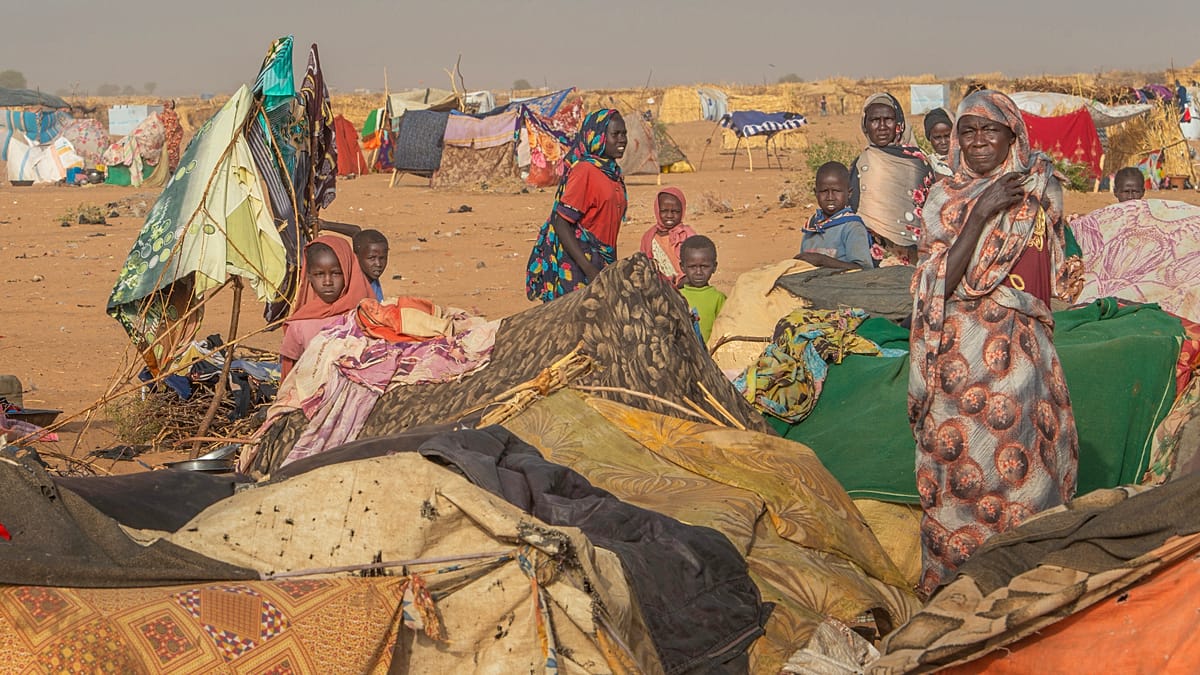
Biro's return to North Darfur, specifically to the sprawling displacement site around Tawila, brought a chilling sense of déjà vu. "History repeats itself," Biro told European Pulse. "The scars run deeper, with civilians once again caught in the cycle of violence." From a distance, Tawila appears as a vast, fragile mosaic of tarpaulins and makeshift shelters, a testament to forced migration on an almost unimaginable scale.
The numbers are staggering. Approximately 700,000 people now live in and around Tawila, making it one of the largest concentrations of internally displaced persons globally. This mass influx has shattered local infrastructure, overwhelming water points, health services, and food distribution networks. Aid systems, perennially underfunded and fragile, are struggling to cope with the sheer density of human need.
"I first came to Sudan’s Darfur region over two decades ago, when the world was just beginning to grasp the scale of the first war," Biro recalled. "I left thinking that what I had witnessed was the worst it could get. Returning now, in the third year of Sudan’s current war, I realise how wrong that was."
War Within a War: Deepening Historical Fractures
The current conflict, which erupted in April 2023 between the Sudanese Armed Forces and the paramilitary Rapid Support Forces (RSF), is often framed as a national power struggle. However, in Darfur, it has folded into older, more entrenched conflicts. The same fractures Biro documented twenty years ago—centered on land, identity, and political power—have reopened and deepened. The RSF itself has roots in the Janjaweed militias accused of atrocities during the earlier genocide.
For the civilians of Darfur, this means a multi-layered nightmare. Families interviewed by Biro have fled not once, but multiple times, moving from one precarious refuge to another. With each displacement, they lose more: possessions, livelihoods, social bonds, and loved ones. Tawila has become a destination of last resort. "People arrive here because there is nowhere else left to go," Biro observed.
The humanitarian consequences are severe and echo crises elsewhere that impact European policy and aid priorities. The strain on resources in Tawila mirrors challenges seen in other displacement hotspots, underscoring the global nature of such emergencies. Meanwhile, the EU Energy Chief has warned of prolonged price hikes from Middle East conflict, a reminder of how regional instability can have direct economic repercussions for European citizens.
The Weight of Witness and Fading Attention
Biro's photo essay juxtaposes images from 2004 and 2006 with those from 2026. The parallels are haunting: elderly women resting outside thorn-bush shelters, families arriving with nothing, and the overwhelming scale of informal settlements. This visual continuity challenges the international community's tendency toward crisis fatigue. As conflicts drag on, media attention fades, but the reality on the ground does not disappear.
"I think back to my first time in the region... when access was difficult but not impossible, and the world’s attention, however fleeting, still translated into some momentum," Biro noted. That momentum has largely dissipated, even as needs have skyrocketed. The crisis in Sudan competes for attention and resources with other global conflicts, including the war in Ukraine, where former Finnish Prime Minister Sanna Marin has urged the EU to integrate battlefield lessons into defence strategy.
The European Union and its member states remain significant humanitarian donors in Sudan. However, Biro's work raises difficult questions about the efficacy of aid in the face of unending conflict and whether diplomatic efforts are sufficient to address the root causes of violence that he has now documented across generations. The international legal framework is also tested by such protracted crises, much as it was in the recent Vienna court case involving a former Austrian diplomat.
Peter Biro's dispatch from Darfur is more than a retrospective; it is a urgent contemporary document. It forces viewers to confront a "forgotten war" that, for millions of Sudanese, has never ended. His photographs insist that the resilience of displaced people—visible in their daily struggles to rebuild and survive—should not be mistaken for a solution, nor should it excuse the international community from its responsibility to seek one.