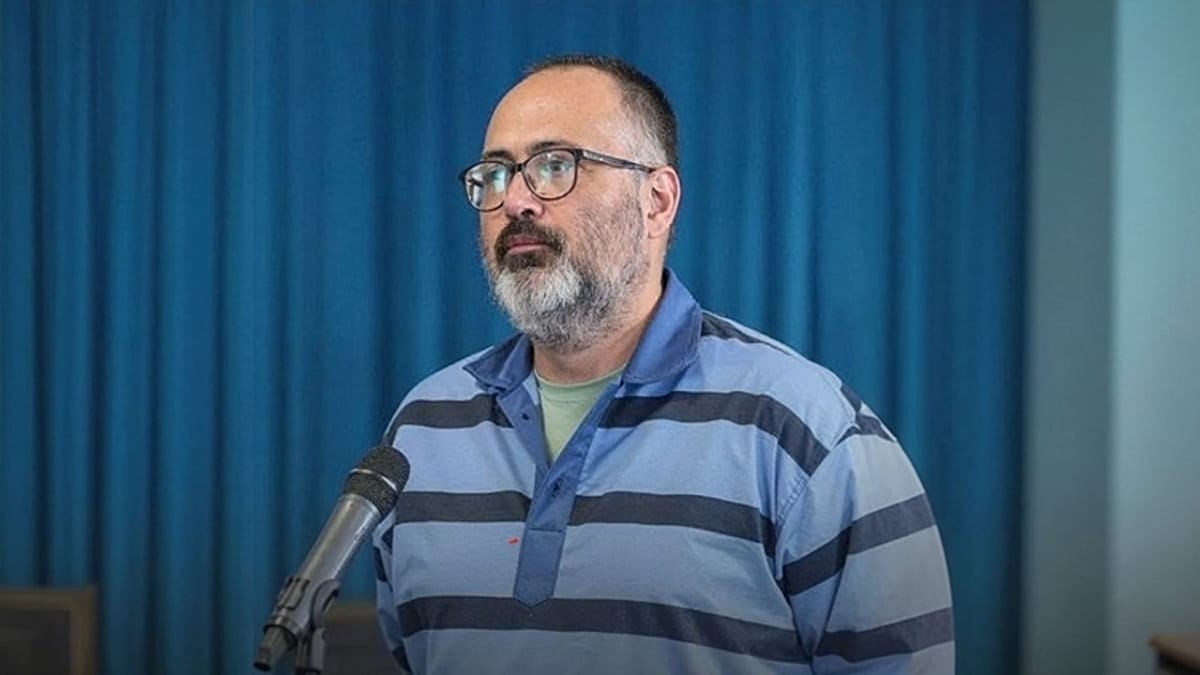
Iran has executed a former employee of its Atomic Energy Organisation on charges of espionage for Israel, a case that has drawn sharp criticism from human rights monitors over the country's judicial process and a broader surge in state-sanctioned killings. The execution of Mehdi Farid, reported by the judiciary's Mizan news agency on Wednesday, is the latest in a series of death sentences carried out against individuals accused of collaborating with Mossad.
According to the official Iranian account, Farid, who was from Arak, was convicted of attempting to infect the internal network of a sensitive defence-related organisation on orders from Israeli intelligence officers. Mizan stated he provided external access by repeatedly connecting equipment via USB and supplied information on organisational structures, building locations, security protocols, and staff identities. The agency claimed Farid made a "frank confession" during judicial proceedings.
Contested Narrative and Judicial Process
This official narrative is starkly contested by the Iranian civil society organisation Hengaw. Citing an informed source, Hengaw presents Farid as an IT student who, after rejecting Israeli requests to act against nuclear scientists, voluntarily approached the security office of the Atomic Energy Agency to hand over information and funds he had received. The source claims Farid was charged with "disclosing information and collaborating with Israel" despite his cooperation with domestic institutions, and that this cooperation was ignored by the courts.
Human rights organisations have repeatedly warned about the lack of fair trials in such security cases, highlighting the prevalence of coerced confessions, denied access to independent legal counsel, and media blackouts. Farid was arrested in the winter of 2022 and held in Tehran's Evin Prison. Initially sentenced to 10 years imprisonment by Branch 26 of the Revolutionary Court, his sentence was changed to death after a prosecutor's objection.
The case is not isolated. Iranian media also reported the execution this week of Amir Ali Mirjaafari, convicted of setting fire to a mosque in Tehran and collaborating with Israel and the US during protests. Judicial officials alleged he was part of a "Mossad network." Another inmate, Ahsan Afwal, has reportedly been transferred to Qezel-Hesar prison ahead of a possible execution.
A Record Surge in Executions
The executions occur amid a dramatic increase in Iran's use of the death penalty. A report by Iran Human Rights and Together Against the Death Penalty states that at least 1,639 people were executed in Iran in 2025, the highest annual number recorded since 1989. This marks a 68% increase from the 975 executions recorded in 2024.
Since the 12-day conflict between Israel and Iran in June 2025, human rights reports indicate at least 10 people have been executed specifically on charges related to "collaborating with Mossad and Israel." Judiciary chief Gholam Hossein Mohseni Ejei has described the domestic situation as an "all-out war" and called for speeding up the implementation of heavy sentences, including executions, following recent protests.
The escalating tensions and judicial crackdown in Iran have implications for European security and foreign policy. The EU maintains a critical diplomatic stance on Iran's human rights record and its nuclear programme, with negotiations often stalling over these core issues. Furthermore, regional instability directly affects European interests, from energy security and prolonged price hikes to broader geopolitical stability.
Europe's approach to intelligence matters and extraterritorial threats is also relevant in this context. While distinct from Iran's judicial actions, European courts have recently grappled with complex espionage-adjacent cases, such as the Vienna court's clearance of a former Austrian diplomat in a case involving a Novichok document. These episodes highlight the intricate legal and security challenges faced by democracies.
The technological dimension of the alleged espionage—involving cyber infiltration via USB devices—also intersects with ongoing European debates about sovereignty and security in the digital age. Discussions around AI, defence technology, and cultural claims, as sparked by Palantir's recent manifesto, underscore the continent's cautious navigation of technological power and its potential weaponisation.
For European capitals from Berlin to Paris, the situation in Iran presents a multifaceted challenge: balancing principled opposition to the death penalty and unfair trials with the pragmatic necessities of diplomacy, non-proliferation efforts, and regional security management. The reported executions and the regime's hardening domestic posture will likely complicate an already fraught relationship.