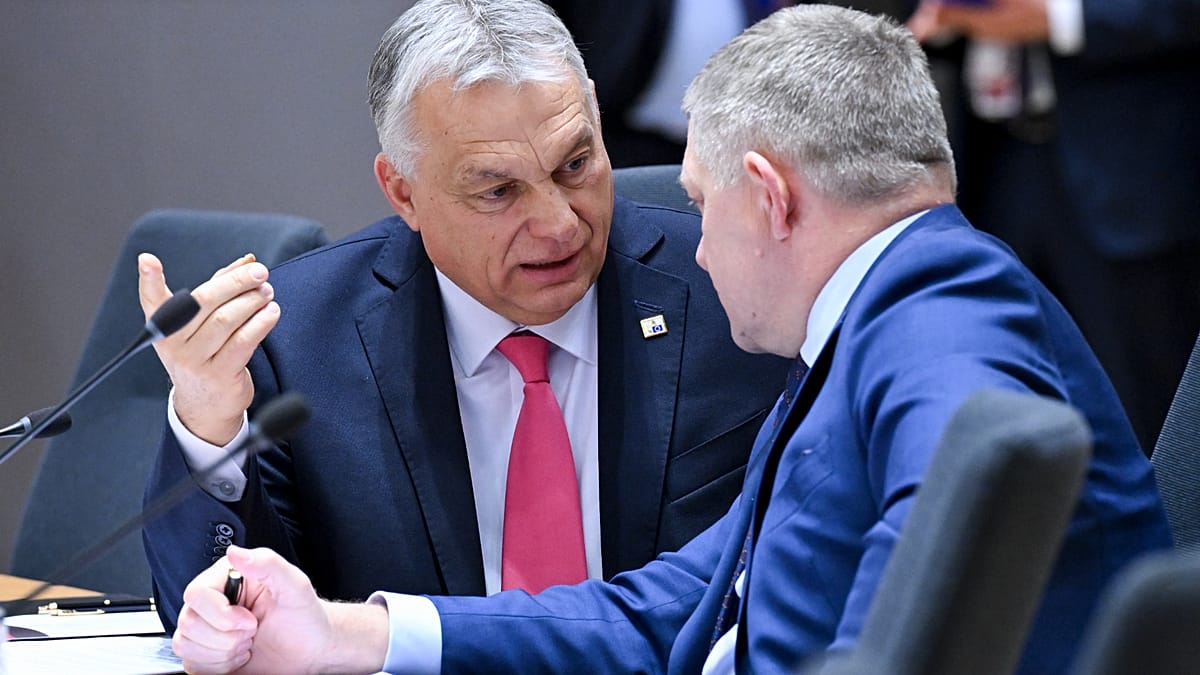
The decisive electoral defeat of Hungarian Prime Minister Viktor Orbán, a figure who frequently leveraged his country's veto power to stall European Union decisions, has ignited a fresh and urgent debate in Brussels: is the era of unanimity in EU foreign policy finally over?
Orbán's government, over 16 years, cast 21 of the bloc's 48 recorded vetoes, most recently blocking a €90 billion loan package for Ukraine in March. His successor, Péter Magyar, has signalled a more cooperative stance, pledging to restore relations with Brussels and likely unblock the Ukrainian aid. Yet, Magyar's government remains opposed to key EU policies on migration and Ukraine's fast-tracked accession, underscoring that the fundamental tension between national interests and collective action persists.
A System Designed for Sovereignty, Now a Tool for Stalemate
The veto power is a foundational element of the EU, enshrined in treaties to protect national sovereignty, particularly for smaller member states. It applies to sensitive areas like foreign policy, defence, and taxation, where decisions require the unanimous consent of all 27 members. While approximately 80% of EU legislation is passed via qualified majority voting, the remaining unanimous domains are often the most geopolitically critical.
"The system was built for a different Europe," said a senior EU diplomat, speaking on condition of anonymity. "It assumes a perpetual alignment of strategic interests that simply does not exist in a union of 27 diverse nations facing wars and global competition." The mechanism allows a single country, as Hungary demonstrated, to paralyse collective action, a vulnerability critics label a profound security risk.
The Push for Reform Gains Momentum
Leading voices are now arguing that Orbán's departure presents a strategic opening to overhaul the system. European Commission President Ursula von der Leyen stated plainly this week that "moving to qualified majority voting in foreign policy is an important way to avoid systemic blockages." She urged leaders to "use the current momentum to move forward on this."
This call echoes longstanding appeals from figures like French President Emmanuel Macron, who in 2022 argued for treaty reform to extend majority voting. The rationale, as von der Leyen told EU leaders at a February retreat, is that "we cannot move at the speed of the slowest" if the bloc is to be a decisive global actor. The argument finds support in the European Parliament, where German MEP Daniel Freund has described unanimity as "a security risk for Europe" enabling blackmail.
The need for agile, unified foreign policy is underscored by ongoing global crises, from the Middle East conflict—where the EU energy chief has warned of prolonged price hikes—to the war in Ukraine, where former Finnish Prime Minister Sanna Marin has urged the EU to integrate battlefield lessons into its defence strategy.
Resistance from Defenders of National Prerogatives
However, significant opposition remains, concentrated among smaller and midsize states wary of being overridden on vital national interests. Dutch MEP Sander Smit cautions that abandoning unanimity could force countries to adopt policies contrary to their democratic mandates, arguing that sustainable EU decision-making cannot rely on bypassing national democracy.
This tension between efficiency and sovereignty is a core EU dilemma. Reforming the unanimity rule would require treaty change, a process needing—ironically—unanimous approval from all member states, followed by arduous national ratifications. The political will for such a monumental task is untested.
The debate also unfolds against a backdrop of internal rule-of-law challenges, as seen in cases like Greece, where parliament stripped immunity from MPs in an EU fraud probe. These issues test the bloc's cohesion and its ability to hold members accountable.
For now, the immediate blockage caused by Orbán appears resolved. But the underlying structural flaw remains. As the EU navigates an increasingly volatile world, the question is whether it can reform its decision-making engine before the next crisis—and the next veto—brings it to a halt once more.