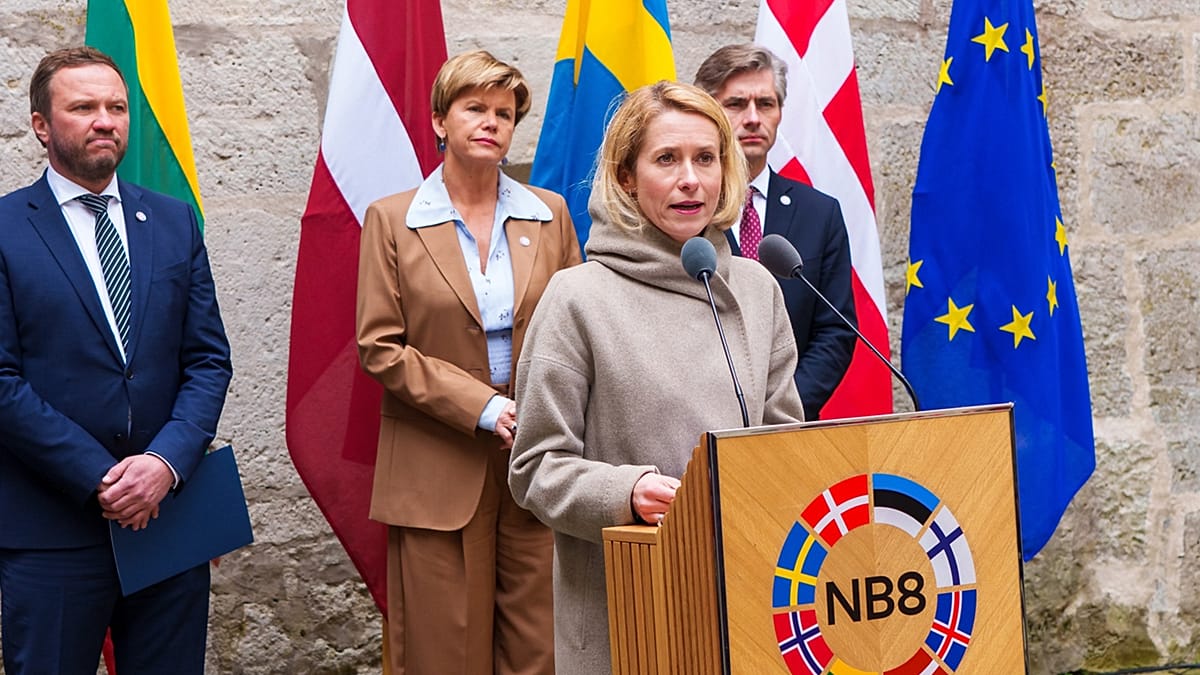
European Union foreign policy chief Kaja Kallas has forcefully dismissed the idea of the bloc initiating direct negotiations with Russia to end the war in Ukraine, arguing that such a move would amount to a self-inflicted humiliation. Speaking during an official visit to Estonia on Thursday, Kallas warned that Moscow is not genuinely interested in dialogue and is instead preparing for a prolonged military standoff with the West.
“What we have seen so far is that Russia does not want to engage in any kind of dialogue. We should not humiliate ourselves by being the 'demandeurs' (saying) 'please, we beg you to talk to us',” Kallas said. “We should put them in a position where they (the Russians) actually go from pretending to negotiate to actually negotiate.”
Her remarks come as EU foreign ministers prepare to meet informally in Cyprus on 10 and 11 May to discuss the bloc’s post-war demands for Moscow. The debate will centre on the conditions the EU should insist Russia meet before any meaningful peace process can begin.
Deterrence and the Danger of Weakness
Kallas underscored that Russia is “gearing up its military for a long-term confrontation with the West,” and that the Kremlin’s willingness to test NATO depends directly on the credibility of the alliance’s deterrence. “Showing weakness only invites aggression,” she said. “There can be no return to ‘business as usual’ with Russia, even after Moscow ends this war in Ukraine.”
Her comments were made a day after US President Donald Trump held a lengthy phone call with Russian President Vladimir Putin. During that conversation, Putin proposed a brief ceasefire to coincide with Victory Day celebrations in Moscow next week—celebrations that have already been scaled back due to Ukrainian long-range strikes. Ukrainian President Volodymyr Zelenskyy responded by saying he had instructed his team to seek clarification from the White House, reiterating Kyiv’s position: “Our proposal is a long-term ceasefire, reliable and guaranteed security for people, and a lasting peace. Ukraine is ready to work toward this in any dignified and effective format.”
When asked about the US-brokered peace efforts, Kallas was dismissive, stating “there is nothing happening there.” She also criticised Washington’s decision to grant Moscow sanctions relief in response to rising energy prices triggered by the closure of the Strait of Hormuz—a policy that contrasts sharply with the EU’s recent adoption of a new package of economic restrictions against Russia.
“When we see these calls between President Trump and President Putin, there are always a lot of questions unanswered, considering that Russia is openly praising the heroic battle that Iran is (waging) against America,” Kallas said. “Does it mean that there is actually also more pressure on Russia because they are helping Iran to fight a war against them? We would like to see that pressure, and we did not see that in that call.”
Internal EU Divisions Persist
The question of direct EU-Russia engagement has exposed sharp divisions among member states. In January, French President Emmanuel Macron and Italian Prime Minister Giorgia Meloni both backed the idea of opening a channel to Moscow. Austria, the Czech Republic, and Luxembourg expressed support, while Germany, Estonia, Lithuania, and Cyprus opposed it. The debate lost momentum after the US and Israel struck Iran, shifting diplomatic attention to the Middle East. Today, the matter remains unresolved.
Last week, Belgian Prime Minister Bart De Wever claimed that the idea of EU-Russia talks had become “mainstream thinking” among his fellow leaders, suggesting the issue is far from settled. For now, Kallas’s firm stance signals that the EU’s top diplomat will continue to resist any move that could be perceived as weakness—even as the bloc grapples with the broader geopolitical fallout of the war and the shifting priorities of its transatlantic allies.