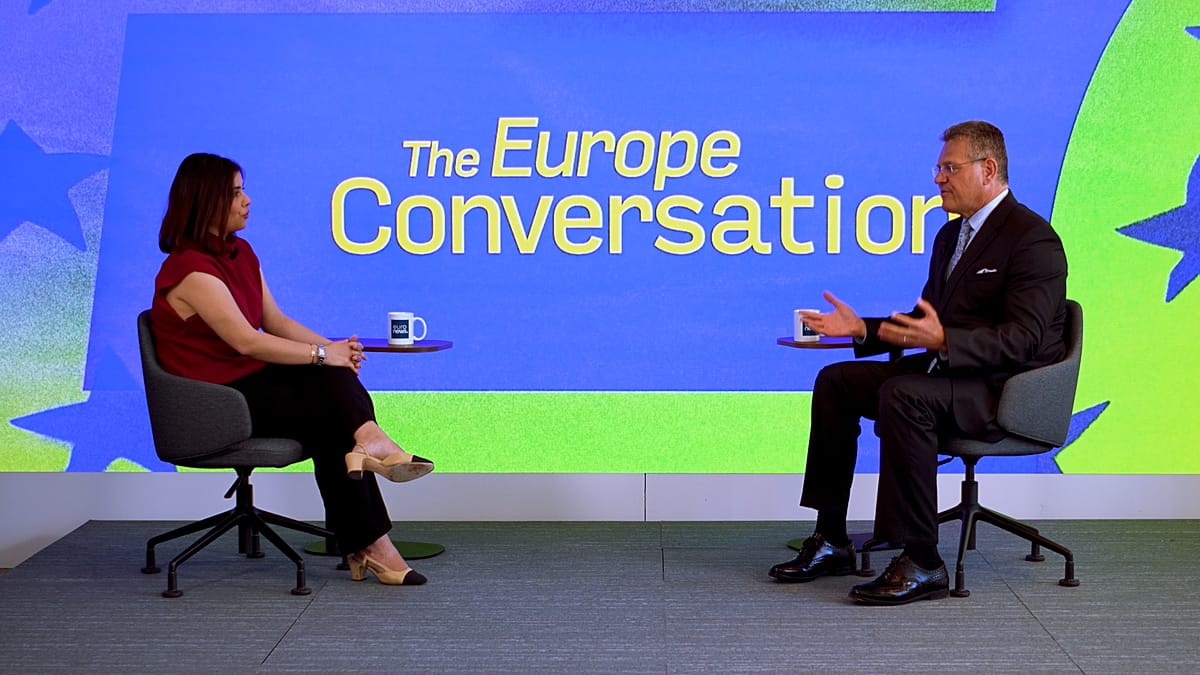
After a series of meetings in Washington, EU Trade Commissioner Maroš Šefčovič told Euronews that Brussels has agreed to establish a “digital dialogue” with the United States. The move comes after months of pressure from the Trump administration, which has repeatedly called on the EU to roll back digital rules it views as obstacles for American technology giants.
Šefčovič made clear that the European Commission will not reopen its flagship legislation—the Digital Services Act (DSA) and the Digital Markets Act (DMA)—which are designed to protect consumers and ensure fair competition. “We cannot give anything that concerns our legislation, but we are ready to talk,” he said. “What we both need is a digital dialogue.”
Steel and aluminium tariffs remain a sticking point
Despite the agreement on digital talks, US tariffs on European steel and aluminium remain at a punitive rate of 50% since June 2025. These tariffs were excluded from the broader trade deal struck last summer, which set US tariffs on most EU goods at 15%. The European industry has been urging a resolution, calling the current rate prohibitive.
Šefčovič acknowledged the impasse: “We still have a problem. That’s very clear.” During his visit, he revived the idea of a “steel ring” to address mutual concerns. “It's the best solution for both of us, because we do not have a problem with our mutual steel trade. We have a problem with excessive capacity hitting global markets,” he explained.
The commissioner highlighted the scale of the challenge: “We are facing 720 million tonnes of excess steel capacity, while European consumption is 140 million tonnes.” China remains the primary source of global overcapacity, a factor that drove President Donald Trump’s initial tariffs on steel and aluminium. The EU has responded by cutting imports by half through new tariffs and quotas, arguing that both sides face the same threat.
Common ground on digital regulation
On digital policy, Šefčovič stressed that the EU and US share “very common tasks” in areas such as online safety and fair competition. He posed rhetorical questions: “What do we want—and what do we not want—appearing on screens for our children? How do we ensure fair competition among operators in the digital market?”
However, he noted that Washington has little interest in reviving the EU-US Trade and Technology Council, a formal dispute-resolution body established under the Biden administration. The current US administration prefers direct, issue-specific talks rather than a structured framework.
The EU’s willingness to engage in dialogue has not yet translated into tariff relief. The steel and aluminium issue topped the agenda during Šefčovič’s visit, but no breakthrough was achieved. The EU has also been exploring cooperation on critical minerals, a topic discussed during the talks.
This development comes as the EU faces growing pressure from within to address trade imbalances and protect its industries. The bloc has recently relaxed state aid rules to shield businesses from energy crises, reflecting its broader strategy to support European competitiveness. Meanwhile, the rise of China hawks within the European Commission signals a tougher stance on trade issues, including overcapacity.
Šefčovič’s remarks underscore the EU’s determination to maintain its regulatory autonomy while seeking pragmatic cooperation with the US. The digital dialogue may open a channel for discussion, but Brussels is not prepared to dismantle the rules that define its digital sovereignty.