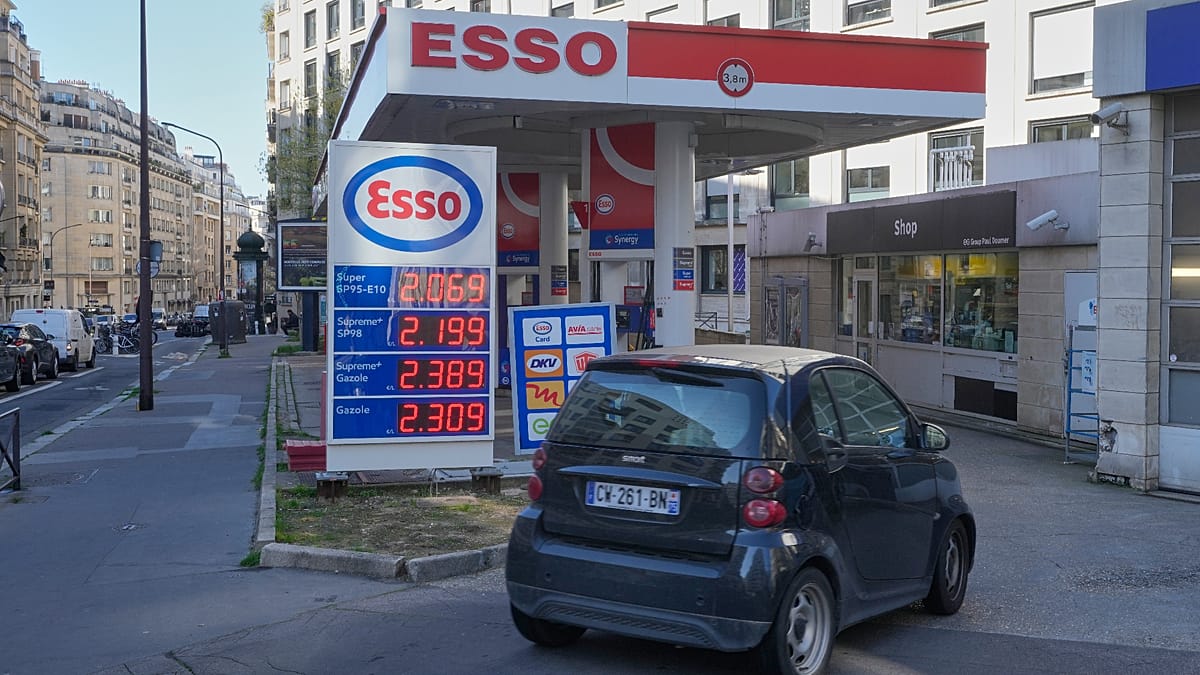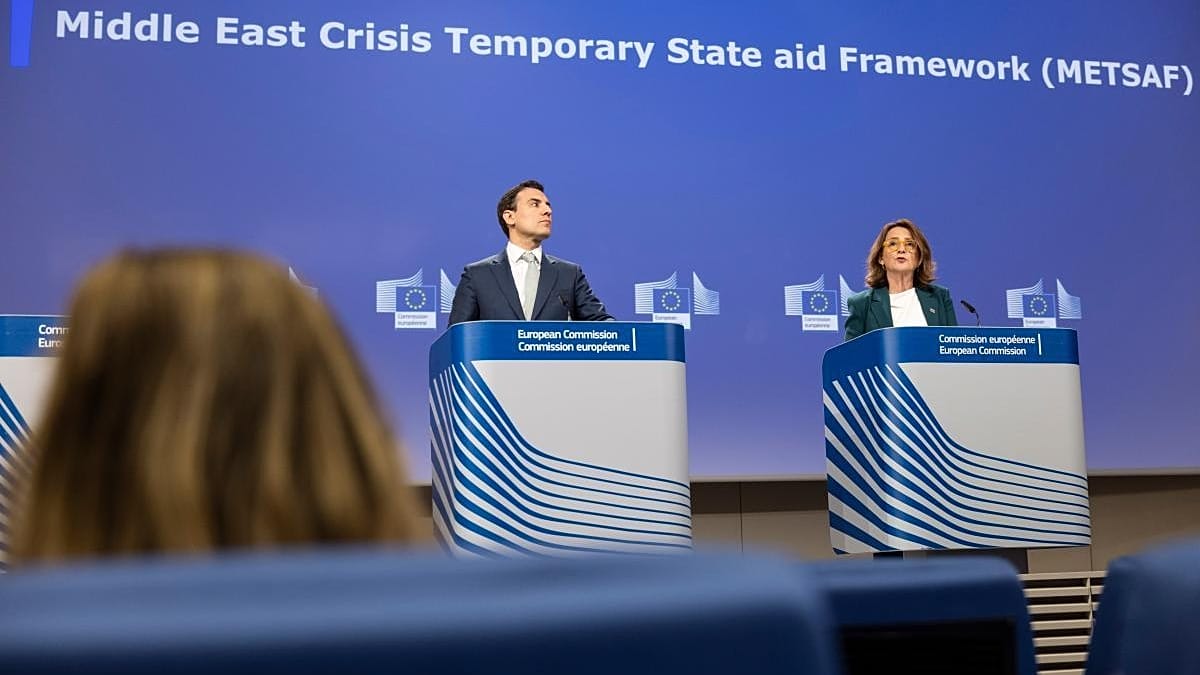
The European Commission announced on Wednesday a temporary relaxation of its strict state aid rules, enabling national governments to cushion fuel-dependent sectors from the sharp rise in energy prices triggered by the ongoing crisis in the Middle East. The emergency measures, effective until the end of December, allow subsidies covering up to 70% of additional fuel and fertiliser costs for farmers, fishing enterprises, and road transport operators.
EU Commission Vice President Teresa Ribera described the package as “a targeted, temporary and proportionate response that will help to shield European businesses from the immediately felt effects of the Middle East conflict.” The crisis has effectively closed the Strait of Hormuz, a critical chokepoint for global oil and gas shipments, sending energy costs soaring across the continent.
Immediate Relief for Hard-Hit Sectors
Farmers across the EU have been grappling with elevated fertiliser and fuel bills, while fishing crews now weigh the viability of each voyage against the cost of diesel. Transport companies face a similar dilemma: absorb the price hikes, pass them on to customers, or scale back operations. Energy-intensive industries, from steel to chemicals, are also feeling the pinch as electricity prices climb, slowing production lines.
Under the revised framework, governments can now offset up to 70% of energy costs for heavy industry, up from the previous cap of 50%. Small hauliers, farmers, and fishermen can access a fixed payment of up to €50,000 with minimal paperwork. “Each individual beneficiary does not need to provide individual receipts from the petrol station,” an EU official noted, underscoring the effort to streamline aid delivery.
Ribera stressed that the measures are designed to be “easily applicable solutions” and that businesses should see financial support within two months, though the speed of disbursement depends on national administrations. The Commission expects member states to tailor aid to local needs, preserving flexibility while maintaining a level playing field in the Single Market.
Level Playing Field Under Strain
EU state aid rules normally prohibit public authorities from granting selective subsidies that could distort competition. The new framework temporarily overrides those restrictions, allowing grants, tax relief, and state-backed guarantees. However, critics argue that such flexibility risks favouring larger member states with deeper fiscal pockets—most notably Germany.
According to Commission data, Germany has accounted for roughly half of all approved state aid since 2022, allocating €73.67 billion in 2022 alone—about a third of the EU total—and maintaining similar levels in 2023. This far exceeds the support provided by France and Italy, raising fears of a subsidy race that could undermine the Single Market. Ribera countered that state aid is only justified where market disruption exists, adding that the announcement responds to “what has been asked at the highest political level and from the capitals.”
The debate echoes earlier tensions during the COVID-19 pandemic and the energy crisis following Russia’s invasion of Ukraine, when Germany’s €200 billion energy shield drew criticism from smaller member states. The current measures, while temporary, could exacerbate these disparities if not carefully monitored.
Energy Transition vs. Immediate Needs
Ribera also framed the crisis as a reminder of the urgency of the energy transition. “The recent spikes in energy prices require an immediate response,” she said, “but the crisis and the fuel surges showed that the energy transition remains the most effective strategy for Europe’s autonomy, growth and resilience.”
Yet environmental groups are wary. Greg Van Elsen, senior industrial policy coordinator at Climate Action Network Europe, suggested the subsidies may inadvertently incentivise greater demand for natural gas, undermining climate goals. The Commission’s own climate chief, Wopke Hoekstra, has recently urged an end to new fossil fuel drilling, as reported in EU Climate Chief Hoekstra Urges End to New Fossil Fuel Drilling Amid Middle East Crisis. The tension between short-term relief and long-term decarbonisation remains unresolved.
The broader geopolitical context—including the Strait of Hormuz closure and its ripple effects on global energy markets—has also prompted discussions on European energy security. A recent summit in Colombia pushed for a fossil fuel phase-out as an energy security imperative, as covered in Colombia Summit Pushes Fossil Fuel Phase-Out as Energy Security Imperative. For now, the Commission’s priority is to keep European businesses afloat while navigating a volatile landscape.
The new state aid framework will remain in place until 31 December, with the possibility of extension if the crisis persists. Member states are expected to notify the Commission of their individual schemes, which must be proportionate and targeted. As Ribera put it, the goal is to “preserve a level playing field in the Single Market” while offering a lifeline to the most exposed sectors.