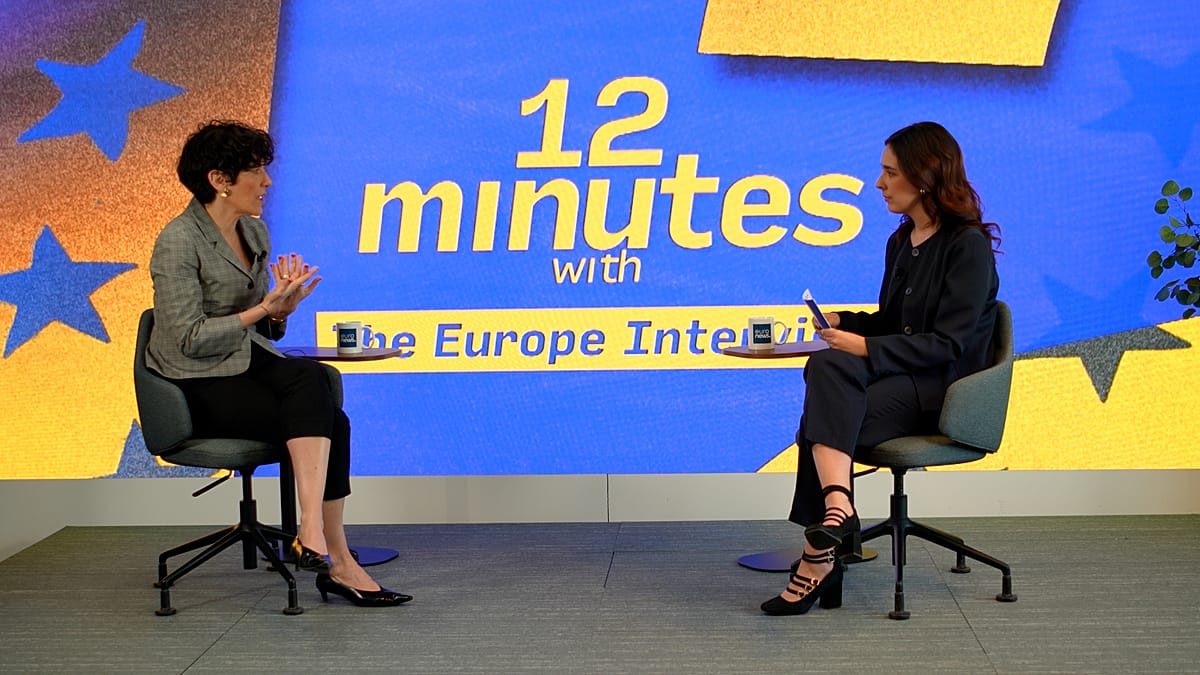
Spain's Migration Minister, Elma Saiz, has positioned the country's migration policy as a potential blueprint for Europe, emphasising integration and the economic contributions of migrants. In an interview with Euronews, Saiz argued that Spain's approach, which includes regularising an estimated 500,000 undocumented migrants, is both principled and pragmatic.
"Spain was once a country of migrants. Today it is a country of opportunities," Saiz said, stressing that migration is a key driver of economic and social development. The regularisation process, approved earlier this year, grants legal status to undocumented individuals who have lived in Spain for at least five months or applied for asylum before the end of 2025.
Saiz defended the policy against criticism from some EU leaders, who worry it could encourage irregular migration within the Schengen area. She insisted the measure respects EU rules, as it applies only to people already residing and working in Spain. "These are people who are already among us. The issue is that they currently have neither rights nor obligations," she said.
The minister highlighted that the initiative originated from a citizen-led legislative proposal signed by over 700,000 people, with support from civil society organisations, employers' groups, and institutions. She argued that public services must be strengthened to match population growth, rather than restricting migration.
A Different Path in Europe
While much of Europe is tightening migration rules, Spain is charting a different course. Saiz described the policy as an international reference point, noting that irregular arrivals have decreased significantly, particularly along routes such as the Canary Islands. "This demonstrates that a humanitarian approach can coexist with effective migration management," she said.
Saiz also pointed to the EU Migration and Asylum Pact, agreed during Spain's presidency of the Council of the EU, as evidence of shared commitment to coordinated solutions. However, the Spanish government's decision to proceed without consulting European partners has drawn criticism. Many in Brussels worry it could conflict with the EU's current policy of tightening migration rules.
Saiz argued that migration policy should be guided by evidence and long-term thinking, not political pressure. She noted that over 40% of jobs created since Spain's labour reform have been taken by foreign workers, who are increasingly joining higher-skilled sectors. This economic argument is particularly relevant as energy costs drive inflation higher in Germany and Spain, putting pressure on labour markets.
Spain's Broader International Stance
Beyond migration, Saiz framed Spain's position as part of a wider effort to promote multilateralism and adherence to international law. "Our position is essentially about being consistent with the values that have taken all of us a great deal of effort to achieve, and which are precisely what sustains the European Union," she said.
Spain has rejected demands from some NATO allies to increase military spending to 5% of GDP, maintaining that its current commitments are appropriate. This has led to tensions with US President Donald Trump, who has criticised Spain's position. Meanwhile, Spain continues to push for a more active role internationally, including in renewable energy expansion, as seen in the race among Spain, France, and Portugal to expand renewables.
Saiz's defence of Spain's migration policy comes amid broader debates about the EU's approach to migration and security. The minister's remarks underscore a growing divide between member states that favour humanitarian approaches and those pushing for stricter controls. As Europe grapples with demographic challenges and labour shortages, Spain's model may offer lessons for other countries.