The global energy crisis, intensified by the US-Israeli conflict with Iran and the blockade of the Strait of Hormuz, has pushed European governments to accelerate their renewable energy strategies. Dr Fatih Birol, executive director of the International Energy Agency (IEA), has described the situation as the “largest energy security threat in history.” For Spain, France, and Portugal, the response has been a mix of regulatory reforms, financial commitments, and infrastructure investments aimed at reducing reliance on imported oil and gas.
Spain: Doubling Down on Solar and Grid Modernisation
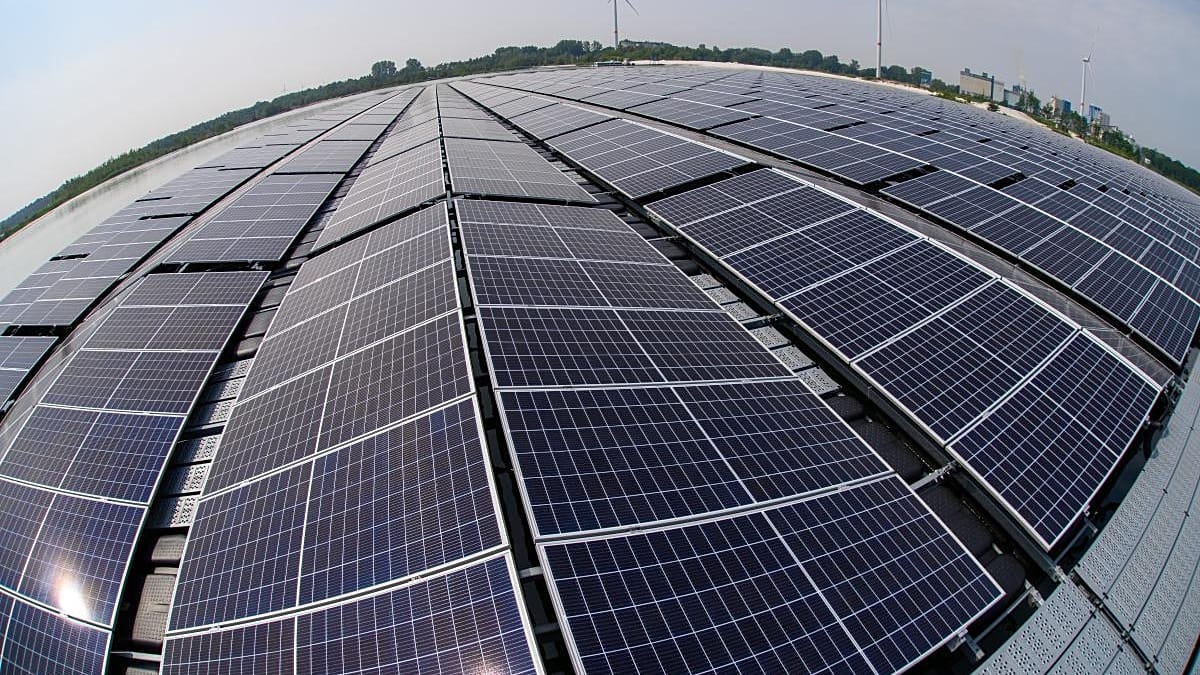
Spain has emerged as a leader in renewable deployment, having doubled its solar and wind capacity to 40 GW between 2019 and 2026—more than any other EU country except Germany, whose power market is twice the size. This foresight has kept Spanish electricity bills among the lowest in Europe, even as the Iran conflict disrupted global energy supplies. A Royal Decree published on 20 March introduced measures to accelerate electrification, including cutting red tape for renewable projects, improving grid infrastructure to avoid wasted energy, and tightening rules for data centres that cannot prove sustainability. The country is also promoting energy communities, allowing households and businesses to generate and share power locally.
Spain’s approach reflects a broader European trend: the EU has saved over €100 million per day in electricity costs since the war began, thanks to increased renewable capacity. Across 19 countries, average electricity prices were 24.2 per cent lower between 2023 and 2025 than they would have been without renewables.
France: Banning Gas Boilers and Pushing Heat Pumps
France is making a decisive shift toward electrification. Prime Minister Sébastien Lecornu announced a €10 billion state support package to help households and businesses switch from oil and gas to electricity. “Today 60 per cent of our energy consumption comes from these imported fossil fuels, though our domestically produced power is three times cheaper,” Lecornu said. “As long as we depend on oil and gas, we will continue to pay the price of other people's wars, which unfortunately will continue and will impoverish us.”
Key measures include banning gas boilers in all new buildings starting in 2027 and installing an additional one million heat pumps per year. Heat pumps, which are efficient and increasingly affordable, are central to France’s strategy to decarbonise heating. The country is also investing in grid upgrades to accommodate the increased electricity demand from electrification. The TotalEnergies Gonfreville refinery continues to operate at full capacity to mitigate short-term fuel shortages, but the long-term goal is clear: reduce dependence on imported fossil fuels.
Portugal: A Price Cap and High Renewable Share
Portugal has taken a different approach, promising a temporary price cap on electricity if retail prices rise by more than 70 per cent or exceed €180 per megawatt-hour—more than 2.5 times the five-year average. Cabinet Minister António Leitão Amaro stated that the government would cover the initial cost of support, which “would be recovered later.”
Portugal is less dependent on natural gas for electricity than many European peers. In the first two months of this year, about 79 per cent of its electricity came from renewable sources, according to official data. This high share of renewables provides a natural buffer against fossil fuel price volatility, though the government remains prepared to intervene if needed. The country’s strategy aligns with the EU’s broader AccelerateEU plan, which aims to speed up renewable deployment and grid modernisation across the continent.
Poland: A Trillion-Zloty Energy Investment
While not in the Iberian Peninsula, Poland is also making significant moves. Prime Minister Donald Tusk announced at the PowerConnect Energy Summit in Gdańsk on 18 March that Poland will invest PLN 1 trillion (approximately €235 billion) in energy infrastructure over the next decade. Of this, over PLN 220 billion (€51.8 billion) will go to renewable energy and storage, PLN 234 billion (€55 billion) to distribution, and PLN 160 billion (€37 billion) to nuclear power. In 2024, coal, oil, and gas still made up 83 per cent of Poland’s energy mix, but the country is rapidly increasing its renewable share, from 21 per cent in 2022 to 28 per cent in 2023, according to the IEA.
The race to expand renewables is not just about climate goals—it is a matter of energy security and economic resilience. As the IEA chief warned, the current crisis is unprecedented, and Europe’s response will determine whether it can shield its citizens from the volatility of global fossil fuel markets. Spain, France, and Portugal are showing that a combination of regulatory reform, public investment, and consumer protection can work, but the continent as a whole must move faster to avoid paying the price of future conflicts.