Two Democratic members of the United States Congress have called on the European Commission to maintain the integrity and timeline of the European Union’s Deforestation Regulation (EUDR), just days before the EU executive is set to review the law and potentially revise its scope.
In a letter dated 24 April, Representatives Lloyd Doggett of Texas and Rashida Tlaib of Michigan urged the Commission to resist growing pressure from industry groups, exporting countries, and political actors to soften the regulation. The EUDR requires suppliers of commodities such as palm oil, timber, leather, coffee, beef, and rubber to prove that their production did not contribute to deforestation. Non-compliant goods would be barred from the EU market.
The law was originally scheduled to take effect on 30 December 2024 but has been delayed twice. The first postponement, in October 2024, followed complaints that the Commission had not provided enough guidance for businesses. The second delay, in September 2025, was attributed to a technical glitch in the bloc’s IT systems.
Climate Stakes and Global Signals
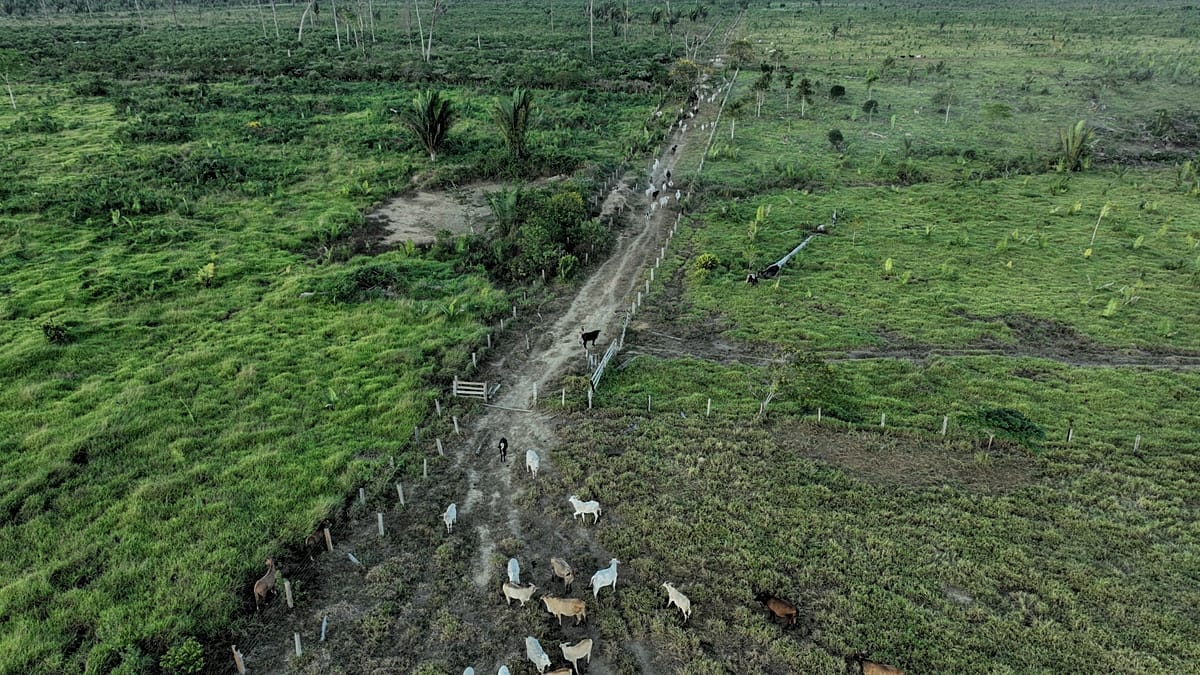
The US lawmakers framed their appeal as a test of international resolve on climate change. “With over 10 million hectares – the size of Portugal – being deforested each year and accounting for up to 21% of global greenhouse gas emissions, the EUDR is necessary to combat the existential climate crisis,” the letter states. Weakening the law, they argue, would send the wrong signal at a critical moment.
The letter also warns against a proposed “no risk” classification for certain countries, a concept reportedly pushed by the Trump administration. Critics say such a designation would exempt some exporters from strict traceability requirements. “Should the EU create this designation and consider the US for classification, American companies would operate in a regulatory desert, without transparency or oversight,” the lawmakers wrote, adding that it would create “significant loopholes” that undermine enforcement.
While pressing Brussels for flexibility, Washington has simultaneously expanded domestic timber production and rolled back certain forest protections. The lawmakers argue that these moves weaken the credibility of US calls for special treatment under the EU system.
Industry Investment and Uncertainty
Many companies, including those based in the United States, have already invested heavily in supply chain transparency and compliance systems in anticipation of the EUDR. Further delays or exemptions, the letter argues, would penalise early movers while rewarding less scrupulous actors. After two postponements, any additional delay would prolong uncertainty and could result in millions of tonnes of additional carbon emissions.
The appeal comes as Environment Commissioner Jessika Roswall met with US Ambassador to the EU Andrew Puzder on Monday. Roswall told reporters afterward that the Commission’s priority is to ensure the rules “address the global challenge of deforestation and are fit for purpose, while ensuring we do not place unnecessary burdens on companies and trading partners.” She confirmed that a “simplification review” is expected in the coming days, aimed at implementing the law more efficiently.
Puzder, for his part, argued that US producers do not contribute to deforestation and should not face costly geolocation requirements. “We are hopeful that the EU will address the very serious and legitimate concerns of US producers and exporters,” he wrote on X.
The EUDR remains one of the bloc’s most ambitious environmental regulations, with implications for global supply chains and forest conservation. As the Commission prepares its review, the debate over how to balance environmental goals with economic competitiveness is far from settled. For a continent that has increasingly positioned itself as a leader on climate action, the outcome will be closely watched — not least by the US lawmakers who have now weighed in.