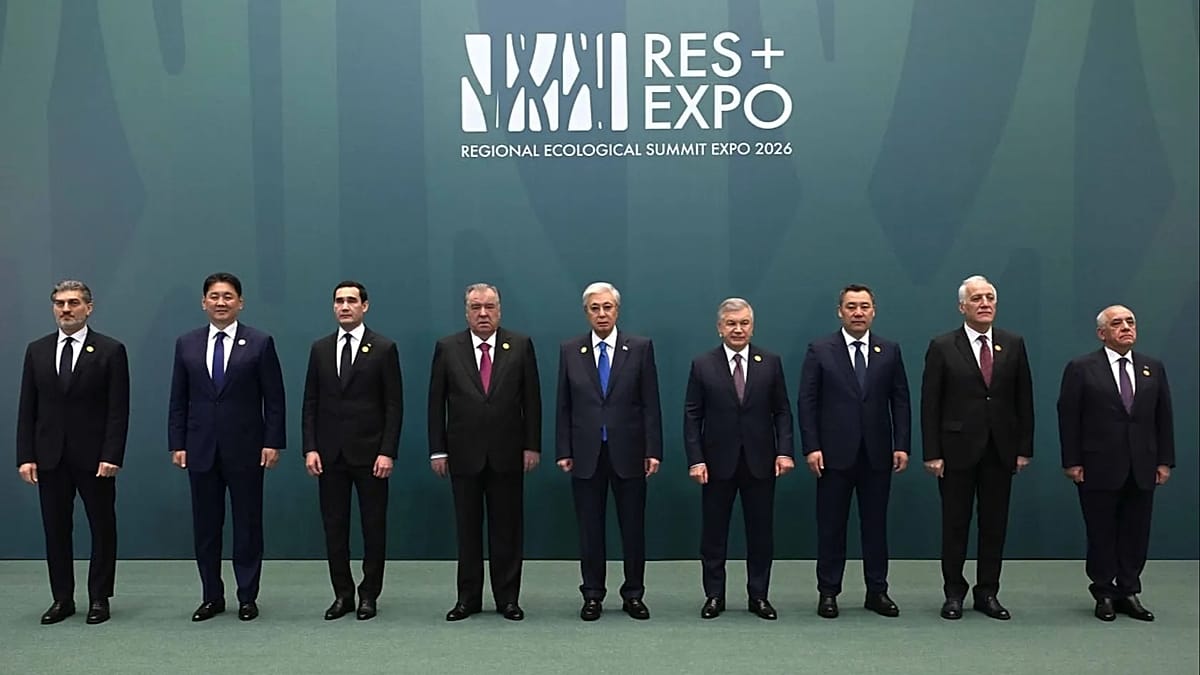
Leaders from Central Asia and neighbouring states have united behind a major diplomatic initiative to establish a dedicated United Nations agency for water, aiming to address a mounting ecological crisis that threatens regional stability. The proposal, championed by Kazakhstan's President Kassym-Jomart Tokayev, is gaining traction during the Regional Ecological Summit (RES) in Astana, where initial consultations on the agency's formation are now underway.
"This initiative is timely, as the UN is currently reviewing thousands of mandates, creating an opportunity to strengthen coherence and effectiveness in global governance," Tokayev stated in his opening address. He first proposed the body in December 2025 during a forum in Turkmenistan's capital, Ashgabat.
Water Security as an Existential Threat
The summit has placed water security at the centre of its agenda, reflecting its critical importance for a region experiencing some of the world's most acute climate impacts. President Tokayev framed it starkly: "Water security is of critical importance for Kazakhstan and the entire region. Our future depends on managing this vital resource wisely and fairly."
Two major bodies of water symbolise the crisis. While Kazakhstan reports restoring around 36% of the Northern Aral Sea, improving local water quality and fish stocks, the larger disaster of the sea's desiccation persists. Simultaneously, the Caspian Sea is declining by approximately 10 centimetres annually. Tokayev announced an interstate programme to prevent further degradation and called for greater international engagement, stressing that any use of military force in the Caspian region "must be excluded."
Regional Tensions and the 'Water Tower'
Water management remains a politically sensitive fault line in Central Asia. Kyrgyzstan, which generates about 50 billion cubic metres of water annually, serves as the primary source for downstream nations like Uzbekistan, Kazakhstan, and Tajikistan. President Sadyr Japarov underscored his country's pivotal role in ensuring regional agricultural, energy, and food security, while voicing a longstanding grievance.
"For decades, we have maintained water allocation limits while providing storage and release services. Kyrgyzstan ensures the safety of hydraulic infrastructure and invests significant resources in water management. However, we do not receive compensation in the form of fossil fuels," Japarov said.
This statement highlights the unresolved economic and political tensions surrounding transboundary water sharing, a challenge with parallels to other regions dependent on shared resources.
A Continent Under Climate Stress
The summit laid out a grim regional climate assessment. Central Asia's average annual temperatures are rising faster than the global average, with increases ranging from +1.5°C in Turkmenistan to +2.1°C in Kyrgyzstan over the past 115 years. The consequences are severe and accelerating.
According to UNESCO data, glacier coverage in Kyrgyzstan has shrunk by 16% over 70 years, while Tajikistan has lost more than a thousand glaciers in just three decades. Furthermore, over 20% of the region's land—roughly 80 million hectares—is degraded, affecting around 30% of the population. "Central Asia is facing common ecological challenges, including water scarcity, desertification, glacier retreat, air pollution and biodiversity loss," Tokayev summarised.
These environmental pressures directly impact European interests. Resource scarcity and instability in Central Asia can influence migration patterns, energy security, and provide openings for external actors seeking to increase their influence, akin to the digital tactics seen in hybrid warfare campaigns against Ukraine.
Green Technologies and Future Frameworks
A key feature of the Astana summit is the RES 2026 International Exhibition of Green Technologies, featuring around 300 companies from 30 countries. The exhibition showcases smart environmental solutions and resource management systems. Kazakhstan's national pavilion highlights conservation projects for species like the Przewalski’s horse and the saiga antelope, alongside efforts to restore the Northern Aral Sea.
With numerous sessions on climate action and green finance, organisers aim to translate political dialogue into concrete steps for greater environmental and economic resilience. The summit itself, first proposed by Tokayev at the UN General Assembly in 2023, is designed to develop a shared policy framework for protecting ecosystems and managing water and land resources sustainably.
The push for a UN water agency emerges from this urgent context. Its creation would represent a significant shift in global environmental governance, potentially offering a new model for managing transboundary resources—a issue of growing relevance worldwide. For Europe, engaged in its own green transition and dependent on stable international partners, the outcome of this Central Asian initiative carries substantial strategic weight, underscoring how ecological and political stability are increasingly intertwined.