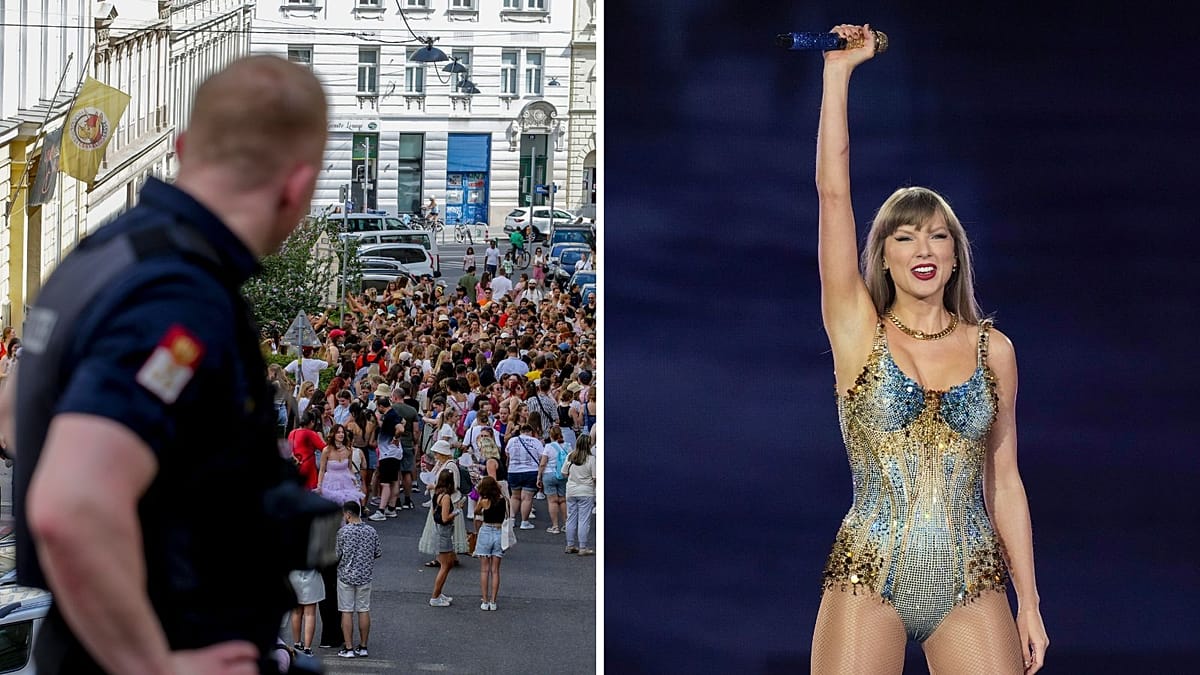
In a case that underscores the persistent security challenges facing large public events in Europe, the trial of a 21-year-old Austrian man accused of plotting a terrorist attack on Taylor Swift's August 2024 concert in Vienna begins today in Wiener Neustadt. The suspect, identified only as Beran A. under Austrian privacy laws, faces charges including membership in a terrorist organisation and planning to commit murder.
Beran A. allegedly networked with members of the jihadist group Islamic State (IS) and aimed to target crowds outside the Ernst Happel Stadium, where up to 30,000 fans gathered each night, with another 65,000 inside the venue. Austrian authorities have stated that the suspect hoped to “kill as many people as possible.” The plot was disrupted thanks to intelligence shared by the United States, which prompted the cancellation of Swift's three scheduled performances as part of her Eras Tour.
Broader Allegations and Co-Conspirators
Prosecutors have also filed terrorism-related charges against a second individual, Arda K., alleging that he and Beran A., along with a third man referred to as Hasan E., planned to carry out simultaneous attacks in Saudi Arabia, Turkey, and the United Arab Emirates during Ramadan 2024 in the name of IS. Hasan E. allegedly stabbed a security guard at the Grand Mosque in Mecca on 11 March 2024 and remains in pre-trial detention in Saudi Arabia. Beran A. and Arda K. did not carry out their plans in Turkey and the UAE.
The case highlights the transnational nature of modern terrorism threats, with links stretching from Austria to the Middle East. It also raises questions about the security of major cultural events across Europe, a topic that has gained urgency after recent incidents. For instance, Kanye West's concert in Portugal proceeded under heightened security, while Italy faces growing calls to cancel a similar event.
Beran A.'s defense attorney, Anna Mair, told the Associated Press that her client plans to plead guilty to most charges, though she did not specify which ones. If convicted, he could face up to 20 years in prison. The trial is expected to last several weeks, with testimony from intelligence officials and forensic experts.
The cancellation of Swift's concerts in August 2024 dealt a significant blow to Vienna's cultural calendar and local businesses, which had anticipated a major economic boost. The incident also prompted a review of security protocols for large gatherings across Austria and the wider European Union, as member states grapple with balancing public safety and the freedom to host major events.
This case is not an isolated one. European authorities have been increasingly vigilant about IS-inspired plots, particularly those targeting high-profile events. In a related development, a London court set a 2027 trial for four individuals charged with arson against a Jewish ambulance, reflecting the ongoing threat of extremism across the continent.
As the trial unfolds, it will test Austria's legal framework for handling terrorism cases and its cooperation with international partners. The outcome may also influence how European nations assess and mitigate risks at future concerts and festivals, ensuring that the continent remains both open and secure.