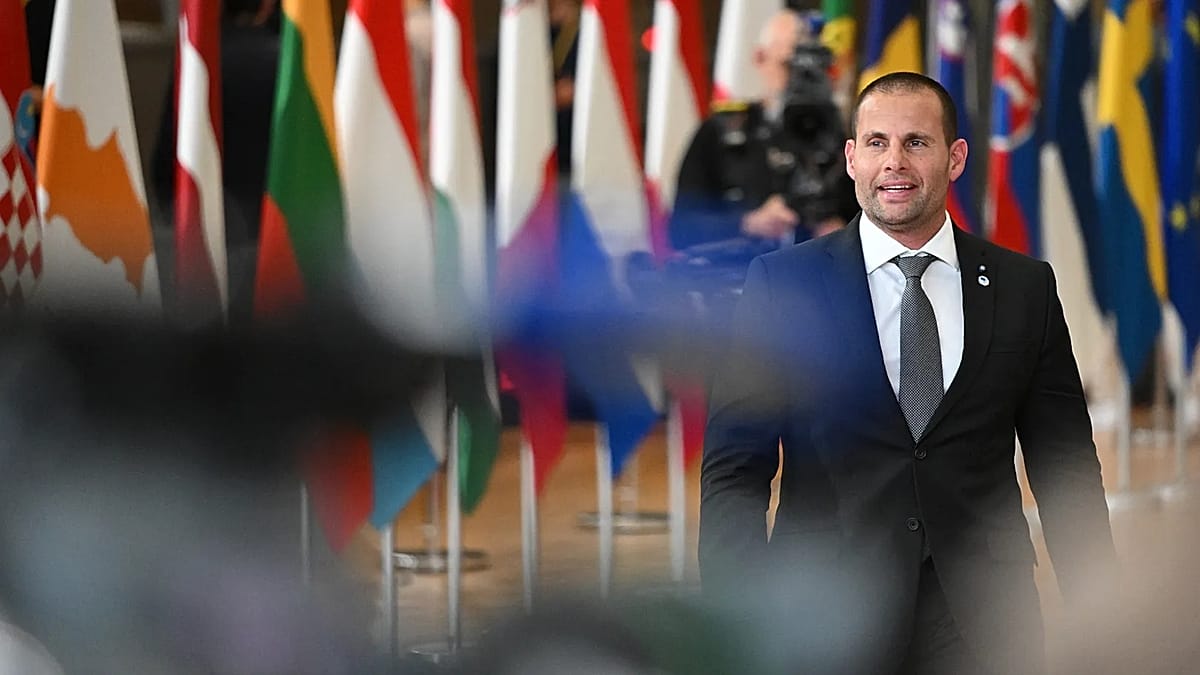
Malta's Prime Minister Robert Abela announced on Monday that the country will hold an early general election on 30 May, as his Labour party seeks a fourth consecutive term in office. In a televised address, Abela argued that Malta requires a government with a fresh mandate to address the challenges posed by the current geopolitical climate.
Abela pointed to rising energy costs driven by the conflict in the Middle East as a primary reason for the snap election. The Maltese leader expressed concern over potential inflation spikes in a nation heavily reliant on imports for its energy needs. He pledged that energy prices would remain stable under his leadership, describing his government as a “shield” for Maltese citizens.
Economic Context and Labour Market
Malta's economy has been among the strongest performers in the European Union, with government debt at 46% of GDP, a deficit of 2.2%, and negligible real unemployment. However, the economy depends significantly on foreign labour, particularly in industries like tourism, which contributes roughly 15% to GDP. The reliance on imported energy makes Malta vulnerable to global price shocks, a factor Abela highlighted in his call for a renewed mandate.
The election will see Abela, a former lawyer who won a landslide victory in 2022, face off against Nationalist Party leader Alex Borg. The campaign is expected to focus on economic stability, energy policy, and the government's record on governance.
Political Background
Abela's predecessor, Joseph Muscat, resigned in 2020 amid allegations that he shielded allies from investigations into the 2017 car bomb assassination of journalist Daphne Caruana Galizia. Caruana Galizia had accused top members of Muscat's administration of corruption. Abela has sought to distance himself from that legacy, but the issue remains a sensitive topic in Maltese politics.
The early election comes as Europe grapples with broader energy and security challenges. The conflict in the Middle East has driven up fuel prices across the continent, prompting many governments to reassess their energy strategies. Malta's decision to hold a snap vote underscores the pressure on small, import-dependent economies.
For context, the European Union has seen a surge in electric vehicle sales as fuel prices rise, with a nearly 50% increase in March alone, partly driven by the Iran conflict. This trend reflects a broader shift toward energy diversification, a topic that may feature in Malta's election debates.
As the campaign unfolds, voters will weigh Abela's economic record against concerns about governance and transparency. The outcome will have implications for Malta's role in the EU and its approach to energy policy and migration, given the country's strategic position in the Mediterranean.