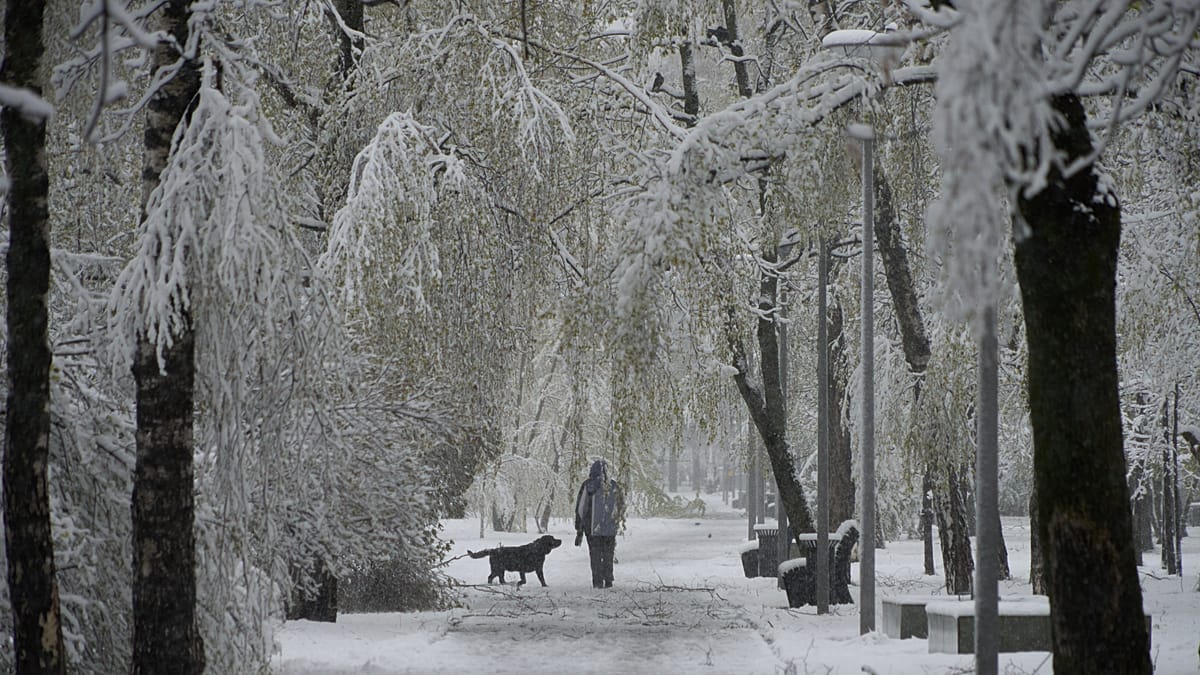
A rare spring snowstorm has blanketed Moscow, disrupting travel and damaging infrastructure across the Russian capital. The Russian Meteorological Center issued an orange alert—the second-highest warning level—for the city, in effect until Tuesday morning.
The unseasonable weather, which arrived after weeks of mild temperatures, has forced the cancellation of dozens of flights at Moscow's major airports, including Sheremetyevo, Domodedovo, and Vnukovo. Airlines have advised passengers to check schedules before heading to terminals, as delays and cancellations are expected to continue through the weekend.
Heavy, wet snow has also brought down trees and power lines in several districts, causing localized blackouts and damaging parked cars. Emergency services have been deployed to clear roads and restore electricity, but officials warn that the weight of the snow could lead to further collapses, especially on older buildings and temporary structures.
The snowstorm comes as a surprise for a city that typically sees its last snowfall in late March or early April. Meteorologists attribute the anomaly to a cold front sweeping south from the Arctic, colliding with moist air from the Atlantic. Climate scientists have noted that while such events are rare, they are not unprecedented; similar spring storms occurred in 2017 and 2021.
For travelers, the disruption adds to a season of uncertainty in European aviation. The jet fuel crisis has already forced airlines across the continent to trim schedules, and the Lufthansa Group recently announced it would cut 20,000 flights due to soaring fuel costs. While Moscow's current disruptions are weather-related, they underscore the fragility of air travel networks during peak spring and summer seasons.
The orange alert advises residents to stay indoors, avoid non-essential travel, and be cautious of falling branches and ice. Public transportation, including the Moscow Metro, continues to operate, though surface routes may experience delays. Schools in several districts have been closed as a precaution.
This storm also highlights broader climate variability across Europe. While Moscow shivers under snow, other parts of the continent are experiencing unseasonably warm temperatures. The contrast serves as a reminder of the complex weather patterns that increasingly define European springs.
For those planning travel to or from Moscow, airlines recommend monitoring updates closely. The situation is expected to improve by Tuesday, but residual delays may persist into midweek.